- Insights This article was written by a TIA community member. Insights pieces undergo the same rigorous editorial process that newsroom-produced articles have.
 Liva Paudere · · 4 min read
Why you don’t say ‘sorry’ in error and info messages
One of the first tasks I had to do after joining Honestbee was to review some error messages. As an average user (my background is in content marketing), I had never paid any attention to error content. Whenever I saw the word “sorry,” I spaced out.
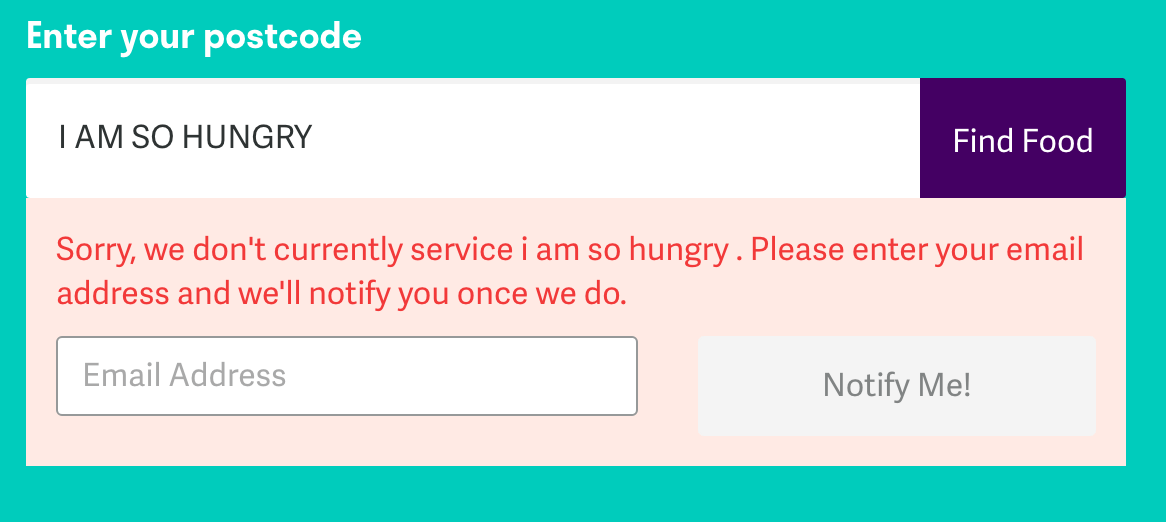
Error message at deliveroo.com.sg.
Faced with the task, I did my utmost best to make the messages consistent and pleasant and started every single one with the word sorry. And I did this not just for error messages, but all kinds of informational content.
I think there are two reasons for it:
- Lots of products do it. I thought it was the norm.
- I wanted to be kind and empathetic to our users.
As for number one, lots of other people doing something does not a good reason make.
“It’s more fun to be a pirate than to join the Navy.” -Steve Jobs
Number two is a more complex issue. At Honestbee, each of us at the design team has to experience conducting user research and doing customer service. I love it. It has allowed me to become more empathetic and to truly look at things from a perspective that is very different from my own.
I thought that by saying sorry, I was making the content more human and preventing users from getting angry.
One day at a design review, my manager asked me why I use the word sorry. The simple answer was that I had never considered not to. But it made me think, what real value was I adding with that word?
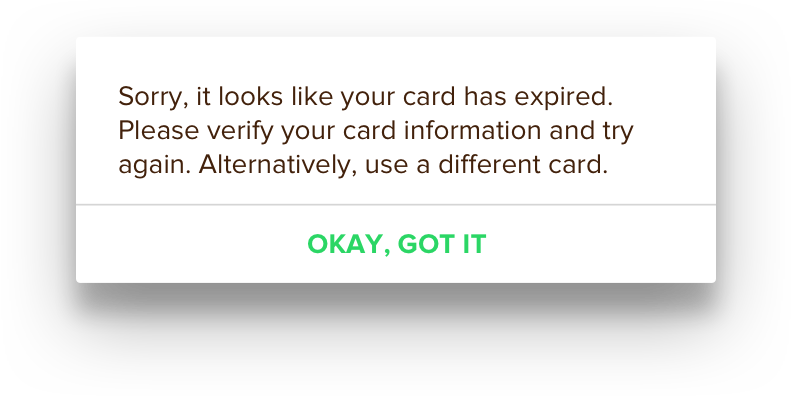
Look at the message below. A user’s card has expired. It is not a big deal and can happen to anyone. It seems that I am turning a neutral situation into a bad one. Why am I making the user feel bad?





Stay updated on the go with our mobile app.
Get latest insights with smoother, more personalized experience through TIA mobile app.











📅 Upcoming Events
22 October 2026
Payoneer x CSPN Summit 2026