- Insights This article was written by a TIA community member. Insights pieces undergo the same rigorous editorial process that newsroom-produced articles have.
 Jack Chan · · 3 min read
4 unique blockchain use cases from a hackathon for dapps
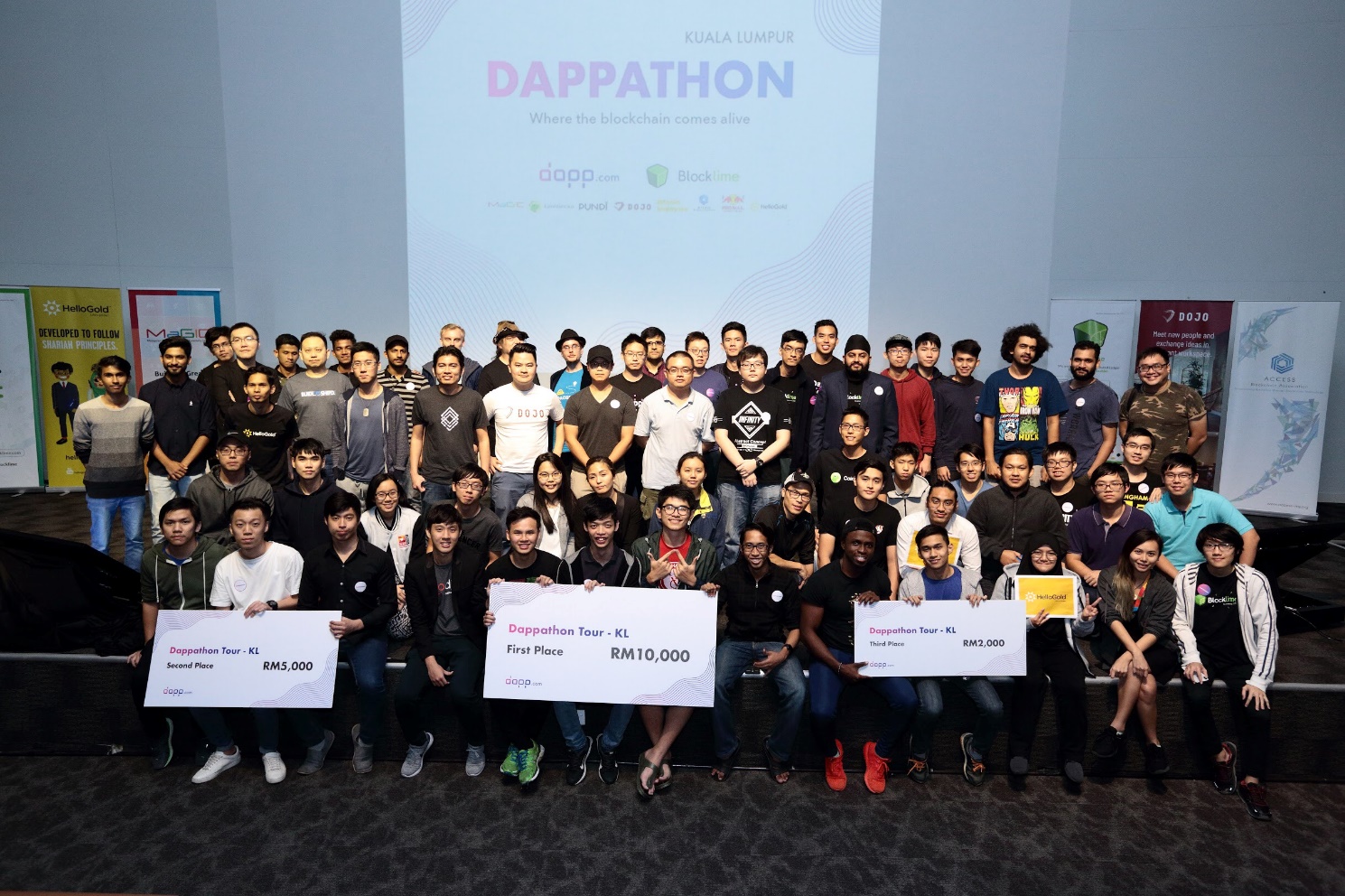
Winners of the Blocklime and Daap.com dappathon
As I write this article, bitcoin is trading at a little more than a third of its value since December when it peaked at nearly US$20,000. Other cryptocurrencies have taken similar tumbles. Regulators in several countries are cracking down on ICOs.
At a glance, the layman may think that the blockchain mania is over.
But cryptocurrencies and ICOs are just one aspect of the blockchain universe. Other kinds of blockchain startups are still proliferating, and big companies and financial institutions are exploring the technology’s applications.
With this in mind, Blocklime and Dapp.com co-organized a blockchain development bootcamp. This was quickly followed by a “dappathon” (a decentralized applications hackathon) in Malaysia, where I was invited as one of the mentors to more than 80 participants.
From the 20-odd teams that survived, there were some locally born use cases that caught my eye.
Immutable Halal food sources
Consumers today are much more concerned over what they eat, drink, and use, more so for Muslim consumers. For frequent overseas travelers, language barriers often pose a problem. This was the experience of a dappathon participant when she traveled to Japan.
As a solution, her team came up with an idea to place product information on the blockchain for consumers to access by scanning QR codes. By decentralizing this process, it weeds out fabricated and inaccurate food labels, providing more transparency to the end consumer.
Similarly, the solution can be applied to other industries such as beauty and healthcare, where allergies and other health conditions prohibit the use of certain ingredients.
Transparent university application process
On an almost annual basis, Malaysian students cry foul over the untrustworthy application processes of some public universities. It’s an open secret that even the most qualified students won’t make the cut because of discriminatory or arbitrary selection criteria.
A participating team made up of university undergraduates thought of using dapps to make the student selection process more transparent. The idea is to develop a more publicly monitored procedure that would inevitably improve the social standing and reduce social distrust in the public university selection processes.
Digital ID for pets and livestock
Many have spoken about KYC (know your client), yet not many have mentioned the KYP (know-your-pet) platform that uses blockchain technology to comprehensively document pets’ health records and pedigree.
Animal birth and health certificates can be easily falsified, making verification of a pet’s value extremely difficult. Having an all-inclusive platform that tracks pedigree and bloodlines would make it more difficult for profiteers to benefit from illegal and unethical breeding mills.
While tracking the data of an animal may seem trivial, from a zoological and agricultural standpoint, it is absolutely necessary. In Japan, for instance, wagyu and kobe beef have their own grading standard, which measures the meat’s intramuscular fat or “marbling.” In fact, since the first known case of mad cow disease back in 2001, all Japanese cattle are individually earmarked with 10-digit identification numbers.
Portable verified credentials





Stay updated on the go with our mobile app.
Get latest insights with smoother, more personalized experience through TIA mobile app.










📅 Upcoming Events
22 October 2026
Payoneer x CSPN Summit 2026