 Samantha Cheh · · 6 min read
Huawei’s hackathon aims to empower young tech talents

The Covid-19 pandemic has changed many aspects of how we approach life, and the shift has been particularly drastic for those finishing up with university. Many fresh graduates have decided to eschew traditional nine-to-fives in favor of setting up their own tech companies, focusing on a variety of areas such as education and web security.
However, while virtual solutions of all sorts have popped up, there remain problems that need to be solved. Sustainability issues continue to plague Asia Pacific, for example, with the region performing poorly in the environmental targets of the United Nations’ 2030 Agenda for Sustainable Development. Additionally, while borders are slowly beginning to open up, there’s still a lot of uncertainty over the future of the hospitality and tourism industries.
Problems like these are what these fresh graduates turned tech entrepreneurs are aiming to solve, and it’s more important than ever to help them bring their tech solutions to fruition.
“No market for these ideas”
It’s clear that the need to innovate remains crucial, but fresh ideas alone won’t make a huge impact.
According to Leo Jiang, Huawei’s chief digital officer for Asia Pacific, the pandemic may have accelerated adoption of existing technologies, but the missing key ingredient is the talent needed to build the next step.
“With the pandemic, things changed so fast that the talent growth couldn’t keep up,” he says.
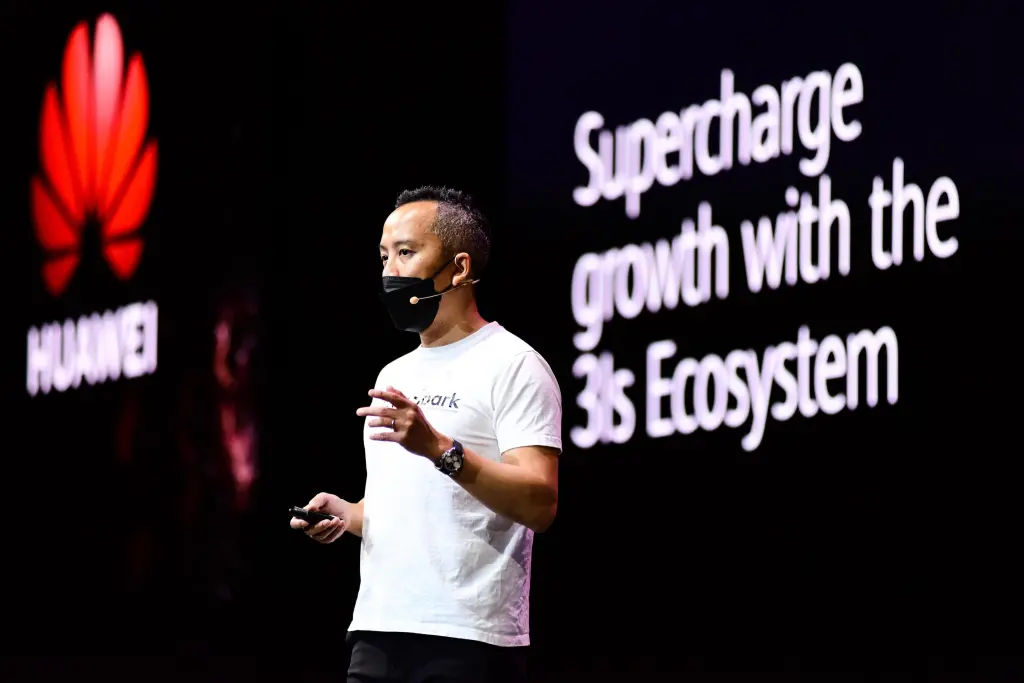
Leo Jiang, Huawei’s chief digital officer for Asia Pacific / Photo credit: Huawei
The talent crunch is a well-established problem in tech circles. Some research suggests that by 2030, there will be a shortage of 47 million tech talents in Asia Pacific alone. So where will the tech professionals of the future come from?
An obvious answer would be the latest crop of students and young graduates. However, while many of them have grown up surrounded by tech, the ability to transform ideas into actual solutions is much harder without access to practical experience, opportunities, and connections.
Jiang shares that he faced similar issues 20 years ago when he was in his final year of university. It was crucial to find a company that could sponsor students like him for projects, “but it was so difficult to find even a single company that could give us a project to work on,” he says.
As a result, most students ended up building something on their own. For Jiang, it was a data capture software, but it wasn’t the most informed of processes. As a student, he says his innovations were stymied by a lack of opportunities to develop his skills on a practical level.
“I didn’t have any commercialization opportunities, because there was no market for these ideas,” he recounts. “At the time, I just thought The Matrix was pretty hot, and I thought of hackers as great role models. That’s why I did it.”
A lot has changed since Jiang’s time as a student, but there are new challenges for today’s innovators to overcome, such as selecting the right technology for their projects and figuring out how to access the resources needed for them.
“I think that’s the first thing that young developers need to understand: which platform, which technology do I need to put my hands on?” Jiang says. “And once you do, then it’s about the cost of learning, the cost of commercializing that learning into a prototype.”
Hacking for greatness
Understanding the need to support students and their ambitions to become tech entrepreneurs, Huawei will make a US$100 million investment to cultivate 10,000 developers, the company announced at its 2021 Spark Founders Summit.
To make that vision a reality, the Chinese tech giant will host its inaugural Huawei Cloud Spark Hackathon Singapore in early 2022 to open up opportunities for students, aspiring entrepreneurs, and technology enthusiasts to gain experience and training. Through the program, participants will be invited to plan and build an original product on Huawei Cloud’s proprietary cloud computing platform. These solutions must be based on a number of categories, including sustainability, travel, education, and healthtech.
Teams will then pitch their prototypes to a panel of judges for the chance to win a US$15,000 cash prize and potential job opportunities within Huawei and its portfolio companies.

Jiang explains that the idea behind Huawei’s hackathon was to not just give young tech talents a chance at winning some cash or scoring a job, but also to connect them directly to players in the tech industry. To that end, startup founders from Huawei’s portfolio companies will also attend the hackathon.
“Students will be coached by the industry leaders who have not only the technical background, but also commercialization experience,” Jiang says. “These are real-world startup founders and technical experts who can provide the training and know-how to guide you in the right direction.”
Hackathon with a difference
Huawei’s event sets itself apart because of two core components: the underlying technology, and the emphasis on education.
Participants of the Huawei Cloud Spark hackathon will build their prototypes on the Huawei Cloud platform with integrated features like the next generation GaussDB distributed database software, which offers no risk of data loss. Huawei will also give participants access to solutions that are already being used in the market, like Australian startup Pi Exchange’s AI/ML tool. With this, the event provides young talents the opportunity to play around and learn with otherwise inaccessible enterprise-grade software.
The hackathon also emphasizes the education aspect. All event participants have the opportunity to be trained on Huawei’s cloud service via the Huawei Certified ICT Associate (HCIA) program, which can be accessed as either a self-paced learning module or a five-day course led by an instructor.
Through the HCIA educational framework, Jiang says participants can also pursue certification that can improve their future career prospects.
First stop: Singapore
For Huawei, the hackathon represents something more than just a fun competition with a lucrative cash prize – it’s also about the resources needed for future innovations.
“Cloud and AI are the most fundamental ingredients to build the digital future,” Jiang predicts. “I don’t think there’s anyone starting a company from scratch in the traditional way anymore, so these are essential tools and knowledge.”
However, the hackathon is just one step in the long journey toward developing a robust cloud and technology ecosystem. Jiang describes a multi-pronged strategy where Huawei will continue investing in new product and service offerings to better serve startups, and it will also roll out more initiatives to develop talent.
The first iteration of the Huawei Cloud Spark Hackathon is set to take place in Singapore in mid-January 2022, and is focused on giving HCIA certifications to at least 500 students. In the future, Huawei plans to hold hackathons in other countries like Thailand, Indonesia, Vietnam, and the Philippines.
“We definitely want to train and educate as many students as we can, and help them find a job in order to contribute to the social and economic side of things in Singapore,” Jiang says. “Imagine if 20 years ago, someone said their hackathon would not only connect you with the industry, but educate you while also providing tools and training. Wouldn’t that be amazing for a student?”
Huawei Cloud Spark Hackathon Singapore is currently open for applications until Jan 16, 2022. Students, technology enthusiasts, and aspiring entrepreneurs with fresh ideas for products in sustainability, finance, banking, education, hospitality, travel, and healthcare are welcome to sign up.
Find out more about the hackathon and apply to participate on the competition’s website.
This content was produced by Tech in Asia Studios, which connects brands with Asia’s tech community. Learn more about partnering with Tech in Asia Studios.
Stay updated on the go with our mobile app.
Get latest insights with smoother, more personalized experience through TIA mobile app.
Recommended reads
 Building a human capital operating system for students
 The AI talent war in Asia: who’s winning, who’s losing, and why
 Freeze headcount until AI becomes the true production line
 Code isn’t king: AI reshapes Singapore tech hiring
 When skills beat degrees in an AI economy
 AI hiring heats up in Singapore
 AppLovin CPO on how renting AI can be a waiting game
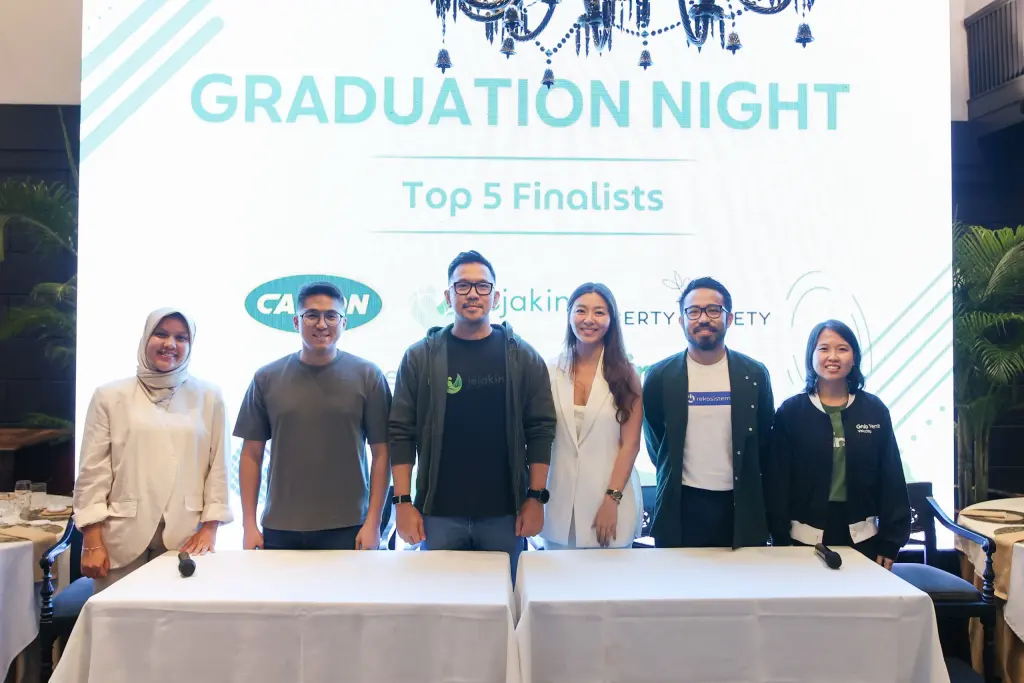 GVV 8: Grab’s latest accelerator graduates share their takeaways
 An AI interviewer being built on interview data, not CVs
 The data center rush reshaping Batam





Editing by Winston Zhang, Stefanie Yeo, and Lorenzo Kyle Subido
(And yes, we’re serious about ethics and transparency. More information here.)






📅 Upcoming Events
22 October 2026
Payoneer x CSPN Summit 2026