 Enricko Lukman · · 9 min read
Inspired by Xiaomi, the budget Himax Polymer is ready to shake up the market (REVIEW)
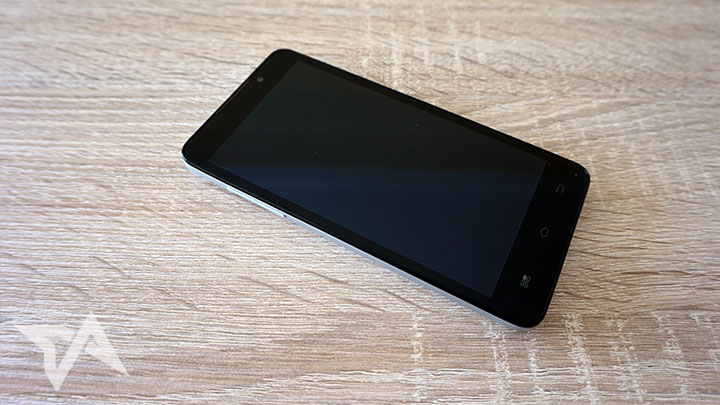
Indonesia is a huge market for smartphones. According to the latest data from Gfk, the sales volume for smartphones in Indonesia during the first quarter of this year grew by 68 percent, the most among all Southeast Asian countries. Not only that, the archipelago itself accounts for two-fifths of the region’s smartphone sales.
Knowing this, it’s not difficult to see why a number of phone brands are keen to pursue Indonesian consumers, with Samsung, Lenovo, and Oppo all marketing aggressively in the country. China’s Xiaomi has also entered the nation selling its Redmi 1S to reach out to new Indonesian smartphone users who are starting to ditch their feature phones (and BlackBerrys).
A new Indonesian brand also wants a slice of the action. It’s called Himax. It’s trying to emulate Xiaomi by running limited online flash sales and making nicer than usual gadgets at affordable prices.
In this review we’ll take a look at one of the most popular Android-powered Himax phones on sale in Indonesia: the Himax Polymer. It’s probably the closest rival to Xiaomi’s Redmi Note, touting a big screen, octa-core processor, and a budget price tag.
The Himax Polymer comes with a 5-inch 1280x720p HD IPS display. It is equipped with dual-SIM support, a 1.7GHz octa-core MediaTek processor, 2GB RAM, MALI-450MP4 GPU, and a 2,500mAh battery. It boasts a 13MP back camera and 5MP front camera. The Polymer comes in at a modest IDR 2 million (US$165).
Hardware
If you have to sacrifice anything to make a smartphone affordable, it’s the hardware. The good news is, although the Himax Polymer is made almost entirely of plastic, its snap-on back cover feels metallic to the touch and allows for a removable battery. The rear camera has a metallic square bezel which gives the phone a more premium look and feel.
The Polymer is not the slimmest phone at 9.3mm thick and 151 grams in weight, but it feels quite nice when gripped in your hand. Unfortunately, I think the plastic cover on my phone doesn’t fit perfectly. Pressing against the left side of the phone causes the sound of rubbing plastic.
The phone comes with three Android soft buttons – the home button on the center, the back button on the right, and menu button on the left. Personally, I prefer the “task switcher” button as the third button found in stock Android phones like the Moto G and Nexus 6, which allows you to toggle and switch between apps. I rarely use the current menu button, and I need to hold the home button for a couple of beats to switch between apps.
Although not the best, the Polymer is quite a powerful phone when it comes to playing games. I tried playing Spider-Man Unlimited and Asphalt 8: Airborne to test out the phone’s power and they played well, but not perfectly. During the early runs on Spider-Man Unlimited, the game was smooth, but as you pick up your speed and encounter more blasts, the experience gets choppy. Playing Asphalt 8: Airborne on the Xiaomi Mi3, which has a more powerful GPU and a better brand processor, feels smoother. However, I’d still like to give props to Polymer because the phone still works better for gaming compared to the more expensive LG Nexus 4 (launched in late 2012) that I mainly use.
On the upside, the Polymer does come with an FM radio tuner built-in. This is a common feature in Indonesian phones but it’s more rare in international phones like the Nexus 4. For those who like the radio, though, being able to listen to it without using any data is a nice perk.
Screen and sound

Software
Camera
Bugs and service centers
Performance and battery life
Alternatives
Emulating Xiaomi?
Conclusion
Pros & cons





Stay updated on the go with our mobile app.
Get latest insights with smoother, more personalized experience through TIA mobile app.








📅 Upcoming Events
22 October 2026
Payoneer x CSPN Summit 2026