 Edith C. · · 4 min read
Here’s how this Vietnamese marketplace competes with regional ecommerce players

Southeast Asia is home to some of the largest and fastest-growing markets in the world. And as the region’s internet economy hits US$100 billion, the ecommerce industry is seeing strong positive sentiment.
Since 2015, the number of online buyers and sellers has tripled to 150 million, and local marketplaces, in particular, are increasingly making an impact. But this growth is spread unevenly, with people in just seven metropolitan areas accounting for over half of the region’s internet economy.
Vietnamese ecommerce player and aspiring unicorn Sendo can attest to this, given its deep expertise in its home market.
According to the firm, an estimated 75 million people in Vietnam live outside major cities like Hanoi and Ho Chi Minh, and they have yet to be adequately served by larger, regional ecommerce players. This means that in these areas, there’s a genuine demand for goods and services that Sendo aims to address.
The latest findings from iPrice place Sendo second in the Vietnamese ecommerce market for Q3 2019. It only trails behind regional giant Shopee and is a few spots ahead of another Southeast Asian titan, Lazada.
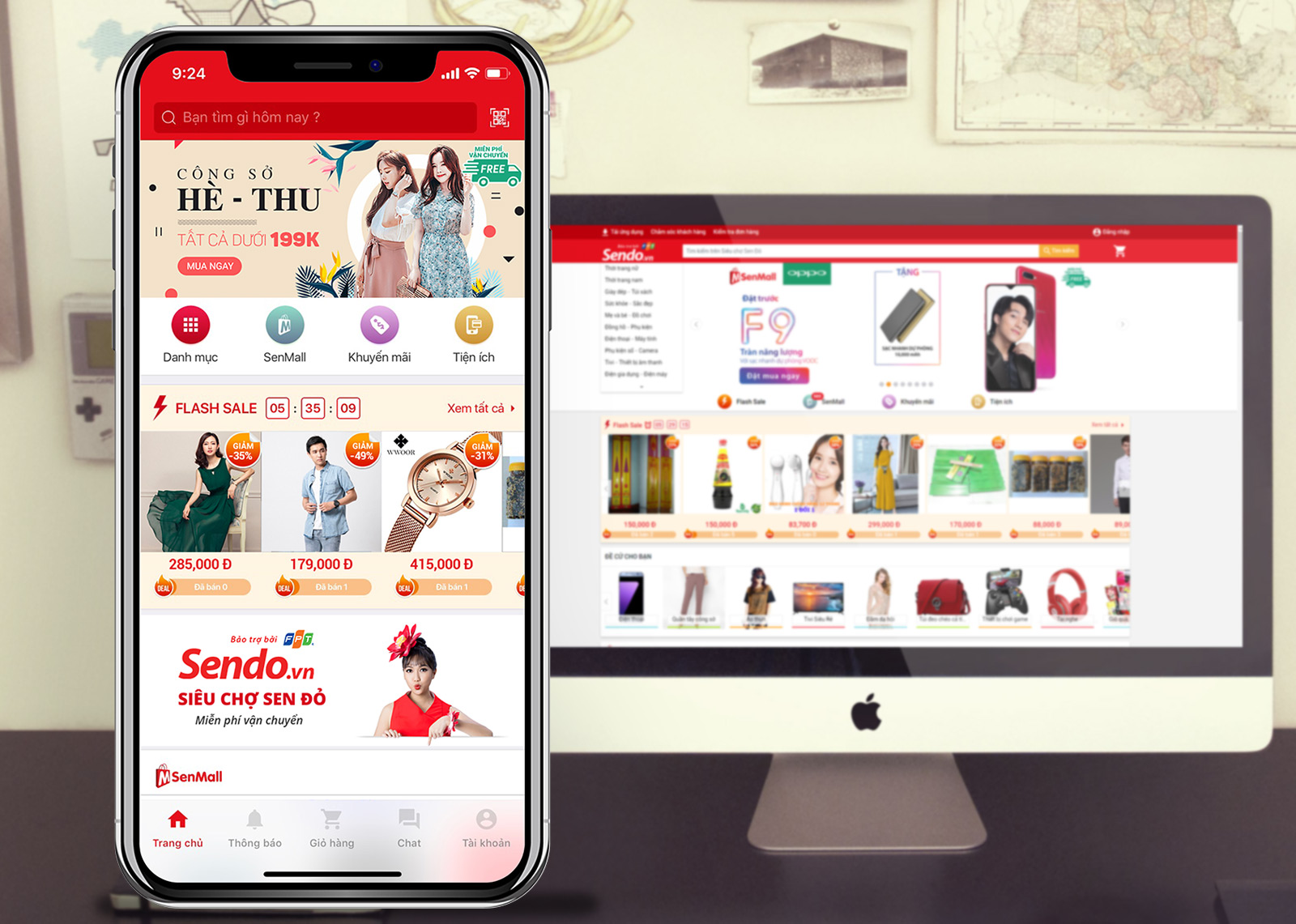
Image credit: Sendo
Sendo also sees nearly 31 million web visits per month and ranks second in app downloads in Vietnam.
With Vietnam’s economic progress, the country could eventually see an even distribution of development and income across the country. Here’s how Sendo recognizes and reaches out to this burgeoning market.
1. Addressing needs, not just creating wants
While cities have continued to grow, the logistics of distributing products and services hasn’t quite caught up.
“It’s harder for consumers in lower-tier cities and provinces to access affordable and quality products due to the distribution gap,” explains Sendo CEO and co-founder Tran Hai Linh.
The company’s market research in Vietnamese provinces showed that locals have to travel between 10 to 20 kilometers to arrive at major markets just to buy necessities.
Additionally, those living in lower-tier cities are less willing to spend on products that cost over US$1,000, like iPhones or televisions. Knowing this, Sendo doesn’t prioritize listing fancy gadgets and similar items on its site. Instead, it focuses on enhancing convenience for people in these remote areas.
It often sells lower to mid-range priced clothes and necessary home appliances or tech accessories. “Now, people will be able to buy products online that are not available in nearby stores at competitive prices,” says Linh.
Offering these products meets the daily demand of consumers and also attracts new users at low cost.
2. Building trust
Understanding how Vietnamese people think and helping them overcome their initial wariness about buying things online have made it easier for Sendo to win over consumers.
“In 2012, when we first started, we were one of the first ecommerce platforms allowing cash on delivery via a local third-party delivery company, Vietnam Post,” Linh recalls. “We understood early on that we could not wait for e-payments to fully develop. Cash on delivery was the best option to convince consumers and earn their trust.”

Sendo CEO and co-founder Tran Hai Linh / Photo credit: Sendo
Sendo’s patience paid off. As locals got used to shopping online, using digital payment methods became the norm.
After launching its own e-wallet, SenPay, the firm achieved its highest transaction value in the third quarter of 2019. Sendo claims that all of its sellers now use SenPay as their main payment method because customers trust the channel. For example, if the buyer doesn’t complain within 48 hours of receiving the product, SenPay releases the payment to the seller.
3. Understanding seller circumstances
On the vendor side, Sendo often works with owners of small and medium-sized businesses (SMBs).
Since these enterprises usually have limited budgets, the company doesn’t charge merchants commission fees. Instead, it helps SMBs by providing advertising solutions.
“Merchants can pay us for advertising on either our platform or channels,” says Linh. This gives SMBs an avenue to increase their sales volumes, which is critical to growing their revenue.
Future plans
Moving forward, Sendo will focus on improving its product range to meet the diverse needs of Vietnamese customers. It will also target smaller cities and rural areas, offering services that would otherwise be inaccessible or too expensive.
“For example, people can book flight tickets and accommodations with just a few clicks when they want to visit their relatives, without having to go down to travel agencies located far from their homes,” explains Linh.
The company will also be investing in artificial intelligence to enhance customer experience.
“Along with building a team of AI experts, we are also working with universities and data scientists in Vietnam and Singapore to bring AI into key operational issues such as product search, display personalization, customer care, counterfeiting, anti-fraud in transactions, optimizing transportation, and protecting customer data,” says Linh.
In line with this, Sendo’s goal in 2020 is to have 80% of its customer care, fraud prevention, and anti-counterfeiting operations handled by intelligent algorithms.
The company is also planning to hire more staff and to collaborate with more partners to boost the quality of its logistics and online payment services.
These expansion plans come after the firm closed a US$61 million series C round in November.
Sendo takes pride in how its recent successes weren’t driven by the high-burn strategy adopted by many other ecommerce players in the region. To remain sustainable, the company leverages its integrated ecosystem of advertising, logistics, and financial services.
And with 75 million people left underserved in Vietnam, the potential for Sendo’s growth is plain to see.
Find out more about Sendo on its website.
Stay updated on the go with our mobile app.
Get latest insights with smoother, more personalized experience through TIA mobile app.
Recommended reads
 Lalamove expands to the US to serve $13b on-demand delivery service market
 Fave names ex-Touch ‘n Go exec as chief product officer
 After a decade, Gojek says it’s generating positive gross margins
 Pinduoduo-like platform in the Philippines bags $1m in seed round
 Will cash-burning Shopee bring its parent firm Sea to the next level?
 East Ventures pours seed funding into Indonesian online kitchen startup
 Ex-Google execs’ firm partners with delivery riders for commission-free online ordering in SG
 Ovo, ZhongAn arm to launch insurtech JV in Indonesia
 Gojek killed GoLife, but on-demand lifestyle services may live on
- Gojek launches GoStore to help small businesses set up online shops





Editing by Winston Zhang, Jaclyn Teng, and Eileen C. Ang
(And yes, we’re serious about ethics and transparency. More information here.)



📅 Upcoming Events
22 October 2026
Payoneer x CSPN Summit 2026