Mary-Anne Lee · · 4 min read
Why Hero Emblems isn’t just a match-3 game for anyone, and why that’s a good thing
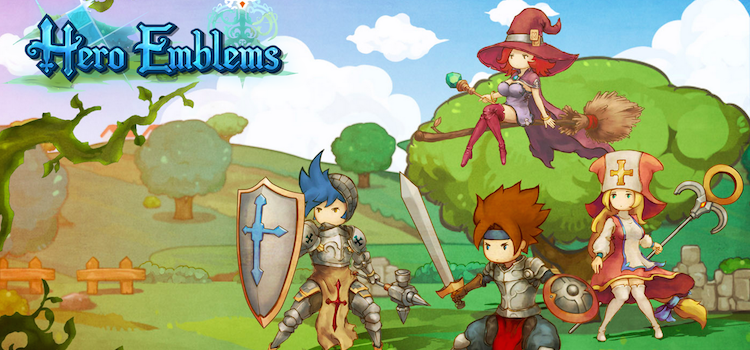
We recently wrote about an amazing old-school RPG reimagined for the mobile platform. Developed by Taiwan’s Heatpot Games, Hero Emblems is an incredibly polished (and cute!) adventure where your heroes do battle using match-three tiles.
Many indie teams in Asia are small, and more importantly, made up of young people sometimes fresh out of school. Their first games are often not impactful or awesome. So what’s different about Heatpot Games?
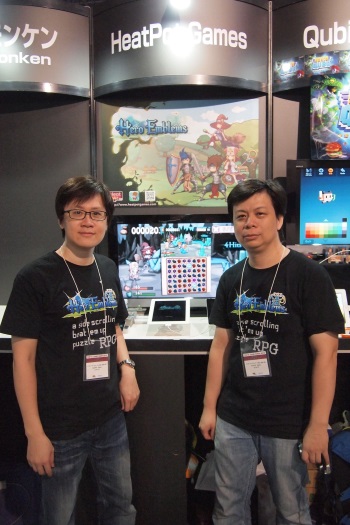
Julian and Gino Kuo.
For starters: brothers, co-founders, and developers Gino and Julian Kuo are not fresh out of school. Gino is 40 and Julian is 38, and both have approximately 10 years of experience under their belts. Gino says they worked at Taiwanese-based companies like Zealot Digital and RedGate, subsidiaries of distributor/developer SoftWorld and publisher Gamania before starting HeatPot. At their previous jobs, the brothers worked on 3D PC game projects, ranging from standalone PC games to MMOGs.
But why leave a stable development job for an uncertain one producing games for the relatively new mobile platform?
Gino says the opportunity first came in March 2012. He had always been interested in mobile game development, and so when a friend asked him to start a small team to do so, it was not difficult for him to quit. He had already been studying iOS programming for a year. Unfortunately, Gino and his friend never managed to get their small team off the ground.
Rather than head back to the PC game industry, Gino started work on Project Zero, his own little endeavor, as a means to practice native programming and familiarize himself with the development process. He asked Julian to help him with some character art in the meantime. When Julian’s company had a big layoff in February 2013, he joined Gino in developing Project Zero. With funding and support from their family, this project would later grow to become Hero Emblem.
“When I started Project Zero, I just wanted to create a fairly simple game, and thought a match-three one should be pretty simple. But I also thought it would be fantastic if I can combine the match-three game with a 2D combat action system,” Gino says.
He went on to prototype several versions of the game he envisioned, but none of them were good enough. After Julian joined the team, his suggestions helped Gino pivot to a classic JRPG that employed the match-three system.
It wouldn’t be just any mobile RPG, though. Gino says Julian and he treated the iOS device “ as a console game device with touch input only.” Console games are typically paid for upfront. And so Hero Emblems, designed from the onset as a premium game, has an expected difficulty level of super tough. In most free mobile games with progression built in, the first few levels are usually easy to pick up. Making them too difficult will turn the player off, and perhaps make them move on to another, simpler game. This wasn’t a priority for Hero Emblems.
In line with his intention to develop a console-type game for iOS, Gino says that “most console game players are midcore and hardcore gamers, so we hoped our game would be challenging.” The Kuos took inspiration from classics like the Dragon Quest and Final Fantasy series, in particular their earlier games.
Hero Emblems launched in January 2015 at a discounted US$2.99 (original price US$3.99). The match-three RPG game had no in-app purchases and no ads, but it wasn’t one that you could just breeze through. The resulting traction was low in spite of being featured on the App Store. Gino adds that downloads are lower than what the brothers expected. They have yet to break even.





Stay updated on the go with our mobile app.
Get latest insights with smoother, more personalized experience through TIA mobile app.