- Premium Content It takes our newsroom weeks - if not months - to investigate and produce stories for our premium content. You can’t find them anywhere else.
 C. Custer · · 4 min read
What would happen if Didi and Meituan abandoned the price war and stopped subsidies?
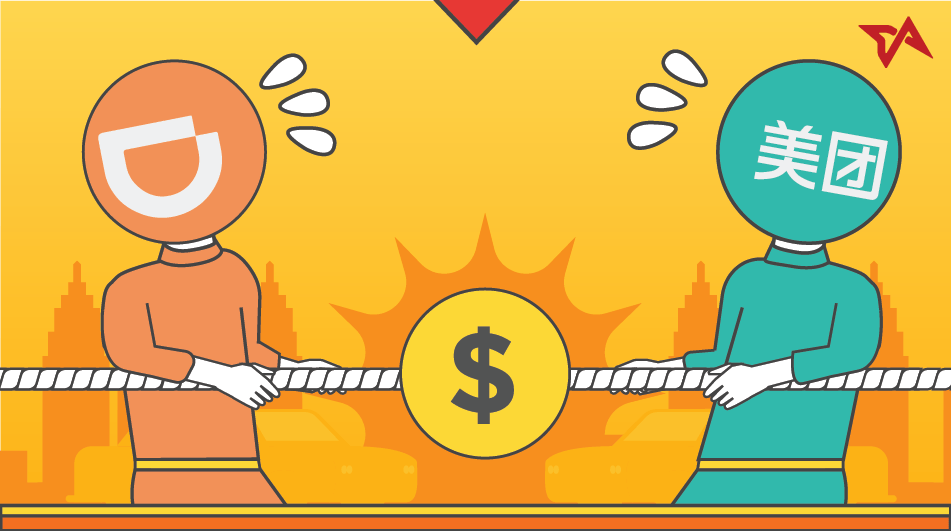
Photo credit: Tech in Asia
The following is an adapted and abridged translation of this article written by columnist Chongershuo and published by Sina Tech.
In October 2015, 82-year-old Chinese Academy of Engineering academician Guo Chongqing wrote an article titled “Internet Plus: Destructive Innovation.” It was an eight-part essay on the “Internet Plus” concept in support of the State Council’s policy guidance on the same topic, and it emphasized how pain was a necessary cost of innovation.
It was around that same time that Meituan went on a spree, expanding or acquiring offerings in more than a dozen categories including wine tours, film, takeout delivery, karaoke, beauty, maternity products, cleaning, and more.
The following year, the sharing economy, which had been growing for years, finally entered its “harvest” period. Didi Chuxing annexed Uber China, bought a controlling share in Ofo, and was itself expanding, even opening a research center in the US, researching self-driving vehicles and green technologies.
Then, Meituan crossed the border into Didi’s ride-hailing turf, and the two companies collided. And while there was competition between Baidu, Alibaba, and Tencent that year, as there always is, it was the Didi-Meituan battle that grabbed the spotlight.
That was no accident. Because while there were 124 Chinese unicorns as of last year, with an average valuation exceeding US$4 billion, a great many of them are direct offshoots or wholesale properties of Baidu, Alibaba, or Tencent (BAT). In fact, among the 11 companies worth more than US$10 billion, just one – drone maker DJI – doesn’t have direct ties to BAT. (Meituan and Didi are not exceptions here. Tencent has invested in Meituan and both Tencent and Alibaba have stakes in Didi).
Still, neither company wants to live its life out as a proxy for larger players. To become the next BAT, Didi and Meituan would need to achieve three things: deep user contact on and offline, broad economic influence, and deep penetration of Chinese social life. Neither is there yet.
So what’s the problem?
The public’s needs are constantly changing. Didi, for example, overthrew the taxi monopoly, making ride-hailing cheaper and more convenient for passengers and also benefiting drivers. But because the “shared” economy has to remain affordable, this isn’t a great business commercially, particularly because Didi has to maintain a standard of safety.
This leads to a sort of no-win scenario for Didi. If it lowers the bar to lower prices, people complain about safety. If it raises the bar, prices go up and people complain about that. And people want it to act differently from the taxi companies of old, but expect it to act like a normal taxi company whenever things go wrong.
Being in the same business, Meituan’s in a similar situation. And for both companies, this point comes after years of development and billions in raised capital burned. Both are still subsidizing their prices to try to bridge the gap between “too cheap to be safe” and “too expensive to be popular.”
So what if they both just stopped subsidizing their prices?
Meituan would theoretically be in good shape; sales accounted for more than 89 percent of its revenue last year (and most of its losses), so raising its prices should cover that hole nicely. And it would be even easier for Didi. Prices would be high enough to provide drivers better benefits and keep riders safer with video recording and encryption, women-only driver groups, etc.
According to my calculations, it wouldn’t even cost that much. The average takeout price would go from US$5.76 to US$7.20, and the rise in ride-hailing prices would be similar: noticeable, but bearable.
Making everybody nervous
Stay ahead in Asia’s tech landscape
This is premium content. Subscribe to read the full story.
Meituan would theoretically be in good shape. It would be even easier for Didi.
We know this is not ideal. ⌛ Sign up in 20 seconds. Cancel anytime.
Our subscriber community includes professionals from these companies:





Stay updated on the go with our mobile app.
Get latest insights with smoother, more personalized experience through TIA mobile app.






📅 Upcoming Events
22 October 2026
Payoneer x CSPN Summit 2026