- Premium Content It takes our newsroom weeks - if not months - to investigate and produce stories for our premium content. You can’t find them anywhere else.
 Jo-Ann Huang · · 6 min read
Halodoc is shaping up to be one of Indonesia’s top healthcare platforms
For most people, seeing a doctor is a rather straightforward affair. But for Indonesians, consulting a physician often means enduring long wait times and dealing with location-related exacerbating factors.
Those who reside in the provinces or countryside usually have little access to specialist healthcare, while those based in major cities like Jakarta have little choice but to add the toll of heavy traffic to the misery of being ill.
Telemedicine app Halodoc aims to address inconveniences such as these that make healthcare so out of reach for both urban and rural dwellers.
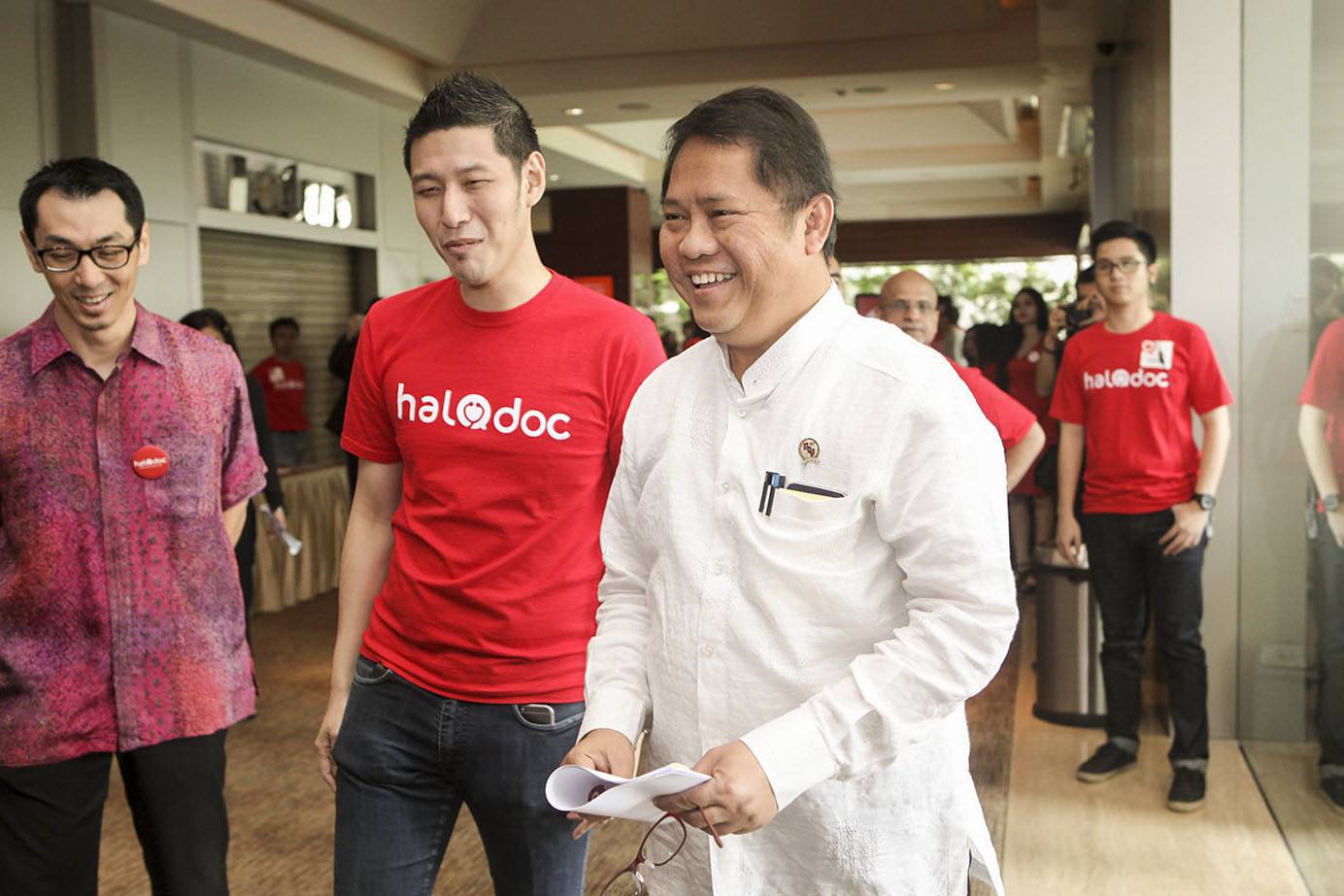
HaloDoc founder and CEO Jonathan Sudharta, with IT minister Rudiantara at Halodoc’s launch.
The app does this by enabling patients to speak to licensed general practitioners (GPs) or specialists via chat, video or voice calls and get prescriptions delivered to them within an hour for most cases.
Halodoc, however, only deals with minor ailments, such as cough and flu. Allergies and skin issues also make up the bulk of its doctor consultations. Anything more serious that requires an in-person consultation or a referral to the hospital will be carried out on the doctor’s orders.
Apart from consultations, patients can buy over-the-counter medications, order lab tests, and claim fees through their insurance plans through Halodoc. By streamlining processes involving appointments, payments, and prescriptions over the app, visitation times are greatly reduced.
Halodoc currently has 22,000 doctors on duty and 1,200 pharmacies on standby to send out prescriptions. Doctors who have a practice in their own clinics or in hospitals allot a specific time in their day for consultations on Halodoc.
Founder and CEO Jonathan Sudharta established Halodoc in 2016. The startup clinched a sizable US$65 million from a series B funding on March 4 led UOB Venture Management, making it one of the most well-funded healthcare startups in Indonesia.
Halodoc raised US$13 million in its series A funding in 2016. Singapore-based venture capital firms Clermont Group and Openspace Ventures as well ride-hailing giant Go-Jek and ecommerce platform Blibli.com joined the round.
Medtech’s potential
Halodoc isn’t the only medtech startup to transform how Indonesians see a doctor. There’s Alodokter, which secured US$9 million in its third round of funding by Golden Gate Ventures in 2017, bringing their total funding to US$12.1 million.
Then there’s TeleCTG, which enables pregnant Indonesian women to access affordable cardiotocography scans through a portable device that integrates with smartphones. The startup secured US$50,000 in funding in 2016.
But even as telemedicine apps are taking off in Indonesia, Sudharta maintains only Halodoc administers and delivers prescriptions.
A former director at Mensa Group, one of the largest pharmaceutical companies in Indonesia, Sudharta realized how inefficient the consultation process was through interactions with his doctor-friends.
Going into the kampung
Stay ahead in Asia’s tech landscape
This is premium content. Subscribe to read the full story.
For most people, seeing a doctor is a rather straightforward affair. But for Indonesians, consulting a physician often means enduring long wait times and dealing with location-related exacerbating factors. Those
We know this is not ideal. ⌛ Sign up in 20 seconds. Cancel anytime.
Our subscriber community includes professionals from these companies:





Stay updated on the go with our mobile app.
Get latest insights with smoother, more personalized experience through TIA mobile app.












📅 Upcoming Events
22 October 2026
Payoneer x CSPN Summit 2026