- Insights This article was written by a TIA community member. Insights pieces undergo the same rigorous editorial process that newsroom-produced articles have.
 Shreyas Parbat · · 5 min read
The practical lessons in Grab’s AI marketing playbook
Alson Ang co-authored this article.
Today’s consumers demand a more personal touch in brand interactions than ever, but providing tailored experiences at scale is a huge challenge for organizations, big and small. This is no less true for us at Grab.
Interestingly, it’s something generative AI can help with. This tech can assist in delivering marketing messages efficiently while maintaining brand consistency.

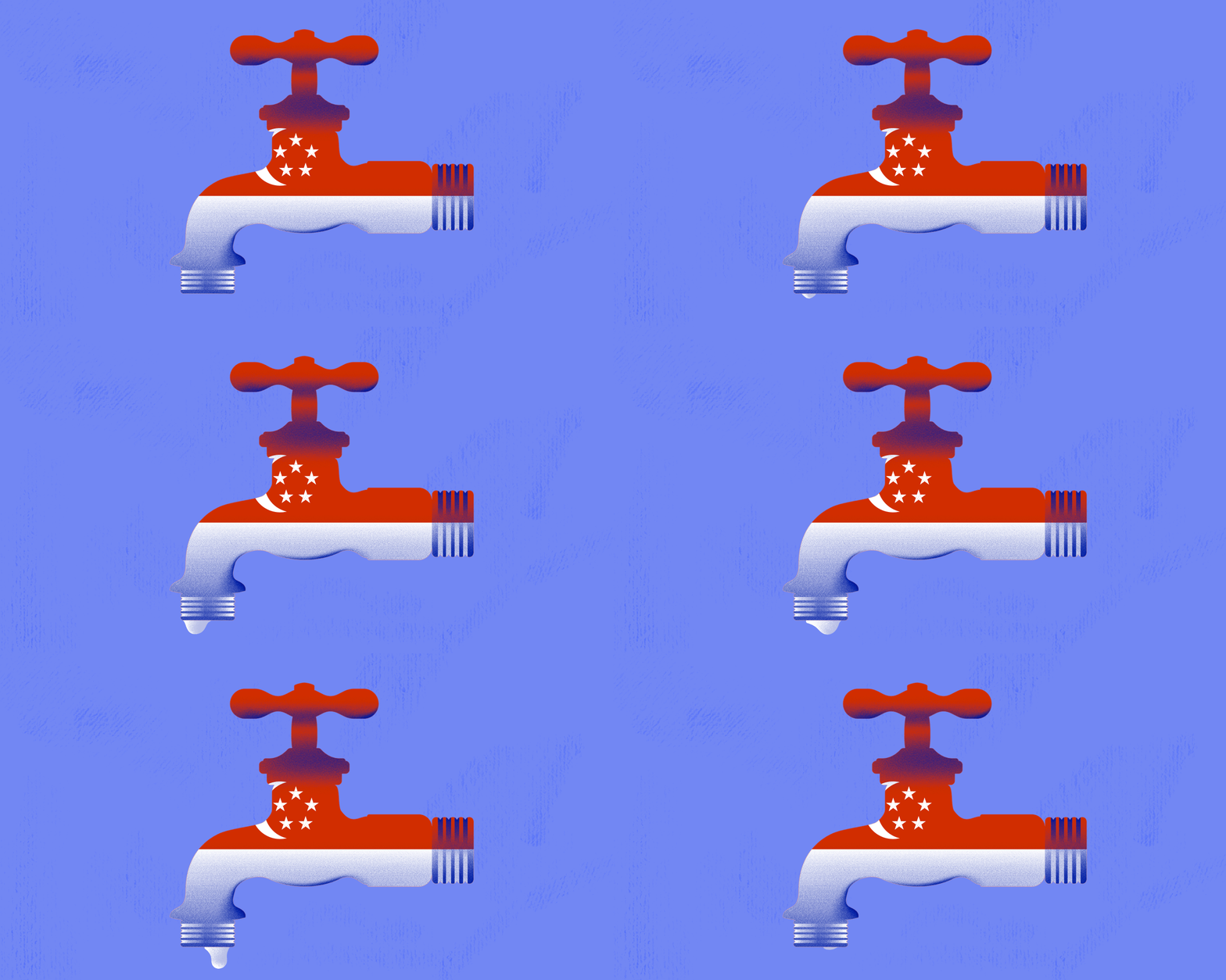
Image credit: Timmy Loen
At Grab, for instance, we created an in-house tool to take advantage of AI. But companies with all levels of resources can still achieve solid results with a similar approach.
Traditional content creation struggles
A McKinsey study found that personalization can drive a 10% to 15% revenue lift, with 71% of consumers expecting companies to deliver customized experiences.
Marketing teams traditionally rely on human copywriters to develop messages for campaigns and tailor content for different audiences and platforms.
In Grab’s case, a variety of messages are sent to users to keep them engaged: push notifications about time-sensitive promotions, reminders for frequently ordered meals, personalized emails with exclusive discounts, and even in-app updates suggesting relevant services based on past behavior.
See also: SEA’s AI players target end users as DeepSeek stifles LLMs
Each of these are nuanced, and manually crafting them at scale presents several obstacles:
- Personalizing messages is difficult: Writing unique content for each type of user is time-consuming and hard to pull off manually. More often than not, messages are left generic so they can be sent out faster.
- Maintaining a unified brand voice is challenging: Organizations that operate in different regions and employ multiple individual copywriters often struggle to ensure brand coherence across languages, cultural contexts, and human writing styles.
How AI helps
A combination of several different AI technologies offers a solution to these challenges when used effectively.
- Machine learning (ML): To classify users into personas based on behavioral data, engagement history, and transaction patterns
- Large language models (LLMs): To generate contextually relevant, human-sounding messages for any marketing campaign tailored to each persona’s needs
- Retrieval-augmented generation (RAG): To make content relevant by integrating brand guidelines, tone-of-voice references, and previous high-performing copy into the AI-generated text
How it’s done
Companies of all stripes have started integrating generative AI into how they communicate with customers.
Challenges and limitations
Starting small
Scale with oversight
Stay ahead in Asia’s tech landscape
This is premium content. Subscribe to read the full story.
Businesses of all sizes can tap into AI-driven automation to boost engagement and efficiency.
We know this is not ideal. ⌛ Sign up in 20 seconds. Cancel anytime.
Our subscriber community includes professionals from these companies:





Stay updated on the go with our mobile app.
Get latest insights with smoother, more personalized experience through TIA mobile app.











📅 Upcoming Events
22 October 2026
Payoneer x CSPN Summit 2026