- Premium Content It takes our newsroom weeks - if not months - to investigate and produce stories for our premium content. You can’t find them anywhere else.
 Samreen Ahmad · · 8 min read
Is Grab’s ride-hailing business future-proof?
Thu Huong Le co-reported this story.
Singapore-based Grab undoubtedly leads Southeast Asia’s ride-hailing sector, commanding around 70% market share.
However, competitors are not relenting. There has been a surge of activity in the sector including funding rounds, public listings, and announcements of expansion.
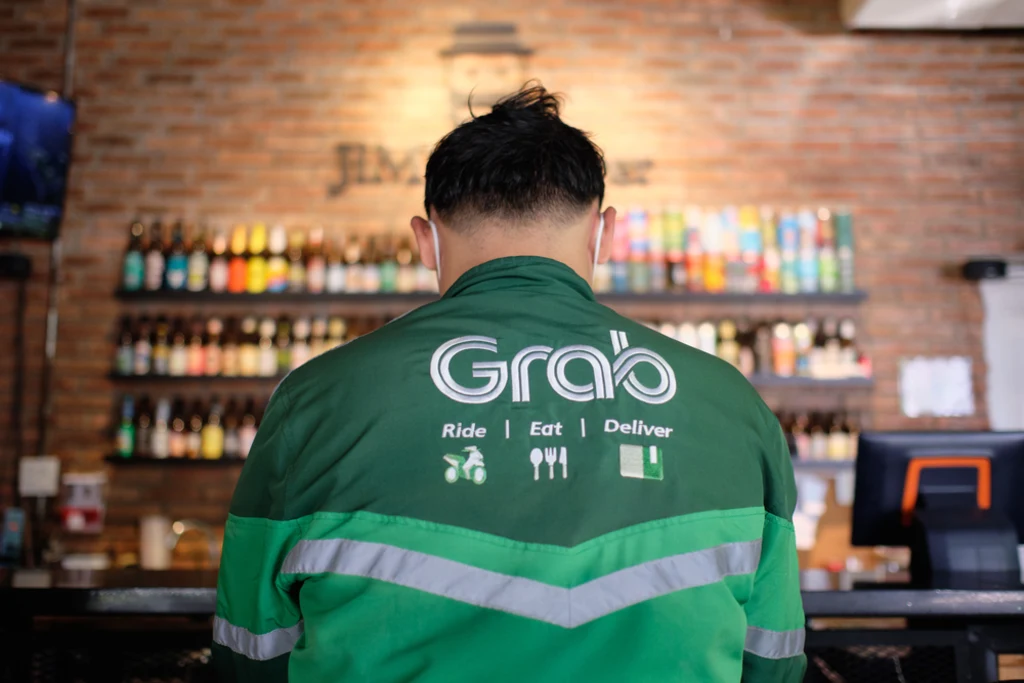
Photo credit: Shutterstock
In Vietnam, homegrown players Be Group and GSM are putting pressure on Grab as favored local alternatives. Be Group raised US$30 million earlier this year, while GSM – led by Vingroup chairman and billionaire Pham Nhat Vuong – is intensifying its focus on expanding its EV fleet.
Singapore-based Tada opened for business in the underpenetrated Thailand market, where it sees scope for faster growth.
Ryde became the first Singaporean ride-hailing company to debut on the New York Stock Exchange as it sought “greater global recognition … and higher liquidity.”
The ride-hailing sector in Southeast Asia is predicted to reach a market size of US$10.5 billion by 2028.
Will these players pose a threat to Grab’s dominance? Or is the Nasdaq-listed company’s pole position safe?
The Grab grip
Launching a ride-hailing business requires dealing with a classic chicken-and-egg situation: To provide the reliability and reach that consumers expect, you need a consistent supply of drivers on your platform. However, attracting these drivers is challenging without a substantial consumer base. As a result, acquiring both sides often requires deep pockets.
This is where Grab stands out, benefiting from a period of low interest rates from 2008 to early 2022. It has secured a total of nearly US$16.5 billion in funding over the years.
The company emerged with its ride-hailing model at a time when capital was more abundant and VC firms poured investments into companies they deemed promising.
That’s not the case in today’s environment, with the “era of easy money” over.
See also: Southeast Asian tech undergoes a funding and playbook reset
New commission models
The EV play
Steering toward consolidation
Stay ahead in Asia’s tech landscape
This is premium content. Subscribe to read the full story.
Could emerging competitors with their new commission models pose a threat to Grab’s dominant position, or is the listed company’s top spot secure?
We know this is not ideal. ⌛ Sign up in 20 seconds. Cancel anytime.
Our subscriber community includes professionals from these companies:





Stay updated on the go with our mobile app.
Get latest insights with smoother, more personalized experience through TIA mobile app.












📅 Upcoming Events
22 October 2026
Payoneer x CSPN Summit 2026