Sign up for the Daily Newsletter, sent exclusively to our premium subscribers. We break down the big and messy topics of Asia’s tech and startup community. Get the newsletter in your inbox everyday with a premium subscription.
Hello reader,
I have a terrible sense of direction. I’m pretty good at getting lost, especially when I’m in an unfamiliar place, and I would be absolutely useless without Google Maps, which has helped me navigate many different cities around the world, from London to Taipei and even my native Singapore.
Still, I’ll admit that Google Maps isn’t great in many parts of Southeast Asia, especially places that aren’t major metropolitan cities. It can’t quite capture the quirks of the region, with our narrow alleyways and side streets on top of our inconsistent address systems.
Fortunately, it seems that Grab seems to have figured out how to deal with these issues in its efforts to map Southeast Asia. In today’s premium story (well, technically it’s a premium video), the super app’s chief product officer shares more about the firm’s mapping platform.
Today we look at:
- How Grab mapped Southeast Asia
- Shopback’s 2022 numbers
- Other newsy highlights such as Deloitte’s resignation as Byju’s auditor and ZaloPay’s collaboration with Shopify in Vietnam
Premium summary
I’m the Map!
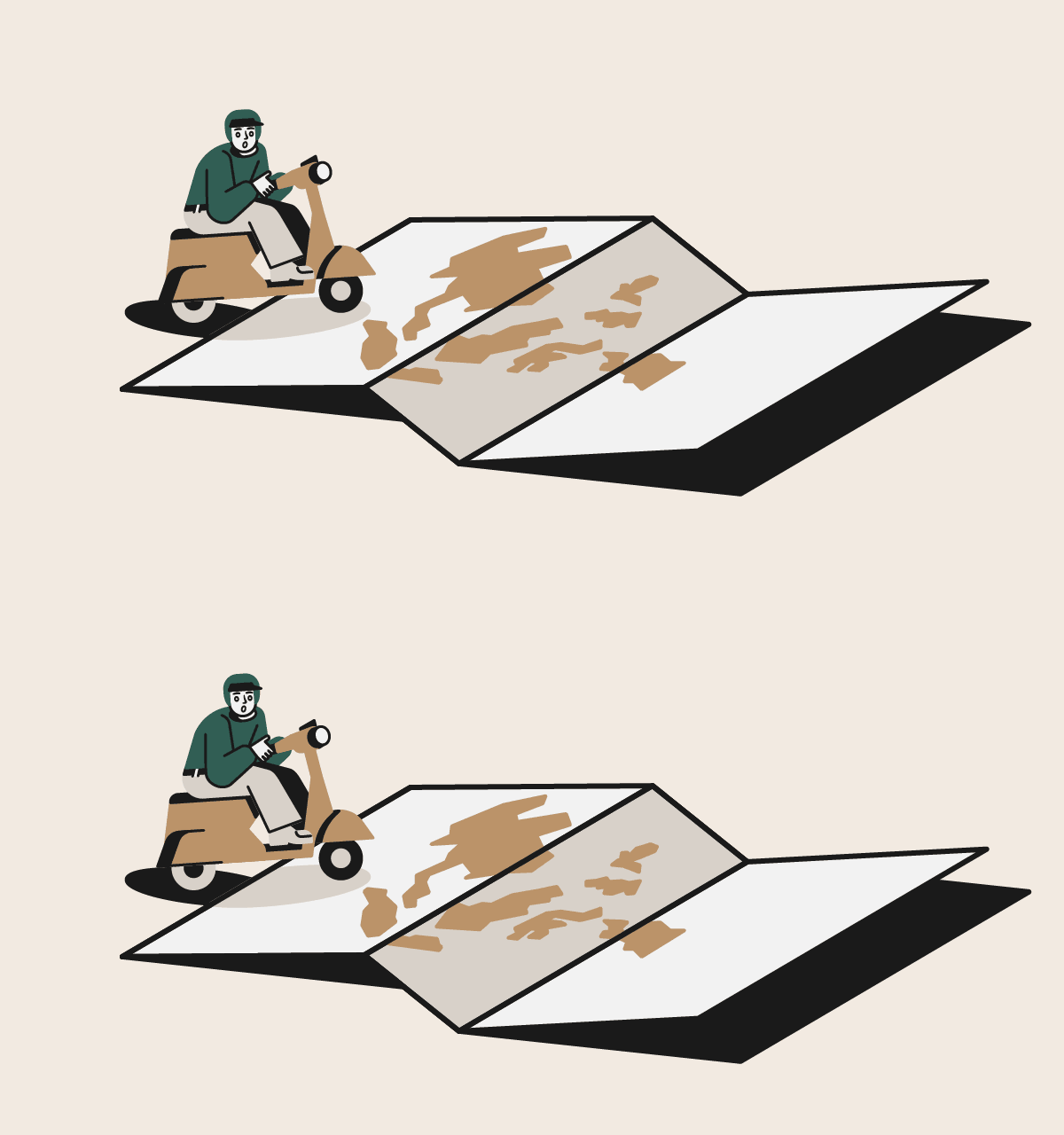
Image credit: Timmy Loen
At our recent Product Development Conference, Philipp Kandal – chief product officer at Grab – shared his insights and experiences.
Aside from discussing his journey as a product leader and what it means to lead a huge team at Grab, he also dove into the origins of GrabMaps, the super app’s in-house mapping platform.
- Navigating the region: The big challenge Grab faced with mapping in Southeast Asia was that many of its markets had narrow alleys and side streets. Because of this, traditional mapping tools – like cameras mounted on vans – wouldn’t be able to do the job accurately or effectively.
- Leveraging what you’ve got: The firm’s solution was to get its drivers to help with mapping, putting cameras on their helmets and on the back of their bikes. It even offered “gig-mapping” – paying drivers to drive around and document the city.
- From novice to expert: Since Grab’s drivers weren’t trained cartographers, the data they initially compiled wasn’t great. But the team soon realized the value of numbers – with multiple drivers mapping the same area, the team was able to cross-reference the data they gathered.
Read more: How Grab cracked the ‘very crazy’ project of mapping SEA
Startup spotlight
It pays to shop
Join us and share the hardest challenges you’ve faced as a founder
Quick bytes





Stay updated on the go with our mobile app.
Get latest insights with smoother, more personalized experience through TIA mobile app.