Welcome to the Opening Bell 🔔! Delivered every Monday via email and through the Tech in Asia website, this free newsletter breaks down the biggest stories and latest trends on Asia’s publicly listed tech companies. Get it in your email inbox by registering here.
Hello reader,
“It is like watching a plane crash.”
“Slow moving train wreck.”
Though metaphors that describe the state of markets today vary, the sentiments remain the same.
Geosphere Capital Management’s Arvind Sanger, who made the train wreck comparison, said in an interview that the current Nasdaq fall is more worrying than the dot-com crash. The companies falling today may have been market leaders for a decade or more, and the effect of their fall is likely to be profound, said Sanger.
The plane crash comment, meanwhile, came from a tweet by the stock market’s very own Cassandra, Michael Burry, the investor and hedge fund manager who’s best known for being one of the first to call out the housing market crash in 2007 and 2008. He is the same Burry who is immortalized in The Big Short, both the book and movie.
Burry, who goes by the name Cassandra on Twitter, after the Greek mythology priestess who was cursed to make true prophecies no one would believe, deleted the tweet soon after it was posted on May 24. “It hurts, it is not fun, and I’m not smiling,” he added.
The investor is no stranger to making unnerving commentary on social media and has even previously described the market to be “dancing on a knife’s edge.”
Perhaps we should dedicate an edition of this newsletter to memorable metaphors used to describe the stock market. Regardless, there’s caution in the wind. The takeaway: make your bets on more than one horse.
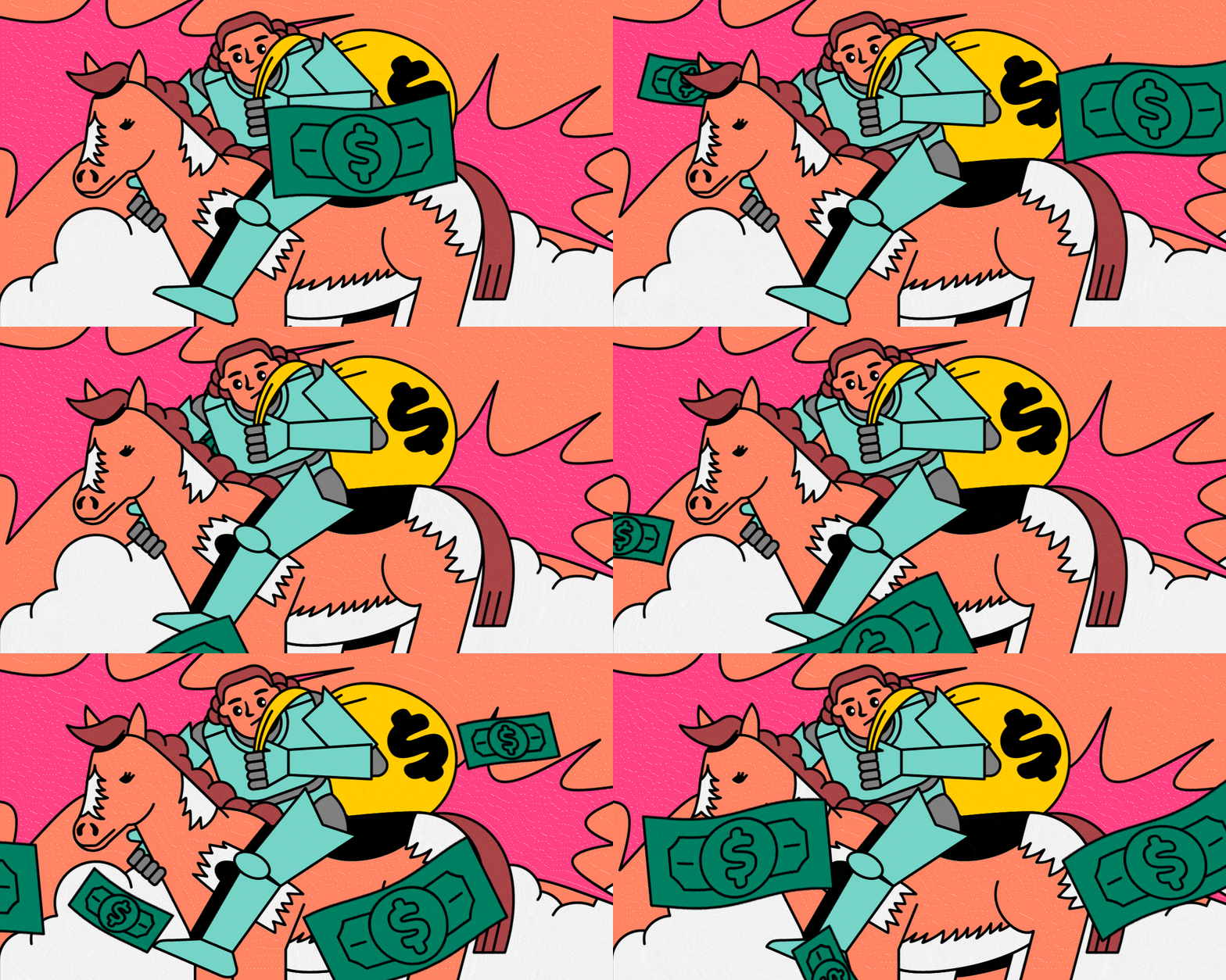
Image credit: Timmy Loen
Take Tencent (0700, HKG) for instance. In a story that dives deep into the Chinese tech giant’s gaming business in light of its lowest revenue growth since the firm went public in 2004, analysts say Tencent is likely to continue taking its deep pockets to Southeast Asia.
Since 2018, for example, Tencent has made massive investments across the region, including in companies like Sea Group and Gojek.
Similarly, after a decade of shining in the ride-hailing and food delivery segments in the region, Grab (GRAB, NDAQ) seems to be upping its focus on fintech, as Tech in Asia notes in a visual story on Grab’s organizational structure.
4 Stocks to watch
3 Market whispers
2 Eye-popping facts 👀
The one you didn’t see coming





Stay updated on the go with our mobile app.
Get latest insights with smoother, more personalized experience through TIA mobile app.











📅 Upcoming Events
22 October 2026
Payoneer x CSPN Summit 2026