Owen Guo · · 4 min read
Taobao leads the charge in a new ecommerce trend: livestreamed shopping
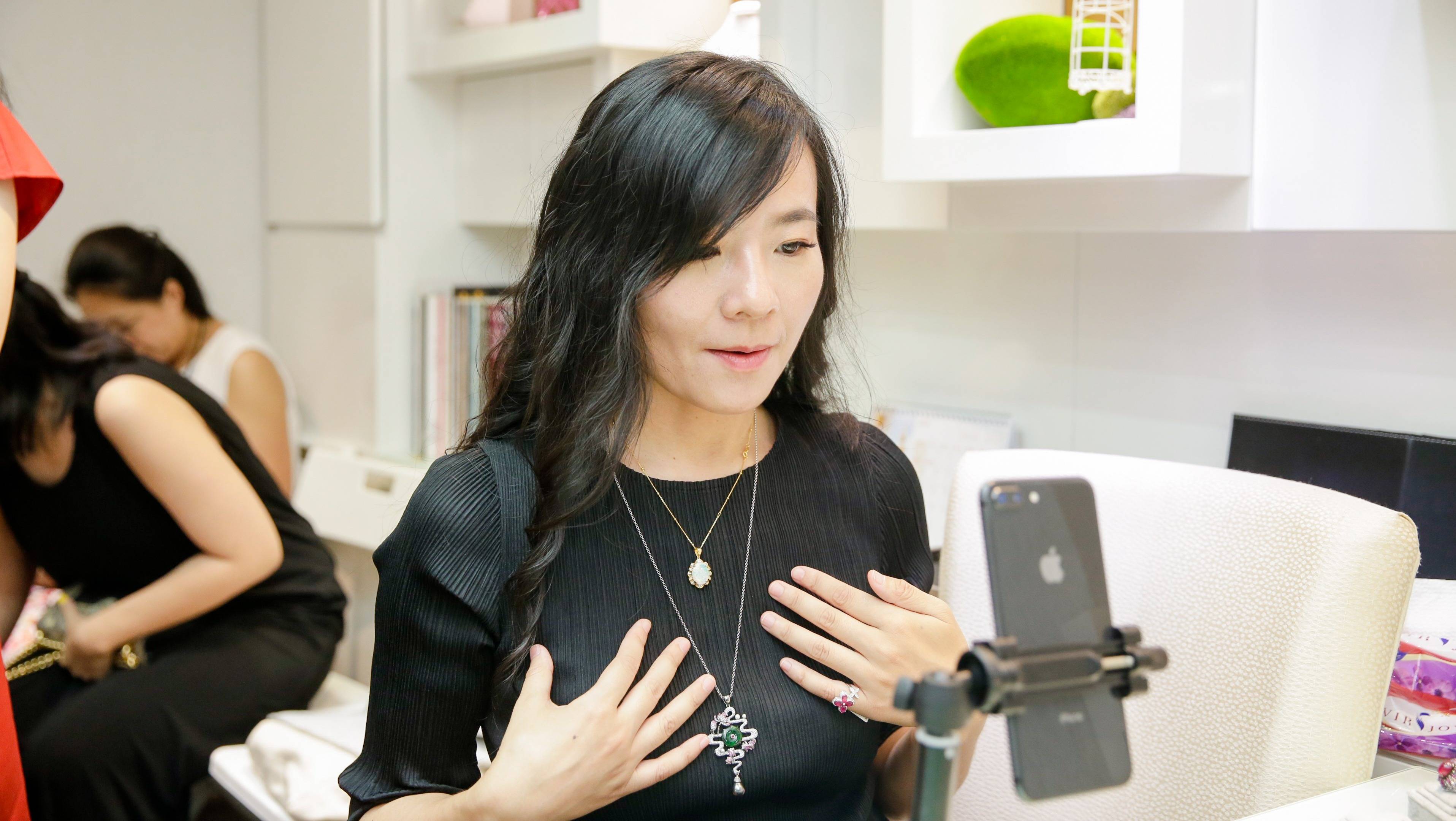
Xiaotian is a popular Taobao livestreamer. / Photo credit: Huxiu
This article is an adapted translation of the original story on Huxiu.
She’s not your ordinary jewelry dealer. Going by the online moniker “Xiaotian,” she commands a big fan base, jokes with her customers, and models for her own business.
“Hi bao bao,” she greets her potential buyers during a livestream session one afternoon in Hong Kong, using a common, endearing nickname for online shoppers. “This is a new design that came out this week. You want me to try it on? Alright!”
Comments piled on. Some complimented the good looks of the designer who stood beside her. Others wanted to see the necklace up close. Still, others asked about the price.
That the Chinese are shopping on the internet in droves is not news. But a new trend is emerging among sellers on ecommerce platforms: they’re ditching old marketing playbooks and are turning to more personal interactions instead.
Taobao is at the forefront of that effort. Already, the Chinese equivalent of Amazon has legions of daigou agents: Chinese expats who buy foreign brands for their compatriots back home.
These days, instead of focusing on big-name brands, they are courting customers who want something different. Designer clothes. Local cuisines not yet known to the public. Handmade jewelry. Without strong brand recognition, these items are marketed with a bit of a personal touch by online sellers like Xiaotian. Many like her are using a wide range of marketing tools, including short videos and blog posts, to build their “fan bases.”
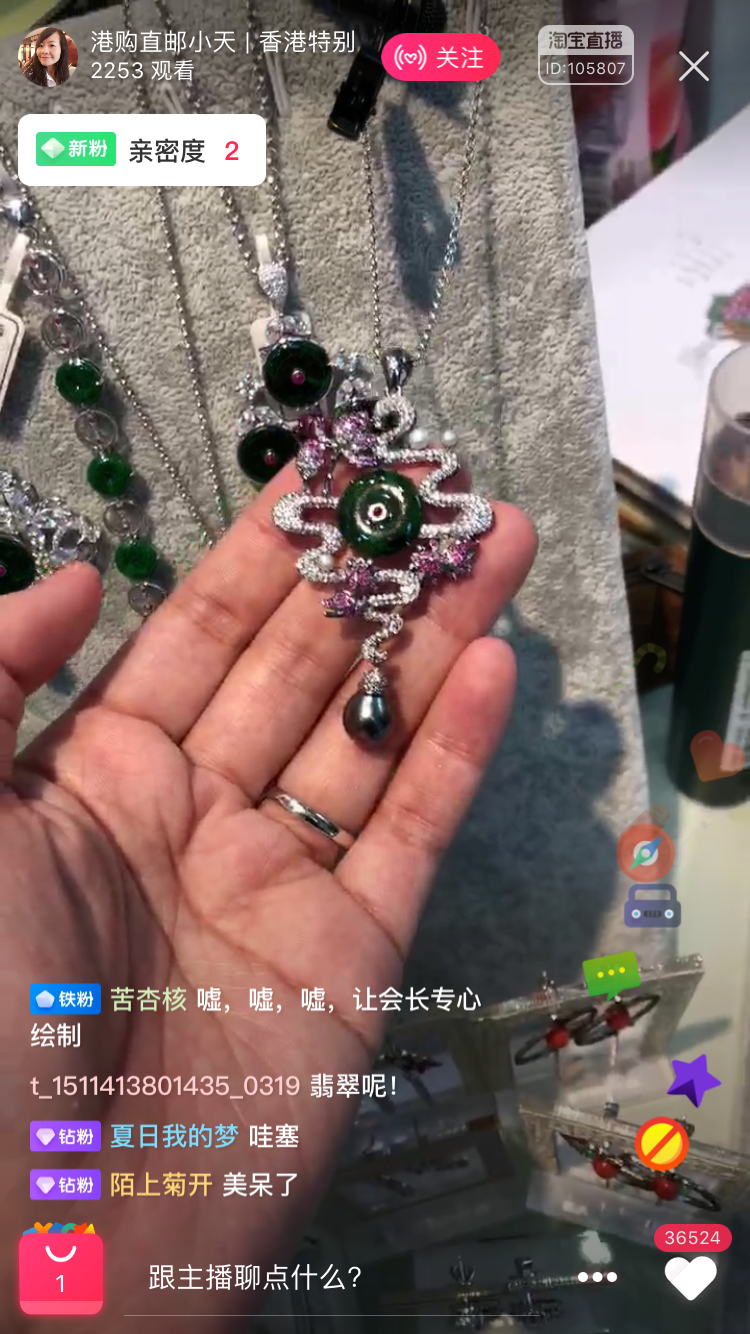
Photo credit: Huxiu
The most effective among these tools is, of course, livestreaming. It’s an intimate environment where buyers can see the products for themselves and pose questions in real time, leading to greater trust and loyalty among shoppers.
Indeed, having the products broadcast live has proven effective. Customers relish that they can binge shop without even venturing out to the store. And as they gain more fans, buyers usually stock up more goods.
“My annual sales figure can reach seven digits, so I wouldn’t worry about my livelihood,” Xiaotian told Huxiu, refusing to divulge her actual income.
A former surgeon from mainland China, she moved to Hong Kong with her husband and became a housewife. Since the end of 2016, she has been sourcing from Fang Weiping, a jewelry designer in Hong Kong who also sometimes appears in her livestreaming videos. When business is good, her livestream session – which takes place in Fang’s studio – could stretch eight hours, lasting from early afternoon to almost midnight.
Chasing consumers hungry for foreign goods
Logistics remains a big hurdle





Stay updated on the go with our mobile app.
Get latest insights with smoother, more personalized experience through TIA mobile app.