 Bree Chan · · 6 min read
These startups are tackling green living from two different angles

While single-use plastic offers convenience – from coffee cups and sandwich wrappings to takeaway lunch boxes and grocery packaging – its lasting effects on the environment cannot be ignored.
Often used briefly, these plastics take years to decompose, breaking down into microplastics that infiltrate oceans, the food chain, and eventually human bodies.
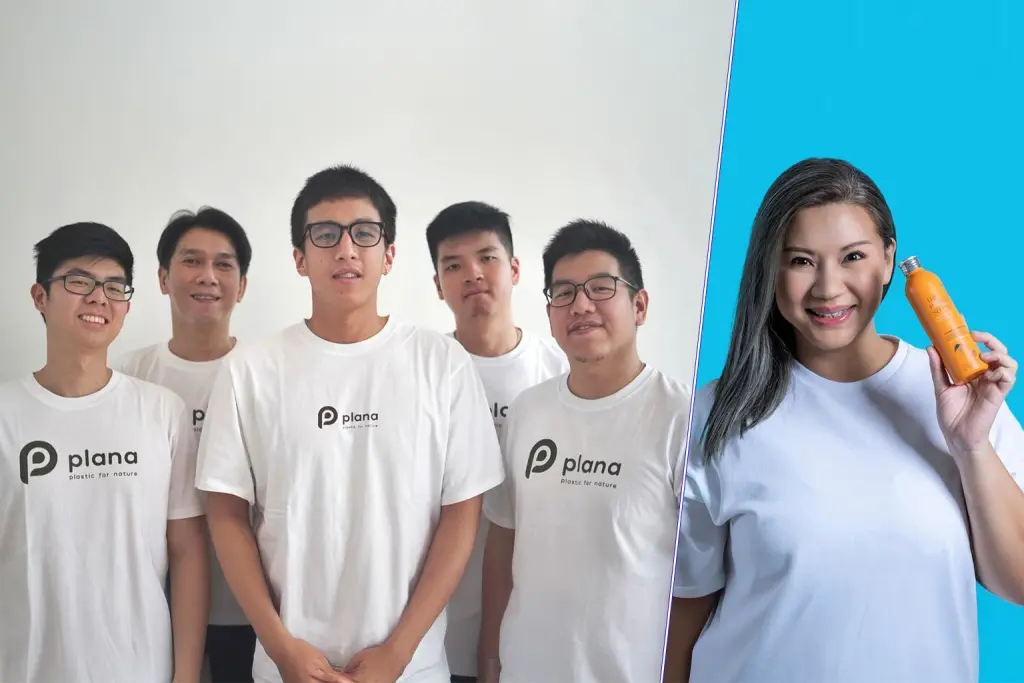
Joshua Christopher Chandra (first photo, first from right) with his Plana co-founders; and Jlynn Chen (second photo), founder of The Powder Shampoo / Photo credit: Plana and The Powder Shampoo
What if there is a way to reduce plastic waste and transform it into something useful?
That’s where Plana comes in. The Indonesia-based startup was founded by industry insiders who saw an opportunity in plastic’s greatest liability: its near indestructible durability.
By combining rice husks, single-use plastics, and a proprietary binding material, Plana – short for “plastic for nature” – creates PlanaWood, a sustainable alternative to natural wood. It is a long-lasting and market-ready construction material suitable for a variety of consumers. The company’s innovative approach to sustainability has earned it recognition as a 2024 Emerging Enterprise Award winner.
Moving from problem to solution
Joshua Christopher Chandra, Plana’s co-founder and chief of sustainability, saw the potential in plastic. His family is in the durable plastics industry, manufacturing parts for air conditioners and automobiles. In his early career in the family business, he saw first-hand how plastic is made in injector factories and how it was a useful, durable material.
At the same time, Chandra struggled with the images of single-use plastics polluting the environment. “Plastic is not all bad – the problem is single-use plastic,” he says.
By recycling single-use plastic as a raw material, PlanaWood creates an avenue to reduce plastic pollution and create new life from consumer and agricultural waste.
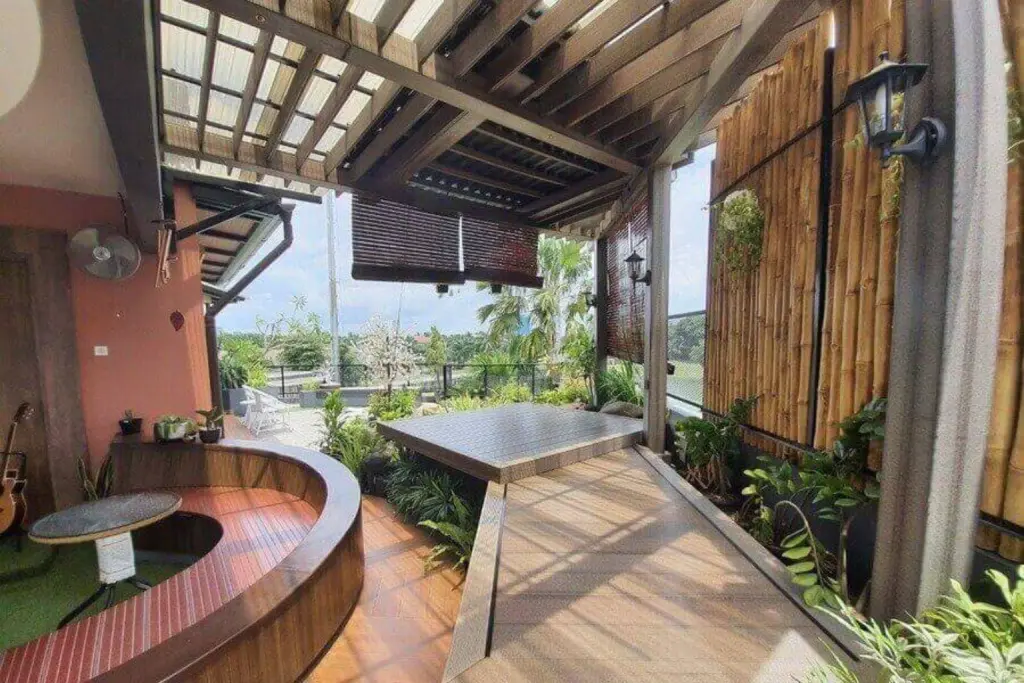
Artist impressions of an elegant outdoor decking showcasing the versatility of PlanaWood, which is made from recycled plastic waste and rice husks / Photo credit: Plana
Jlynn Chen is another entrepreneur who reflected on her industry’s use of plastic. Having spent 20 years as a beauty product distributor, she saw how plastic is widely used in packaging. Plastic is commonly used to package products in cream, serum, and gel forms.
“Beauty products are 80% to 90% water. Shampoos and shower gels are 80% to 90% water. It’s such a waste of a precious resource to produce beauty products this way and transport them globally. The more successful I was (in the distribution business), the more I sold, the more I contributed to the plastic pandemic problem,” Chen observes.
At the root of the problem was the lack of sustainable products in the market. Chen realized she couldn’t find many efficient, plastic-free personal care products. “Even if consumers want to choose sustainable products, there aren’t any available for them in the market,” she says.
In 2021, she was moved to act after watching a documentary about plastic waste recycling. From the documentary, she learned that out of 140 tonnes of plastic waste collected, only two tonnes were fit for recycling. “In Singapore, only one tonne in 400 tonnes of plastic waste is recycled. We are a small and developed country, and yet this is our result,” she adds.
Spurred by years of frustration with the status quo and inspired to leave a better world for her children, Chen founded The Powder Shampoo. A finalist in the 2024 Emerging Enterprise Award, the startup tackles plastic and water consumption through its line of powdered shampoos and body washes.
Because there is no water in the formulation, its products are lightweight and do not require plastic packaging. The product, encased in infinitely recyclable aluminium, is efficient to ship and convenient to travel with.
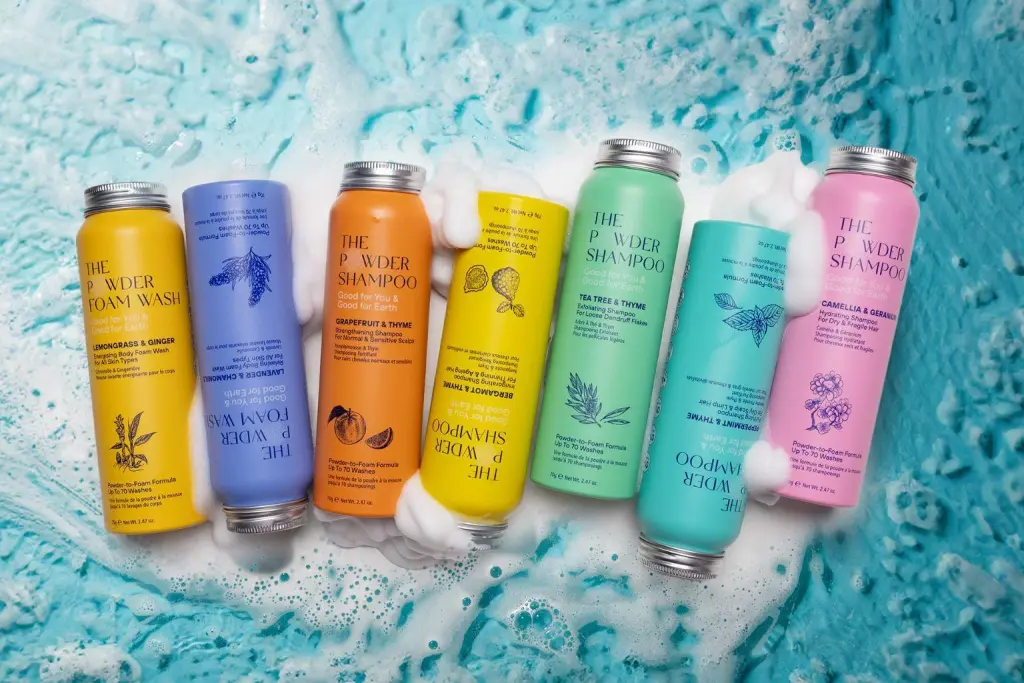
The Powder Shampoo’s waterless formulas come in recyclable aluminium packaging, offering an eco-friendly alternative to traditional shampoos. / Photo credit: The Powder Shampoo
Compared to traditional liquid shampoos, The Powder Shampoo delivers 10 times more washes per unit. Thanks to Chen’s professional experience with hair products, the research and development phase took less than a year.
Building a sustainable alternative to wood
On the other hand, the Plana team took five years to develop PlanaWood. The startup’s goal was to create a compelling product that can replace natural wood as a construction material.
As a result of extensive development, PlanaWood is durable, mouldable, waterproof, and fireproof. It is also resilient to termites, rot, and extreme weather.
Based in Tangerang, Java, Plana was able to source its raw materials from the local economy: rice husks from farmers and discarded single-use plastic from waste collectors. With a new factory that it launched in June 2024, the startup can produce 4,200 decking units of PlanaWood per month.
When designing PlanaWood, the founders emphasized the aesthetics of the product. “If it looks like plastic or doesn’t look good, people won’t like it. This is something people will have in their homes,” notes Chandra.
Plana also partnered with other companies and artists to showcase PlanaWood as an attractive, innovative, and cost-competitive product. The startup put up collaborative exhibitions featuring PlanaWood being used in outdoor decking, indoor paneling, and art installations.
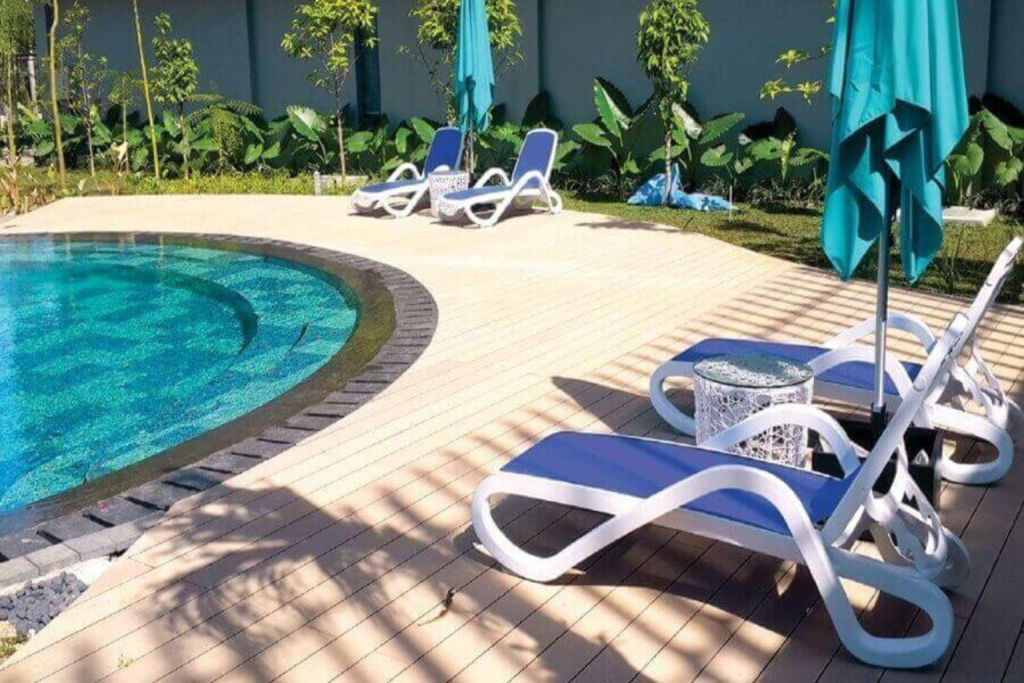
Artist impression of a poolside decking area crafted using PlanaWood, a durable and eco-friendly alternative to natural wood / Photo credit: Plana
Its efforts have paid off. Plana has won several awards for PlanaWood, including the Korean-ASEAN Business Model Competition. Regional construction companies have also taken notice of PlanaWood’s potential in their projects, with a special interest in how it can contribute to their clients’ environmental targets.
In the World Expo 2025 in Osaka, Plana will have another chance to shine. The Indonesian government has invited the startup to build the Indonesian Pavilion using PlanaWood as a locally sourced and distinctive Indonesian product.
Turning expertise into eco-innovation
Plana’s achievements underscore the power of innovative thinking in addressing environmental challenges. This same spirit of eco-innovation and determination is echoed in Chen’s journey to create The Powder Shampoo.
“I do not have to go through levels of approval, and it helps that I have over 20 years of experience in this industry. Hence, I am able to adjust the formula to the quality I desire very swiftly,” says Chen. This also helped her formulate the product within a few months.

Founder Jlynn Chen of The Powder Shampoo, holding one of her innovative products designed to reduce plastic and water waste in the beauty industry / Photo credit: The Powder Shampoo
Chen also formed her own focus groups to gather consumer insights and conduct product trials. By asking friends from all over the world for help, she tested her product under several scenarios, considering different levels of water hardness and varying scalp and hair conditions.
The Powder Shampoo has since seen promising growth, with sales in 40 international markets since its incorporation in April 2022.
From an idea in 2021, Chen marvels at the progress she has made. It’s a reminder that every great journey starts with a single step of courage. It affirms her belief that profits and the planet can co-exist.
Recognising bold ambition
Now in its 17th year, the Emerging Enterprise Awards continue to highlight the innovation, resilience and excellence of SMEs under 10 years old. The awards are a joint initiative by The Business Times and OCBC Bank.
For the second consecutive year, applications were extended to emerging businesses across the region, broadening the awards’ reach beyond Singapore.
In the sustainability category, the Emerging Enterprise Sustainability Awards honor enterprises that embrace opportunities in the green economy, whether by embedding sustainable practices in their operations or leveraging technology and innovation to drive the transition to low-carbon economies.
Additionally, the Most Promising Sustainability Startup Awards celebrate businesses with unique, commercially viable ideas and significant long-term potential. Find out more here.
This story was republished with permission from The Business Times. It was moderately edited to reflect Tech in Asia’s editorial guidelines.
Stay updated on the go with our mobile app.
Get latest insights with smoother, more personalized experience through TIA mobile app.
Recommended reads
 Indonesian AI startup goes global
 Forrest Li on scaling Sea, building smarter bots, and founder grit
 An AI assistant that joins sales calls and scores team skills
 Beyond the check: Why VCs need more than capital
 SGX’s CEO says it doesn’t need a unicorn to win
 SMEs want AI too, but not the kind Big Tech is selling
 Oatside’s alt-milk rise hits a profitable gear
 Alibaba’s financial health in 12 charts
 Asia’s telcos bundle AI into mobile plans. Will it pay off?
 M-Daq chases bigger clients as revenue falls, losses grow





Editing by Lorenzo Kyle Subido
(And yes, we’re serious about ethics and transparency. More information here.)


