- Insights This article was written by a TIA community member. Insights pieces undergo the same rigorous editorial process that newsroom-produced articles have.
 Hans Tung · · 6 min read
How a former Microsoft exec made the plunge to build a computer vision startup
This article is from an episode on GGV Capital’s 996, a podcast about tech and entrepreneurship in China hosted by Hans Tung and Zara Zhang. This is heavily revised from the original show transcript. For the full interview, go here. You can listen to the 996 Podcast by searching “996” in any podcast app.
Disclosure: GGV Capital was an early investor in Clobotics in 2017, and managing partner Jenny Lee is on the board.
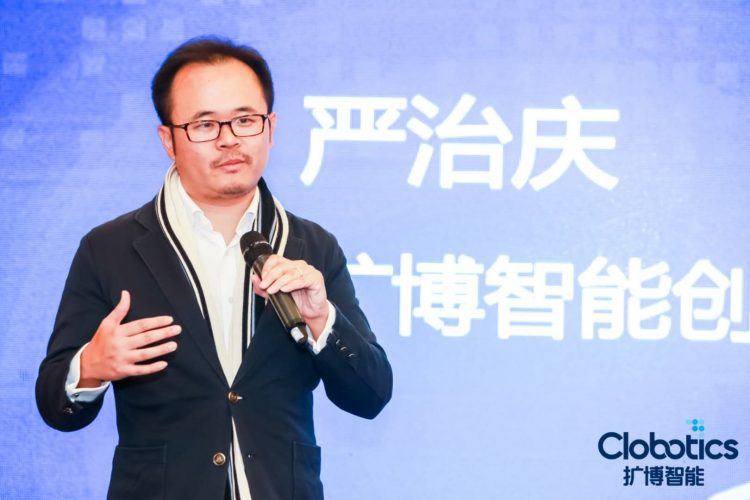
George Yan, founder and CEO of Clobotics / Photo credit: Clobotics
George Yan is the founder and CEO of Clobotics, a computer vision startup that seeks to make traditional industries more intelligent. Founded in 2016, it is headquartered in Shanghai and Seattle, with offices in Beijing, Dalian, and Singapore. Clobotics owns over 40 patents and has raised US$21 million in VC funding.
Previously, Yan spent 16 years at Microsoft in the US and China. He was vice president and general manager of marketing and operations in China and was responsible for the success of Microsoft Cloud, Azure, and Office 365 in the country. He also worked at financial giant Goldman Sachs and global consultancy McKinsey & Company in the US.
In this interview, Yan discusses when to leave big tech companies to become entrepreneurs and what he learned from helping Microsoft land in China. He also shares some advice for US companies entering China.
How does Clobotics help traditional industries?
On the retail side, we’re focusing on digitized products. We think that offline retail today is unfairly challenged because it’s really hard to connect people with a product in the stores. That’s the problem we want to solve. Once you build customer interaction with a product, you’ll have a very different model for how offline retail generates revenues going forward.
For example, if you open a fridge in a store, you will see our internet-of-things device stuck on the fridge’s door. It’s basically two cameras looking in that record what products have been taken out of the shelf. Then, we do local processing on the edge, where deep-learning algorithms recognize what products have been taken. This gives businesses transparency for how these point-of-sale devices work in real time.
When we got into this business, we saw that the fundamental technology blocks are the same for wind energy – our first industry – and retail. It will be hardware as well as some type of software, computer vision, and automation. We believe that these technologies should be applicable in different industries.
We went into wind energy first because we had background in drones, hardware, and computer vision. Then, we saw that retail is a trillion-dollar industry with still very little technology. We believe that if we can provide the same technologies to offline retailers, they can use it as tools to have a fair fight against companies like Amazon.
What did you learn jumping from a big company to building your own?
I think the most important takeaway from my two and a half years in the startup world is that I started to recognize that I know nothing.
If you’re a large fish in a small pond, you think that you know everything. You can execute and do anything with your eyes closed – and that’s no longer interesting. So get yourself out of that comfort zone into a new space because there’s a bigger world out there.





Stay updated on the go with our mobile app.
Get latest insights with smoother, more personalized experience through TIA mobile app.








📅 Upcoming Events
22 October 2026
Payoneer x CSPN Summit 2026