- Premium Content It takes our newsroom weeks - if not months - to investigate and produce stories for our premium content. You can’t find them anywhere else.
 Pranav Balakrishnan · · 9 min read
The truth about AI language models: No one wants to pay for them
Gai yang, Thailand’s beloved grilled chicken, is slow-cooked over charcoal at street stalls across the country. So when Thai researchers asked ChatGPT how to prepare the dish soon after the chatbot’s launch, its answer stung: “Put it in the oven.”
That is where the inspiration for Typhoon’s string of free, open-source Thai models came from, says Warit Sirichotedumrong, a senior research scientist on the Typhoon Team at DataX, the AI lab owned by Siam Commercial Bank parent firm SCBX.
“The frontier labs, the big labs, and the ones outside Thailand didn’t know or didn’t notice,” he adds.

Image credit: Ulla
Cultural gaps like these in large language models (LLMs) have underpinned many companies’ business plans since 2023. Projects across Asia – from Singapore’s SEA-LION and India’s Sarvam to Indonesia’s Sahabat-AI – bet that local languages would set them apart from Big Tech. On paper, these should have made 2026 the boom time for local-language AI.
Yet at the United Nations General Assembly in New York last month, nearly four years after ChatGPT was rolled out, the Gates Foundation shared that AI language models still underserve an estimated 3.4 billion people.
“Only a small percentage of the world’s roughly 7,000 languages are considered well-resourced enough to support strong AI capabilities,” the world’s largest private charitable foundation said.
The gap persists because there is no economic incentive to close it, and about 60 organizations have pledged to address that.
In fact, many have been working on it for years, ranging from big names like Google, Microsoft, Anthropic, and OpenAI’s foundation to local-language players such as Sarvam, BharatGen, and AI Singapore.
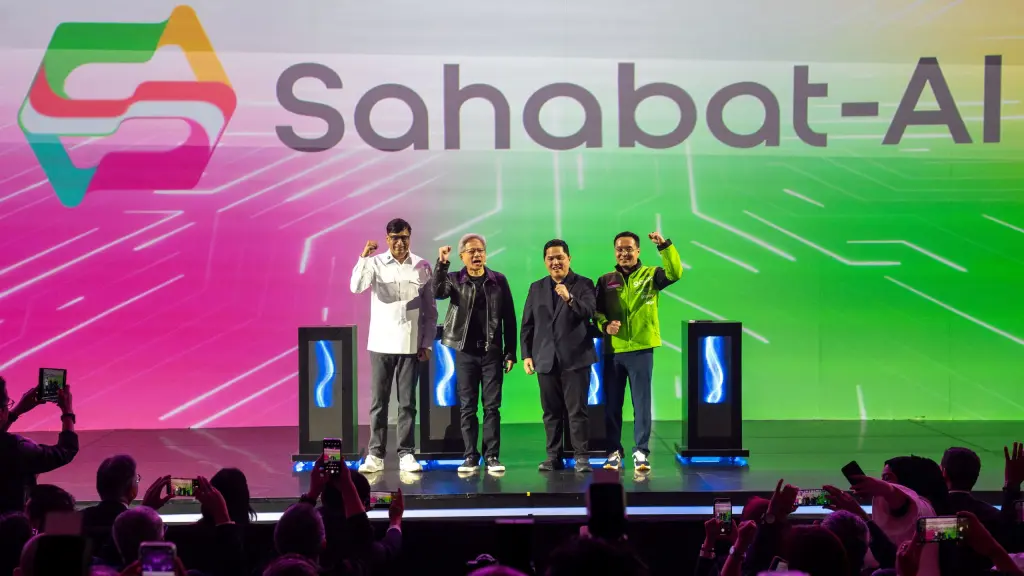
Nvidia CEO Jensen Huang (second from left) at Sahabat-AI’s launch event in Jakarta / Photo credit: GoTo
For AI Singapore, which builds the SEA-LION models for multiple local languages across Southeast Asia, the new coalition validates what it has been arguing all along.
“The market will not solve this problem,” says Leslie Teo, the lab’s senior director of AI products. “The profit motive will not solve this problem.”
When AI Singapore started three years ago, he says, that view was “more contested.”
Expensive to build and run
But is it all worth it?
Big Tech advantage
Pivot or die?
Stay ahead in Asia’s tech landscape
This is premium content. Subscribe to read the full story.
Local languages were meant to be Asian AI labs’ edge over Big Tech, but numbers show otherwise, leaving many to rely on philanthropy and CSR efforts.
We know this is not ideal. ⌛ Sign up in 20 seconds. Cancel anytime.
Our subscriber community includes professionals from these companies:





Stay updated on the go with our mobile app.
Get latest insights with smoother, more personalized experience through TIA mobile app.











📅 Upcoming Events
22 October 2026
Payoneer x CSPN Summit 2026