Samantha Cheh · · 7 min read
These female founders are challenging the narrative on gender and tech

It’s been 10 years since singer Beyonce debuted her empowerment anthem, Run the World (Girls). Today, female leaders and creators are more visible than ever before – even in the business world.
Female-led firms not only report higher stock prices and employee retention rates, they’re also taking on age-old issues of workplace gender discrimination through programs that tackle gender inequality for all employees.
Yet, female entrepreneurs still find themselves at a disadvantage.
There remains a persistent funding gap between female-led and male-led startups. In Southeast Asia, startups with female founders or co-founders bagged only 16% of the available venture capital in 2020.
That said, there are corners of the VC world that are pushing the needle in the battle against gender inequality by offering not just cash, but also the infrastructure and resources a female-led company needs to beat the odds.
1. Avana: Building tech solutions from the bottom up
Yienyee Soh, co-founder and group chief operating officer of social commerce platform Avana says there are persistent myths that female entrepreneurs contend with. One among them is the belief that women founders typically go into “feminine” industries like beauty and fashion, and lack their male counterparts’ technical skills.
However, it was precisely Soh’s close ties to the beauty and fashion world that planted the seed of the idea that would blossom into Avana.
During her college years in the early 2000s, Soh did most of her online shopping on forums and “blogshops,” which are blog-based ecommerce stores where enterprising sellers post about fashion trends that are then sold to their audiences. Soh was hooked on the low prices and lengthy catalogs, and eventually got involved by aggregating merchandise from Malaysian blogshops, and hosting offline shopping events.
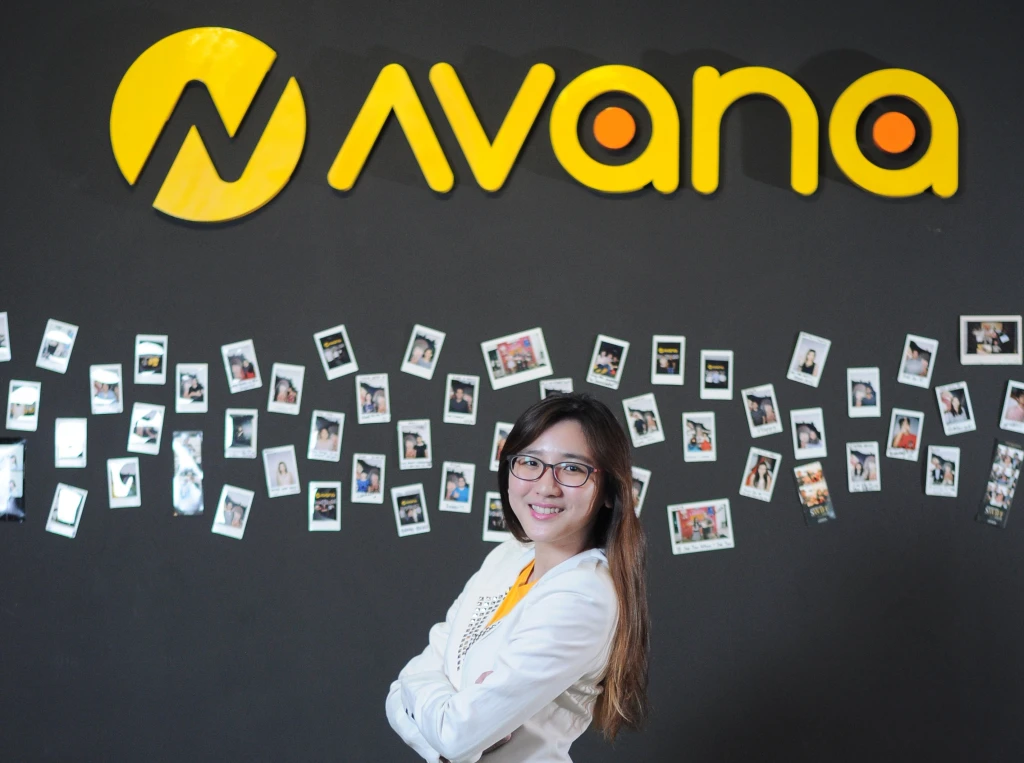
Yienyee Soh, co-founder and group chief operating officer of Avana / Photo credit: Avana
Through her personal connection with blogshop communities, she learned that many faced difficulties in running “fragmented and manual businesses” that eventually became too unwieldy to maintain. However, that’s where Soh saw an opportunity to disrupt the ecommerce space for local brands and help them become sustainable.
In 2016, she began working with her co-founder, Luqman Adris – the techie between the two – to launch Avana, a social commerce platform that aims to solve the fragmented nature of the blogshop business. Today, Avana hosts over 130,000 brands across Southeast Asia on its platform, with a special focus on those from Malaysia and Indonesia.
Soh points out that with their community-driven approach, she and Adris were able to build a tech solution for problems faced by blogshops and small and medium-sized enterprises.
“Female founders and team members tend to have stronger empathy towards community-driven initiatives. This in turn creates more opportunities and helps to upskill our local talents and brand owners,” Soh says.
Investors like VC firm Gobi Partners also played an integral role in validating and supporting the founders. In 2018, Gobi led Avana’s seed round during the social commerce firm’s expansion into Indonesia. This enabled Avana to enter the market, glean nuanced insights on local users, and connect with the right people.
“They put their trust in us to solve the problem we set out to tackle as a company, regardless of the roadblocks that we faced,” Soh explains. “[Gobi] has helped us to better understand the needs of our customers and hire the right talent.”
2. Lynk: Creating access and challenging the gatekeepers of knowledge
It’s not just about debunking myths around what a woman founder can and cannot do. Fostering gender equality in tech also involves breaking down systemic problems, such as limited access to information and resources. That’s why Lynk, a knowledge-as-a-service platform, set out to tackle the problem of uneven access to and distribution of information and expertise.
Peggy Choi, the founder and CEO of the Hong-Kong based startup, says the company was born out of the desire to fill a knowledge gap that she noticed as a former “super user of expert consultancies” in her previous jobs as an investor.
“I’d seen exactly how the system needed to be improved and where access to expertise should be expanded,” she says. Choi founded Lynk to improve access to credible knowledge from vetted experts across industries.

Peggy Choi, founder and CEO of Lynk / Photo credit: Lynk
This is a particularly pressing problem for women as there are a disproportionately large number of men in C-suite positions. This leaves women with few opportunities to gain experience and knowledge and significantly less support in leadership roles than their male counterparts.
Choi believes that Lynk’s product could help level the playing field for women in the workforce not just through its product, but also by walking the talk. Unlike most businesses, Lynk has managed to maintain a 50:50 male to female gender ratio across the company and its board amid its expansion into the northern hemisphere.
“Companies are more aware that in order to succeed long term, they need diversity of thought and perspective. The best way to achieve that is by hiring diverse and female voices,” Choi observes.
Lynk also runs several initiatives, including a campaign to recruit female experts to join its knowledge platform, to help women excel in their fields and build sustainable careers, Choi says. The startup’s diversity program aims to support female experts’ work by giving them the tools to easily share and monetize their expertise.
Choi highlights the importance of VC support for female-led startups in the long fight to undo the effects of the funding gap and historical discrimination. Though the Covid-19 pandemic led to a huge boom in VC funding, investments in women-led companies actually declined between 2019 and 2020, reversing the progress that businesses run by female entrepreneurs had made since 2018.
“In fact, only about 12% of VC decision makers are women, and most firms don’t even have a female partner globally,” Choi underlines.
VC firms like Gobi Partners, which focus on making investments into women-led startups, have the ability to ensure women are able to “keep breaking glass ceilings” in the tech world, she says. Choi mentions that Gobi’s faith in her company’s mission has driven Lynk’s commitment to not only democratize access to knowledge, but also debunk the myth that investing in women is just a play for diversity.
“It’s just good business to invest in female founders, so I’m optimistic that gender biases surrounding startup funding for female-led companies will improve sooner rather than later.”
3. GoWork: Creating social impact while balancing traditional gender roles
Vanessa Hendriadi Li, CEO and co-founder of GoWork, an Indonesian co-working space provider, believes the challenges of being a female founder today are twofold: to straddle the responsibilities of work and family, and grapple with gender biases when looking to secure backing from male investors.
“Male founders may not necessarily understand these problems that female founders face,” she observes. “The investment landscape currently runs like a ‘boys’ club,’ with mostly male investors who fund male founders.”
The proof is in the pudding. In 2019, just eight woman made it into The New York Times and CB Insights’ round-up of the top 100 venture capitalists – a step down from the nine women who made it to the list the year before.
Growing up, however, Hendriadi Li was deeply shaped by her parents’ determination to carve out their own paths.

Vanessa Hendriadi Li, CEO and co-founder of GoWork / Photo credit: GoWork
“My dad started his business fresh out of university. My mum, who had come from a family of doctors, gave up her dentistry practice after marrying my dad to help with the operations,” she shares.
This set the wheels turning early for the GoWork CEO to build her own company, which she believes should revolve around building a community. In 2016, she founded Rework, which merged with competitor GoWork two years later.
Since the start of her journey as a founder, Hendriadi Li has stuck to her ethos by ensuring the co-working space provider has a positive social impact on the industry. For instance, GoWork’s hubs are strategically located near major malls, business districts, and train stations across four cities to cut costs and time spent commuting. This, she says, also allows customers to focus on networking opportunities and increases productivity.
Amid the pandemic last year, Hendriadi Li was also quick to identify how businesses were seeking hybrid, flexible working arrangements, and she tapped into that trend to ensure GoWork’s continued growth. In the five years since its founding, the company’s annual recurring revenue has grown 20x, a large part of which Hendriadi Li attributes to Gobi, which has backed the co-working space provider since its series A round in 2018.
“They’ve consistently provided us with entrepreneurial insights and unique market perspectives that are useful as we grow our business,” she says.
Given that the VC is one of the precious few that back a female-co-led company, Hendriadi Li believes this unequal access to opportunities and funding is something that both investors and founders need to overcome.
“Having equal gender inclusion makes any startup stronger, since both male and female founders bring different perspectives to the table,” the GoWork CEO observes.
Gobi Partners is one of the most interconnected Pan-Asian venture capital firm with US$1.2 billion in assets under management across North Asia, South Asia, and Southeast Asia. Founded in 2002, it has raised 13 funds to date, invested in over 270 startups, and nurtured nine unicorns. Gobi Partners has 13 locations across key markets in Asia and is committed to invest in and champion female-led startups and ecosystems.
Find out more about Gobi Partners and how it can help your startup by reaching out to the team on its website.
This content was produced by Tech in Asia Studios, which connects brands with Asia’s tech community. Learn more about partnering with Tech in Asia Studios.
Stay updated on the go with our mobile app.
Get latest insights with smoother, more personalized experience through TIA mobile app.
Recommended reads
 Surge backs $5.1m round of first accelerator participant from Thailand
 Flipkart co-founder’s startup banks $25m in series A money
 Exclusive: Bukalapak founders’ fund backs early round of Indonesian coding test firm
 The Aspiring Founders Program – Fall 2022
 These startups are scaling successfully with Huawei’s help
 Tech winter prompts flight to safety of big tech
 SG’s Spenmo joins 4 YC alums to help SEA startups scale
 Carousell co-founder backs $1m round of SG edtech firm
 YC-backed Cashfree Payments sheds up to 80 employees
 Sequoia India’s Surge backs $14.3m series A round of Vietnamese edtech firm





Editing by Rebecca Liew, Nathaniel Fetalvero, and Arpit Nayak
(And yes, we’re serious about ethics and transparency. More information here.)