Jum Balea · · 3 min read
Philippines sets up innovation center, takes a page from Singapore, Malaysia
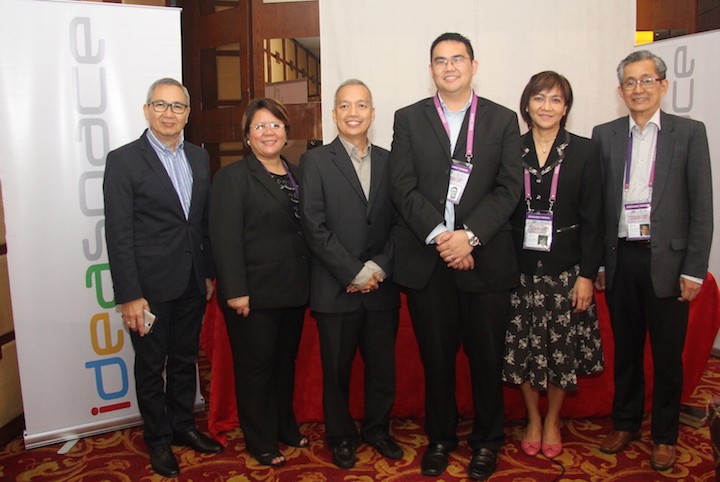
Smart’s Ramon Isberto and IdeaSpace’s Earl Martin Valencia with government officials DOST Usec Rowena Guevarra, DTI Usec Nora Terrado, and Monchito Ibrahim
The Philippines has announced a plan to build a national innovation center – taking cue from Silicon Valley in the US, Block 71 in Singapore, and MaGIC in Malaysia.
Government agencies, including the Department of Science and Technology (DOST) and the Department of Trade and Industry (DTI), are collaborating with startup accelerator IdeaSpace for this effort.
With initial funding of PHP 30 million (US$665,000) from the government and counterpart funding of up to PHP 15 million (US$332,000) from private sector and academe, the innovation center will have two locations – both of which will be near the country’s premier universities.
“When we founded IdeaSpace in 2012, we wanted to find the next big innovative idea and create a startup ecosystem that embodies the Silicon Valley-mindset of using technology and science to create massive change in the world,” said Earl Martin Valencia, president and co-founder at IdeaSpace.
“Now, we realize the dream to create Philippines’ own innovation hub with our initial collaboration with the government and the academe where startups and high-potential research can get the support they need in order to grow and thrive,” Valencia added.
The Philippine innovation center will foster technology advancement and startup ecosystem growth. Valencia said the hubs will be set up near key academic institutions to imbibe the spirit of innovative and entrepreneurial thinking among students, to tap into a wellspring of engineering and technology talent from these universities, as well as to address the growing interest of students in founding their own startups.
Calling on more partners
The center will also serve as a venue for government agencies and academic institutions to promote products, facilitate transfer of their R&D results, and establish connections with the investment community.
“It has always been DOST’s thrust to support technology transfer of R&D output, either through commercialization or deployment for public good. The innovation center, we believe, will be a critical and effective agent in delivering R&D results to the people,” DOST undersecretary Rowena Cristina Guevara said.
DTI undersecretary Nora Terrado added: “The DTI strongly supports entrepreneurship and innovation in the Philippines to realize economic growth that is truly inclusive. Tech startups present a growing spectrum of opportunities for Filipinos to compete in the international stage as they create new solutions to pressing social and environmental problems. In the process, this will spur economic activities resulting from the value and employment generated.”
Valencia notes the initiatives represents the Philippines’ first ever public-private partnership that focuses on innovation and aims to improve the country’s position in the global digital economy. “We can’t do it alone, so we’re calling on more partners… to help us push this initiative forward.”
The creation of the innovation hub will be a critical component in boosting the Philippines’ ranking in the Digital Evolution Index (DEI), which ranks countries in terms of their readiness for the quickly expanding digital economy.
The Philippines is one of the so-called “break-out” nations in the recent global DEI study conducted by the US-based Fletcher School at Tufts University, using data from 2008 to 2013. The country stands alongside China, Malaysia, Thailand, and Vietnam as one of the “rapidly advancing countries” in the global digital topography.





Stay updated on the go with our mobile app.
Get latest insights with smoother, more personalized experience through TIA mobile app.