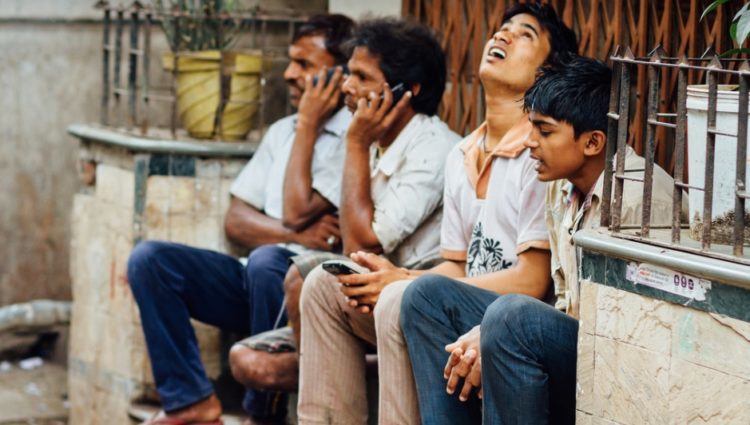
Photo credit: Adam Cohn.
Despite 125 million smartphones floating around India, few paid apps have managed to reach their full potential.
This might change with Google Play’s latest announcement to launch carrier billing in the country. Earlier, only credit cards and international debit cards could be used inside the Play store. This latest move means that people can charge directly to their phone bills. It works with both prepaid and postpaid plans and can be used to buy apps as well as purchase things within them.
Google Play has partnered with Indian telecom Idea, which owns about 18 percent of the telco market and is considered the sixth largest in the world. That means that only those who use Idea can use this service. It’s anticipated that Google Play will soon launch carrier billing with other telcos too.
This new technology will be powered by Bango, which is also behind Google’s carrier billing services in many other countries. Bango is also used in Latin America and Africa and cites a tenfold increase in content sales in those markets after carrier billing was launched.
Google itself cited some stats – “We’ve seen tremendous growth in the app ecosystem wherever we’ve supported DCB [direct carrier billing],” it explained in a blog post. “In Indonesia, for example, the number of people who make app and in-app purchases has quadrupled since we launched DCB there in March 2015.”
It also made sure to mention that the new release is specifically focused on app developers. India is expected to have the biggest population of app developers in the world by 2020, and they seem to be every global company’s favorite demographic to talk about before entering the country.
The effort to make some money

Photo credit: sandeepachetan
Talks about carrier billing for app stores have been going on for a while – years, in fact. In 2012, Nokia tied up with Airtel and Vodafone to allow carrier billing on the Nokia Store. Then, Nokia got bought out by Microsoft, which proceeded to shut it down – so that never really went anywhere.
Google’s also made other efforts to get more money from India’s smartphone users. It lowered its basic app price to US$0.15 in July 2015 and last year, introduced offline vouchers that were sold at handset retail outlets Vijay Sales and Spice Hotspot. They went for US$7.50, US$15, and US$23, but not much data has been released on whether they’ve worked well or not.
The biggest criticism of the vouchers was that they were far too much money to spend at once – especially on apps. India’s on the opposite end of the app-spending spectrum from most Western countries, and it’s not often that legends of people squandering US$10,000 on Candy Crush appear.
Last year, Sheng Fu, CEO of Cheetah Mobile, was asked at GMIC 2015 why China was doing so much better than India in terms of mobile app monetization. His response is an important one to remember: “India won’t monetize off of its games until people in the country have an increase in their basic income and have luxury money.”
Editing by Malavika Vaelayanikal and Nadine Frieschlad





Stay updated on the go with our mobile app.
Get latest insights with smoother, more personalized experience through TIA mobile app.