
Welcome to The Offset! Delivered once a month via email and through the Tech in Asia website, this free newsletter breaks down the biggest stories and trends in greentech. If you’re not a subscriber, get access by registering here.
Hi there,
The news headlines about climate change this month have largely centered around what went on at the 2021 United Nations Climate Change Conference (COP26) in Glasgow. I noticed that technology was a key debate at the summit.
While the conversation was earlier about whether countries should act against global warming, it’s now seemingly focused on how nations should go about it: Politicians and experts squabbled over using nuclear power to meet the world’s soaring energy demand and debated on carbon offsets to reduce global emissions.
Did you tune in to COP26? What are your thoughts on these discussions?
— Nicole
Deep reads
1️⃣ Can high-tech capitalism address climate change?
“Everyone wants to go to heaven but nobody wants to die,” Thomas L. Friedman, New York Times opinion writer, writes in his piece about the Glasgow summit, held earlier this month.
To Friedman, however, the world has yet to reach an impasse.
Just last year, countries relied on science and technology to weather the Covid-19 pandemic. Friedman suggests that the world could bank on similarly transformative technologies funded by the likes of Elon Musk and Bill Gates to help navigate the climate crisis.
The key, for Friedman, is to align the interests of capitalism with these innovations.
For example, satellites and AI can help hold big polluters accountable. A company is developing a “transparency tool” that uses modern technology to calculate the true cost of fossil fuel extraction done by oil and coal companies more precisely and in real time. The hope is to hold emitters accountable and trigger consumer boycotts or stimulate sustainable investments by making the data freely available.
To some, however, the world cannot engineer or innovate its way out of the crisis. COP26 failed because it was “predicated on the fiction that technology will solve the problem of climate change,” writes Julian Allwood, professor at University of Cambridge. According to Allwood, many technologies discussed at the summit will not solve the climate problem because they cannot be scaled sufficiently in time. Overly emphasizing these tech solutions prevented any discussions on practical options, she argues.

Satellite over the coast / Photo credit: Unsplash
2️⃣ How a new global carbon market could exaggerate climate progress
Though the Paris Agreement paved the way for the use of carbon offsets, countries have still been haggling over how carbon markets should be regulated. At COP26, negotiators finally agreed on rules for carbon offset trading.
The was supported by observers at Glasgow. They praised the new rules as a way to prevent double counting. The long-existing loophole let two countries offset both their carbon footprints by trading carbon credits, when the offset should apply only to the nation buying the credits.
Despite having new rules in place, experts still fear the carbon-offset mechanism might create an illusion of progress. Some argue that while the new rules aim to close loopholes in carbon accounting, they could be hard to implement because governing bodies have taken a hands-off approach to voluntary markets, which many fossil fuel and tech companies are trading on.
3️⃣ How cement can help slow global warming
Concrete is the second-most consumed material globally, behind only water: It’s in buildings, roadways, bridges, and almost everything else we build.
The production of cement, a key ingredient in concrete, emits a lot of greenhouse gases. But the demand for concrete is not cooling off anytime soon because there are few practical green alternatives.
Over half the emissions involved in cement making come from calcination, which is the process of heating a mixture of solids. A study shows that the most efficient way for these companies to cut emissions is to capture the CO2 produced from calcination and store it away via a process called reverse calcination.
The captured CO2 can be stored underground, used by other industries, or injected back into the concrete, leading to some unexpected benefits – including making the concrete stronger. Companies like Canada-based CarbonCure Technologies and Australia’s Calix are betting on reverse calcination to decarbonize the concrete industry.
Trending news
You can also check out Tech in Asia’s coverage of Asia’s greentech scene here.
1️⃣ Sovereign wealth funds step up focus on ESG, Green Investment
More than 70% of sovereign funds now take Environmental, Social, and Governance (ESG) into consideration when making investment decisions – a jump from 24% a year earlier – according to a survey by the International Forum of Sovereign Wealth Funds and the Planet Sovereign Wealth Funds.
Of the funds surveyed, 41% said they were planning on educating their investment teams on ESG, while 38% said they were either forming or expanding a dedicated ESG team.
Further, over 70% of the respondents said renewable energy is the most attractive climate-related investment area.
Why it matters:
ESG assets are set to exceed US$53 trillion globally by 2025. Amid pressure from shareholders, regulators, and the public to clean up investment portfolios, investors are jumping on the bandwagon. However, sovereign wealth funds – many of which were set up by oil-producing countries – have been among the slowest to transition.
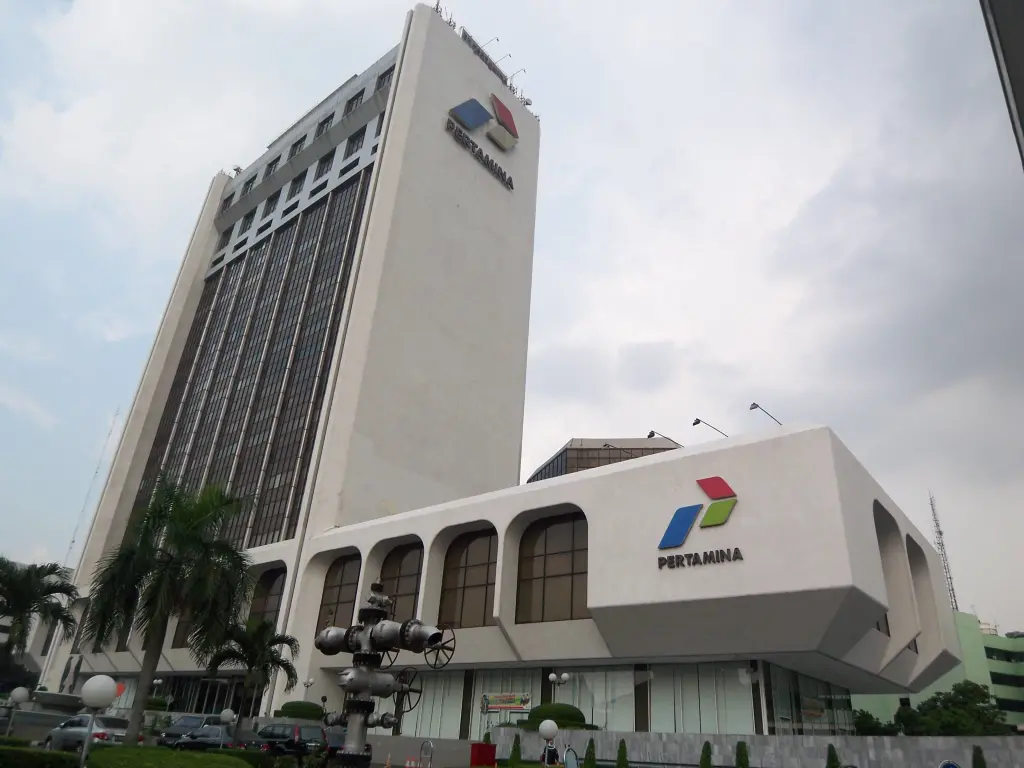
PT Pertamina headquarters in Indonesia / Photo credit: Wikimedia Commons
2️⃣ Exxonmobil exploring carbon capture storage in Indonesia
PT Pertamina, a state-owned Indonesian oil and gas company, and ExxonMobil, the US oil giant, signed an agreement at COP26 to explore carbon capture storage (CCS) technology in the Southeast Asian country.
The deployment of CCS in the archipelago’s oil fields in Cepu and Bojonegoro could cost about $500 million, the oil giant said.
Why it matters:
Indonesia, the world’s eighth-biggest emitter of CO2, expects to reach net zero by 2060. The country is looking toward carbon capture to achieve its ambitious goal. However, the tech is not yet at the commercialization stage, and critics fear the fossil fuel industry will use it to deflect more far-reaching actions to cut emissions.

App icons / Photo credit: Unsplash
In an open letter, sustainability organizations and advertisers urged social media companies to adopt a clear universal definition of climate disinformation and misinformation. The letter, organized by Conscious Advertising Network (CAN), called out Facebook, Instagram, Google, Twitter, TikTok, Pinterest, and Reddit for not doing enough to combat the spread of climate-related fake news.
Why it matters:
False information and claims about climate change are playing an increasingly significant role in shaping global conversations. These posts on social media generate millions of views per day and have grown by leaps and bounds due to the inaction of platforms.
Startup watch
1️⃣ GIC, Sequoia, Primavera to pour over $1b into Envision Group
Chinese greentech company Envision Group has raised US$1 billion from Sequoia Capital, GIC Private Ltd, and Primavera Capital. Envision’s business spans renewable energy, hydrogen, battery, digital solutions, and other areas. The firm aims to facilitate energy transition in the public and private sectors.
2️⃣ Temasek co-leads $95m round of SG biotech firm
RWDC Industries, a developer of sustainable plastic alternatives, has secured US$95.1 million in a series B2 funding round led by Temasek and Vickers Venture Partners. The Singapore- and US-based startup will use the fresh funds to expand its production capacity for sustainable biomaterials at its factory in the US and build a production facility in Singapore.
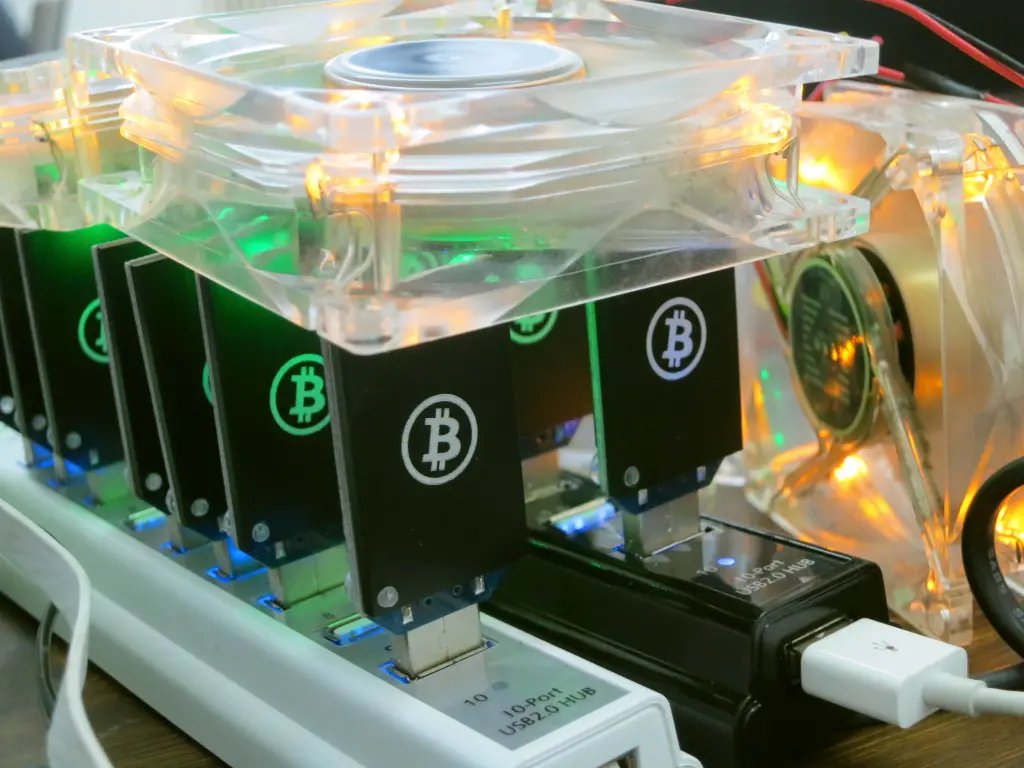
Bitcoin mining / Photo credit: Wikimedia Commons
3️⃣Crypto Mining Power Management Firm Lancium Raises $150M
Lancium, a Texas-based data center power management company, has raised US$150 million in a round led by South Korean conglomerate Hanwha Solutions, the operator of major solar cell manufacturer Q Cells. Lancium focuses on building the energy infrastructure for cryptocurrency mining and other distributed energy-intensive applications.
4️⃣ Sun Energy recharges with $25m series A fundraise
Sun Energy, a Singapore-based solar energy company, has secured US$25 million from its series A round. The latest funding round was led by Indonesian coal miner TBS Energy Utama via its unit Toba Bara Energi. The company will use the new capital to develop projects and expand capacity in Indonesia.
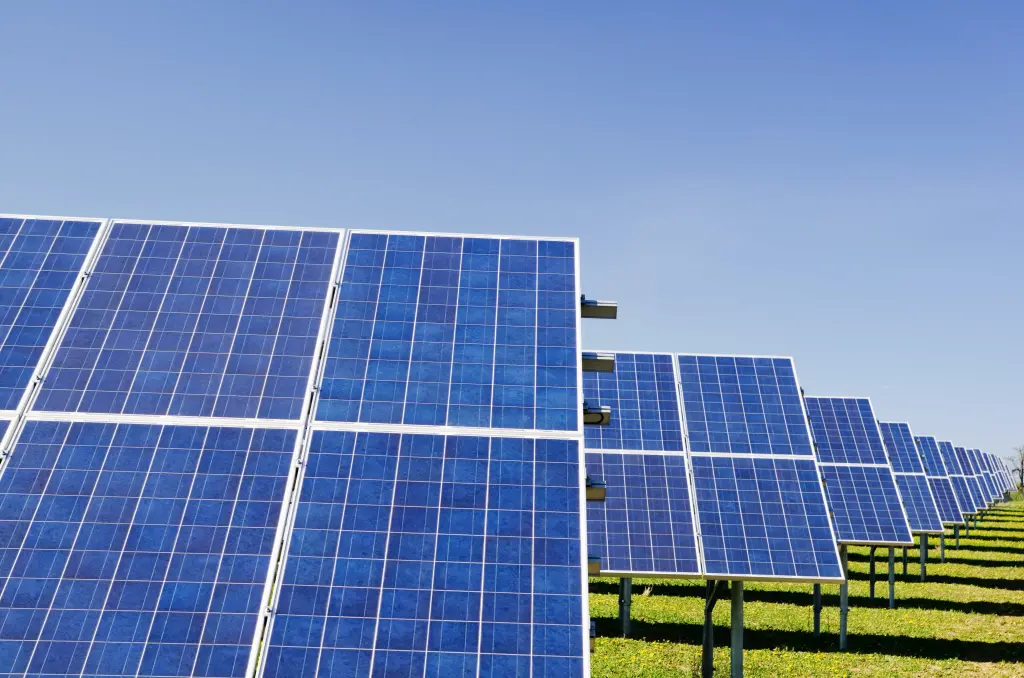
Solar power plant / Photo credit: Unsplash
5️⃣ With new tech and $3.6M in seed money, DiviGas aims to clean up hydrogen production
DiviGas, a Singapore-based hydrogen energy startup, has secured US$3.6 million in its seed round. The company’s tech isolates hydrogen from mixed gases and hydrocarbons produced in industrial processes like oil refining and plastic production. The fresh funds will go toward the construction of a pilot plant in Melbourne, which is scheduled to be turned on in March.
That’s it for this edition – we hope you liked it! Do subscribe to continue receiving The Offset.
Not your cup of tea? You can unsubscribe from this newsletter by going to your “edit profile” page and choosing that option in our preference center.
See you next month!
The Offset is made possible thanks to Taiwan Mobile.
It earned the best telco title in Global Views CSR Awards.
Taiwan Mobile is on a mission to transit to 100% green energy by 2040.
Stay updated on the go with our mobile app.
Get latest insights with smoother, more personalized experience through TIA mobile app.
Recommended reads
 Behind the screens: Who’s protecting our digital spaces?
 Ola founder’s AI startup hits unicorn status with $50m round
 India’s HiLabs raises $39m to clean up healthcare data via AI
 India’s Cred eyes digital wealth management with Kuvera acquisition
 Standard Chartered backs Hong Kong eKYC firm’s multimillion-dollar round
 SCBX nixes $500m Bitkub acquisition
 Mesh Bio to expand healthcare platform’s SEA reach with new capital (update)
 India’s Arya.ag doubles gross revenue, sees 36% bump in profits
 Indian data privacy firm secures $14m from Sequoia, others
 Wavemaker-backed WasteX raises $450k to expand biochar solution across Indonesia





Editing by Terence Lee and Arpit Nayak
(And yes, we’re serious about ethics and transparency. More information here.)




📅 Upcoming Events
22 October 2026
Payoneer x CSPN Summit 2026