I’ll be very honest with you. To learn all the skills in data science is next to impossible as the scope is way too wide. There will always be some skills (technical/non-technical) that data scientists wouldn’t know or haven’t learned as different businesses require different skill sets.
But based on my experience, there are generally some core skill sets that an aspiring data scientist should learn.
Technical skills
This include math, statistics, programming, and business knowledge. Despite having excellent programming skills, we as data scientists should always be able to explain our model results to stakeholders in business language, supported by math and statistics.
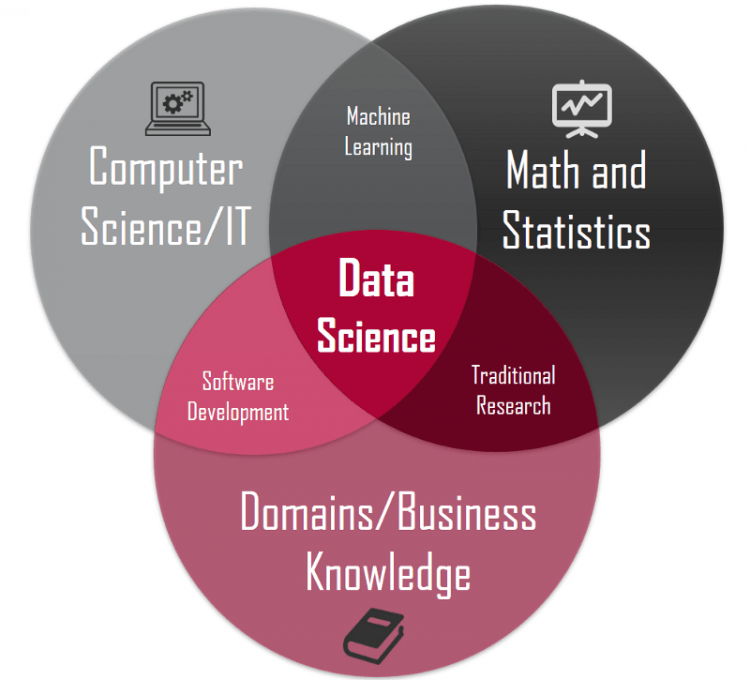
To learn math and statistics, check out ClaoudML, which was created by Randy Lao.
I also recommend reading the book An Introduction to Statistical Learning, which I read when I was first starting out in data science. It’s really for beginners because it focuses on the fundamental concepts of statistical modelling and machine learning, with detailed and intuitive explanations. If you are a mathematically hardcore person, perhaps you would prefer The Elements of Statistical Learning.
To learn programming skills, I suggest focusing on learning just one language (I personally prefer Python) first, since the concepts are also applicable to other languages. Python is also easier to learn.
Finally, I can’t stress enough the importance of business knowledge. Understanding how a business works is extremely crucial, as I have outlined in one of my articles.
2. How can I choose the right bootcamps and online courses when there are plenty of them out there?
3. Is learning from open source sufficient to become a data scientist?
4. Should a beginner (from a totally different background) start with reading materials to understand the basics? What book would you suggest?
5. How can I find balance between understanding business problems (formulating solutions) and developing technical skills (coding, core math knowledge, etc.)?
6. How can we overcome the challenges of starting a career in data science?
7. How should I put my work experience in my resume to get hired?
8. What kind of portfolio can help me get my first job in data science or machine learning?
Final thoughts
 Admond Lee