Osman Husain · · 6 min read
She’s teaching girls in Singapore how to code and think critically
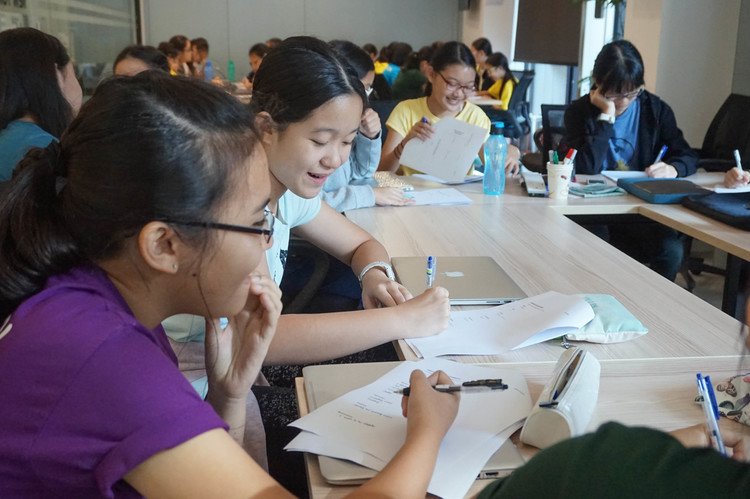
One of the bootcamps organized by 21C Girls. Photo credit: Publicity.
The lack of women in tech has been a talking point for several years now, but some people are beginning to realize that the long-term solution lies in changing cultural attitudes entirely.
And nowhere are these attitudes more prevalent than in Asia – where boys have been traditionally encouraged to pursue STEM subjects by their families, in many cases at the expense of their sisters.
Ayesha Khanna witnessed this firsthand. She’s a data analytics consultant and researcher based in Singapore. She holds a degree from Harvard and a Master’s from Columbia. In 2013, while volunteering at a kids hackathon, she became acquainted with a little girl who was eagerly conducting an electronics experiment.
“I distinctly remember that her mother quickly came, kind of hushed her away, and put her son forward instead,” says Ayesha. “The girl felt terrible, and, as a mother of both a daughter and son, I felt really bad too.”
“She was very talented and deserved to be there. That really stuck with me”
So Ayesha did something. She set up 21C Girls, short for 21st Century Girls, with the mission to help reduce the systemic biases girls face in particular fields.
She provides them a nurturing environment where the children can learn the basis of computational thinking. Hence the girls won’t just be taught how to code, but also to think creatively, dabble in things like electronics and robotics, and solve real-world challenges.
21C Girls was registered as a charity in Singapore in 2014. There’s absolutely no plans of ever moving to a for-profit. Ayesha says the eventual aim is to become an Institute of Public Charter, resulting in a tremendous amount of transparency in what they do – something she wholeheartedly believes in.
Building communities
The focus for 21C Girls has been, from day one, to involve local communities in their efforts. Its first program was called Techstars (not affiliated with the startup accelerator). It worked with Crescent Girls’ School to train over 250 girls and teachers. The project is still ongoing, but has now been handed over to the teachers after they were trained in the specifics.

Ayesha Khanna
Classes were conducted on the weekends so as to try and keep schedule disruptions to a minimum and allow as many participants to join as possible.
The team has also conducted several robotics programs with the Singapore Indian Association as well as the Muslim Association, Mendaki.
Personal experience
Securing the future





Stay updated on the go with our mobile app.
Get latest insights with smoother, more personalized experience through TIA mobile app.