 Adinda Pryanka · · 3 min read
How this startup is fighting AI bias with faith-aligned chatbot
This article is a part of Startup Spotlight, a series that features young, up-and-coming startups.

Image credit: Timmy Loen
It started when one of the co-founder’s Muslim friend received a life-changing job offer. Unsure if accepting the offer was permissible in Islam, he asked an AI chatbot for advice. However, the AI gave a nuanced-sounding answer that subtly dismissed centuries of Islamic teachings and scholarly interpretation.
The response was shaped more by modern cultural norms than by authentic religious texts. This moment revealed a critical gap for the founders of Hidaya. If AI is the default teacher for the next generation, Muslims need a tool built intentionally around their faith.
😟 Problem
Most large language models are trained on broad internet data, which reflects dominant Western cultural norms. This creates documented biases related to gender, race, and religion. For Muslims, this means general AI tools can provide answers that are misaligned with Islamic principles.
Since English dominates internet data, Islamic scholarship that is in Arabic is not proportionally represented in AI training sets. This can lead to simplified, distorted, or inaccurate religious guidance. As AI adoption grows, so does the risk of widespread faith-based misinformation.
💡 Solution
Hidaya is an AI assistant designed to provide answers grounded in authentic Islamic teachings. It avoids relying on general internet data, instead building its system on curated and verified religious texts.
The platform’s key features include:
- Training its model on classical Islamic scholarship, trusted tafsir, and hadith collections.
- Integrating APIs like the Quran Foundation to pull exact Quranic text and translations.
- An emphasis on understanding classical Arabic to interpret nuance and context accurately.
- Cross-referencing multiple scholarly sources to explain different opinions where they exist.
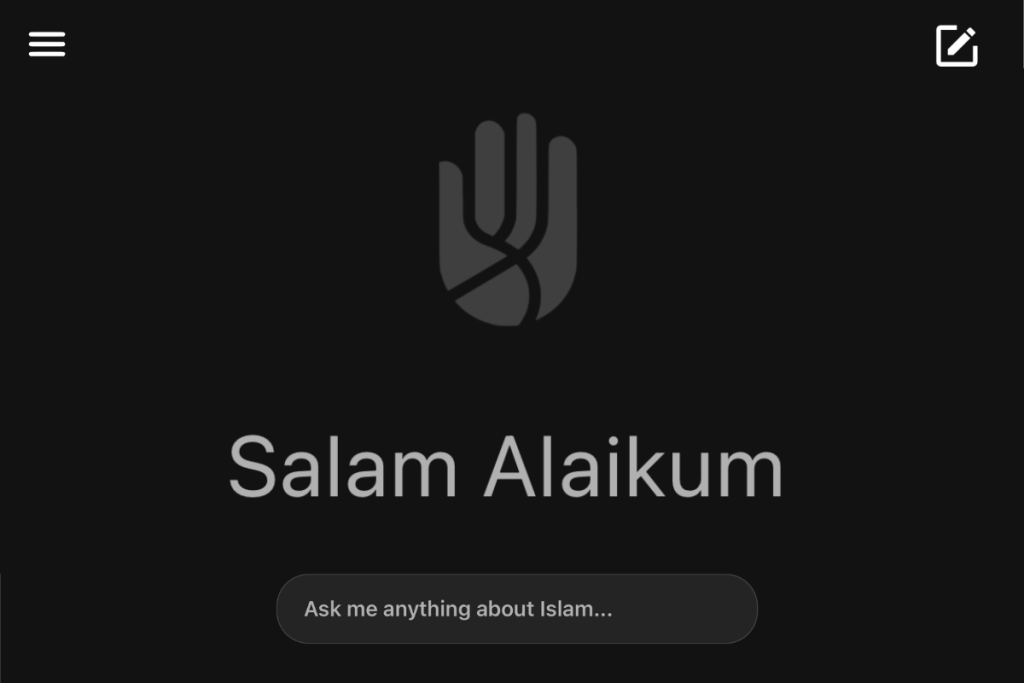
Photo credit: Hidaya
📊 Market size
The global Muslim population is around 1.9 billion to 2 billion people and is projected to reach 2.8 billion by 2050. It is also one of the world’s youngest religious demographics, with a median age of 24. This young, tech-savvy population is rapidly gaining internet access.
The consumer AI market is also expanding, with analysts projecting it to exceed US$1 trillion within a decade. Capturing even 1% of the global Muslim population would represent a user base of 20 million people.
🤝 Team
- Daryll Netscher. Co-founder. A serial entrepreneur and founder of venture-backed projects, Tren Finance and Venom Blockchain. He runs T3 Labs, a venture builder, investment firm, and developer of Hidaya.
- Zachary Nelson. Co-founder. A serial entrepreneur and venture builder. He also runs T3 Labs.
🚀 Traction
🏆 Competition
💰 Financials





Stay updated on the go with our mobile app.
Get latest insights with smoother, more personalized experience through TIA mobile app.











📅 Upcoming Events
22 October 2026
Payoneer x CSPN Summit 2026