Terence Lee · · 7 min read
Why the next era of computing won’t be defined by one device
I remember surfing the internet for the first time. The computer came in non-descript beige, whirred as it booted up, and its modem made an awful screech as it connected to the internet. I was 12.
Six years passed by. The internet sped up, the high-pitched modem song was silenced, and social networks crept into existence. But my computer was still a thick beige tower with a blocky monitor.
The pace of change accelerated from then on. I got my first laptop after entering university, then my first smartphone (using the clunky Windows Mobile 6.5) a couple of years in.
Today, my family shares a staggering number of internet-connected devices at home: four smartphones, three laptops, two desktop computers, and one tablet.
My point is this: the speed of evolution of internet-connected devices – in both hardware and software – has sped up. Now, desktops co-exist with laptops, tablets, smartphones, and wearables, with all types of hybrids in between.
We’re at the beginning of a Cambrian explosion in the consumer gadgets world. If you think the sheer variety of devices available now is staggering, wait till you see what comes out a couple of years later.
The death of dominant device categories
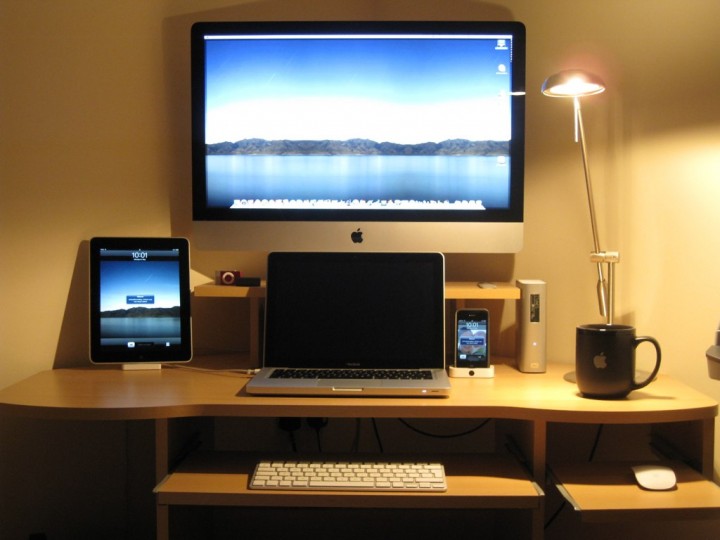
Every computing era is marked by a particular template or configuration. Desktop computers have been around for ages, but Macintosh popularized the graphical user interface and brought the PC into the mainstream. Windows-compatible clones popped up all over the place, thanks to the business-savvy of Microsoft. But they all look identical: a CPU, monitor, mouse, and keyboard.
Then came laptops, and once again they followed the same template: a silicon book that folds in half, one part housing the screen, the other the guts, touchpad, and keyboard.
Smartphones were next. While Blackberry dominated for a while by essentially shrinking the desktop configuration into a palm-sized gadget, Apple defined the definitive template for smartphones. Following the iPhone’s release, later smartphones abandoned a physical keyboard in favor of a candybar with a capacitive touchscreen. Tablets then came into the fore, but they look like enlarged iPhones.
Which brings us to today. There’s no consensus on the zeitgeist of the next computing era. 2014 has so far been defined by a slew of new internet-enabled hardware products. Apple announced the Apple Watch, which solidifies the company’s positioning as a luxury gadget brand that’s out of reach to average twenty-somethings in China, India, or Southeast Asia. The gap, however, is being filled by cheap Android phones made by Samsung, Xiaomi, Micromax, and dozens of other brands.
See more: Xiaomi is now the world’s third-biggest smartphone vendor, according to IDC
Wearable computers is another big topic, but the winner’s undecided: will it be smartwatches, Google Glass (although some are already writing it off) and the slew of head-mounted computers, or cheaper smartbands made by companies like Fitbit and Jawbone? And then there’s a whole lineup of smart-everythings – drones, smart flasks, smart cars, smart lamps, smart lockets, and yes, smart vibrators.
Soon, the gimmicks will fall away. Entire categories will become hot and then fade, as netbooks once did. Wearables may eventually become defined by the Apple Watch or Google Glass, or virtual reality headsets like the Oculus Rift, or some stealth product waiting for its moment in the sun.
Implications for startups





Stay updated on the go with our mobile app.
Get latest insights with smoother, more personalized experience through TIA mobile app.