Leighton Cosseboom · · 4 min read
Google ready to test Project Loon in Indonesia, bringing wifi to remote areas

Earlier today, Google’s parent company Alphabet announced its high-flying Project Loon has partnered with Indonesia’s three largest telcos to start countrywide testing. It will deliver internet access in rural areas at the beginning of next year.
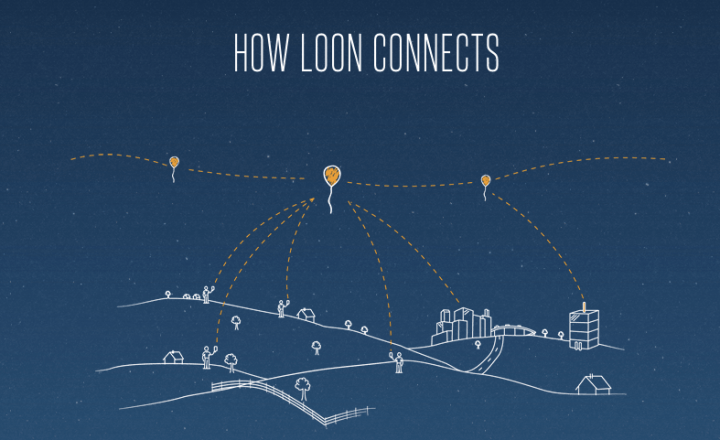
Don’t know what Project Loon is? Essentially, it’s an initiative that uses high-altitude balloons to bring internet coverage to remote areas, developing nations, or places that otherwise don’t have web access. Indonesia is a likely candidate for the project as its geography — a nation divided by water into more than 17,000 islands — makes implementing broadband and telecoms infrastructure a bona fide nightmare.
Executives from Telkomsel, XL Axiata, and Indosat today unveiled the plan with Project Loon’s point man Mike Cassidy and Google co-founder Sergey Brin at a press event in Silicon Valley. Indonesia is now the fourth country behind Brazil, Australia, and New Zealand, over which Loon will launch balloons more than a dozen miles into the sky and drop down internet access to smartphones.
Earlier this month, Indonesia’s telcos had mixed feelings about this proposed initiative. “Clearly, the project would harm not only Telkom, but also other telecommunication companies,” Indra Utoyo, Telkom director of innovation and strategic portfolio told the media. “That means Google would bypass us.”
However, now that Telkomsel is in on the deal, everything should presumably be rosy between both parties. Now, Telkom indicates that Project Loon will run for 12 months as an experiment before it can become a commercial project. Project Loon is set to use the 900 Mhz frequency in five skypoints above Sumatra, Kalimantan, and East Papua.
Bringing Indonesia’s rural population online is a task multiple parties are attempting to tackle. Back in May, Indonesian satellite service provider BigNet inked a US$78 million, long-term agreement with Singapore-based Kacific Broadband Satellites. The goal is to bring a new form of high-speed broadband service to Indonesia starting in 2017. Kacific aims to beam signals straight from its own satellites to cover the entire archipelago. It has a particular emphasis on providing good quality, affordable internet to developing areas in East Indonesia.
See: This satellite firm wants to be the ‘budget airline’ of the internet game in rural Indonesia
Dog fighting for internet in the sky
Project Loon started back in 2011. Loon’s initial testing phase in New Zealand used 30 balloons in 2013. Australia and Brazil soon followed. The tests helped shape Loon’s current approach of saddling up with telecoms, allowing them to own certain parts of the spectrum, instead of trying to negotiate unused parts of the spectrum to use for free. Cassidy claims the project will send up hundreds of balloons over Indonesia.
In Indonesia, increasing internet penetration is important because only about 30 percent of the population has access to the web. Where it is available, data speeds are slow due to poor infrastructure. With Loon, Google is able to take signals produced from Indonesia’s three big telcos and redistribute them from the stratosphere, high above airplanes and natural weather events. From there, the signal can bounce around between multiple balloons and blanket remote sections of the country. People with phones that can connect to the internet see the signal as a standard wifi network.
The firms claim download speeds will be up to 10Mbps, which is comparable to the average download speed in the US. For Alphabet, Project Loon is part of its efforts to bring online more than 4 billion people around the world who currently live without internet access. More people online in Indonesia inevitably means more Google searches, which is good for Alphabet.





Stay updated on the go with our mobile app.
Get latest insights with smoother, more personalized experience through TIA mobile app.