 Priya Pradeep · · 4 min read
How this Indian startup plans to thrive building affordable satellites
Nearly a decade ago, Sanjay Nekkanti, then an engineering student at SRM University in the south Indian city of Chennai, was in rapt attention listening to a guest lecture by a scientist from the Indian Space Research Organization. The speaker said that even students can build small, functional satellites. The young Nekkanti took the idea to heart and set to work.
Nekkanti and a few of his college friends designed and assembled SRMSAT – India’s first student-built nanosatellite. It weighed a little over 10 kilograms.
However, that was just the first step. Nekkanti was far from satisfied. He wanted to build India’s first private spacetech company.
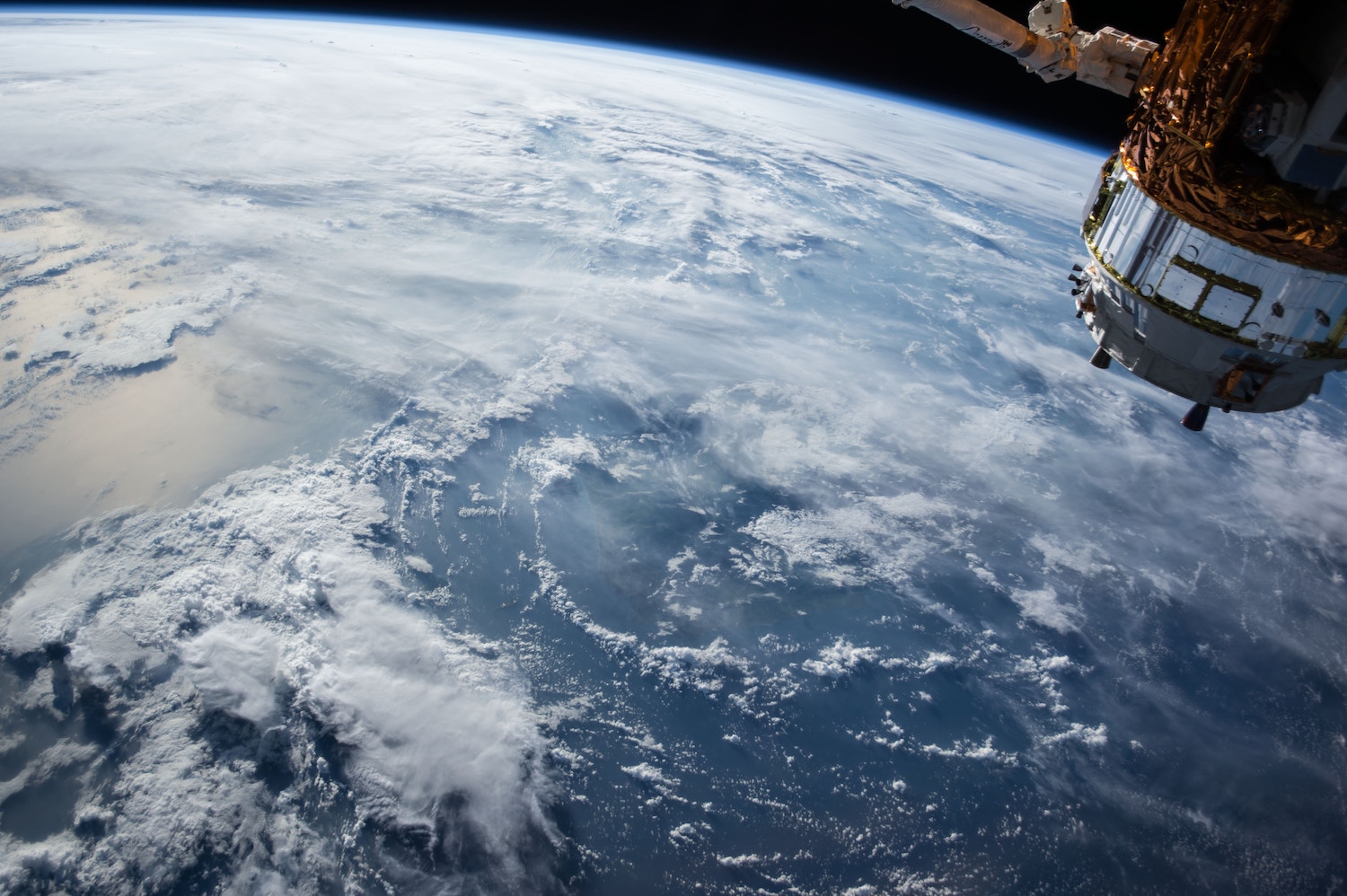
Photo credit: NASA / Unsplash
After graduating from SRM University with a bachelors degree in electronics and telecommunication engineering in June 2010, Nekkanti pursued his graduate studies at the European Union’s Erasmus Mundus Space master program. He traveled to Germany and Sweden and learned about different domains of space technology, including satellites and space instruments.
Nekkanti returned to India in 2012 to start a spacetech startup. He knew that satellites could be built for a much lower cost in India than in the West, but his firm, Dhruva Space, India’s first private space company, would go further by launching them into orbit.
“For US$250,000, you could build a really good small satellite in India, which could be of use to a small nation, whereas building a similar satellite in the US or Europe would cost US$970,000,” said Nekkanti, founder and CEO of Dhruva Space.
Chasing a comet
In late 2013, people around the world were eagerly waiting to see Comet ISON – touted as the “comet of the century” – fly by our planet.
Traveling at 320 kilometers per second towards the sun, the bright ball of frozen matter was on a course that would take it behind our galaxy’s star and graze Earth’s atmosphere on November 28, 2013.
Astronomers expected it to be brighter than a full moon and visible to the naked eye at nighttime throughout the month of December 2013.
On behalf of Indian Institute of Astrophysics, Dhruva Space was studying Comet ISON. The company deployed a high-altitude balloon that would operate at 30 to 40 kilometers above Earth’s surface.
However, in a remarkable turn of events, Comet ISON broke up before it got close to the sun. It was torn apart by the star’s immense gravity, disappointing thousands of astronomers and stargazers around the world.
As that happened, Dhruva Space lost communications with its balloon after it reached 18 kilometers in altitude, and the company was unable to pinpoint its location. As it turned out, the balloon had drifted off course by 50 nautical miles and was retrieved by a group of fishermen. One of them removed the SIM card embedded in the balloon’s payload and placed it into his own mobile phone. When Nekkanti dialed the SIM’s number, the fisherman answered, and Dhruva managed to track him down and recover part of the payload.
A tumultuous journey
From 2014 to 2015, Nekkanti and his team struggled to find customers. It was also becoming difficult to run the company without any funding. “Since the market had not matured and not much was known about space startups in 2014, investors did not bet on us,” Nekkanti said.





Stay updated on the go with our mobile app.
Get latest insights with smoother, more personalized experience through TIA mobile app.











📅 Upcoming Events
22 October 2026
Payoneer x CSPN Summit 2026