Iain Garner · · 9 min read
Danganronpa 2 review: the dark and disturbing deduction series is back!
For those of you who don’t know the Danganronpa series, you need to go and play the first game now, or if you don’t have a PS Vita, watch one of the better Youtube let’s plays. A kind of Phoenix-Wright-meets-Death-Note, Danganronpa: Trigger Happy Havok is one of the weirdest, most awesome games I have ever played, and its sequel is Danganronpa 2: Goodbye to Despair didn’t let me down.
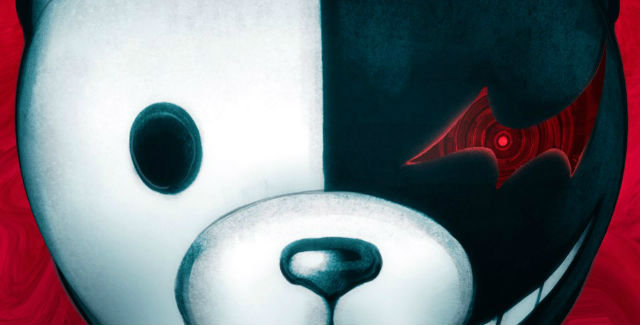
In truth, newcomers to the series don’t need to have played the first game in order to understand the second. You will, however, be missing out on a lot if you haven’t. There are regular in-jokes that only players of the previous games will get, and even characters that if you don’t recognize from the original, will be lost on you. In short, if you haven’t played Danganronpa: Tricky Happy Havok I strongly suggest you do so before starting on the second game. Skip ahead at your peril.
Both games revolve around a group of “ultimate” students from Hope’s Peak Academy in Tokyo. Each one is the best in their field, whether its ‘the ultimate swordswoman”, ”ultimate cook”, or the more mysterious “ultimate lucky students.” The game follows the lives of these “ultimates” after being kidnapped and held hostage by the homicidal teddy bear, Monokuma.
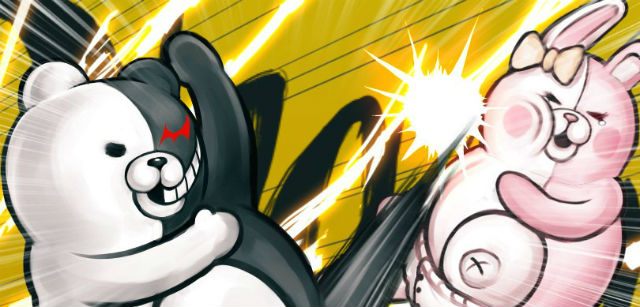
That’s right, a homicidal teddy bear, who is simultaneously cute, and terrifying. Like a murderous Doraemon.
Monokuma gives the students an ultimatum: if they want to escape his control, they must murder one of their fellow students, and then get away with it. If the other students fail to discover who the killer is during the “class trial”, then they will all be executed and the murderer set free. If they reveal the killer, then only he or she will be executed.
Intriguing, right?
Don’t mess with the murderous mojo
If you played the original game, then Danganronpa 2 is going to feel familiar. You explore scenes in the same way by selecting pieces of the environment to study with a “point-and-click”-style reticle. Everything that relates to the case is filed away in your student handbook. Interacting with fellow students, giving presents, and investigating crime scenes play out identically to the first game, but if it ain’t broke, don’t fix it.
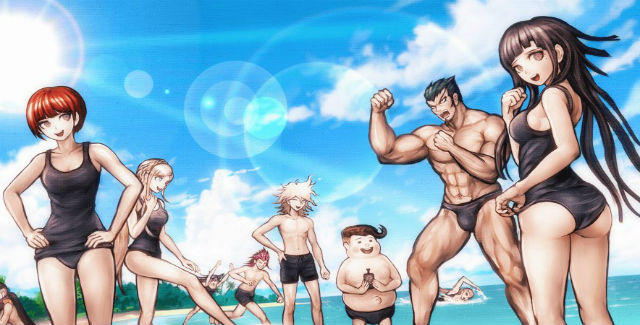
The artwork is consistent with the last game, and the few characters that carry over keep their original voices, which sound as great as ever if you opt for the Japanese voice cast. I recommend you do not use the English voices, as they are almost too painful to bear (pun unintended). Using English subtitles and Japanese voices is the superior option, unless you fancy deafening yourself with a sharpened pencil half-way through the first chapter.
999 review: a great game with some very obvious holes One Piece: Unlimited World Red review: explore the One Piece universe like never before





Stay updated on the go with our mobile app.
Get latest insights with smoother, more personalized experience through TIA mobile app.