- Insights This article was written by a TIA community member. Insights pieces undergo the same rigorous editorial process that newsroom-produced articles have.
 Ben Wee · · 5 min read
The crypto label is becoming a liability for winners in the space
Crypto assets are starting to look like the “middle child” of asset classes: no longer the fringe alternative to traditional finance but not quite a mainstream asset either. It also does not yet command the kind of serious attention or capital allocation that equities or fixed income do.
It’s in this in-between state that things get interesting. Crypto is no longer dismissed outright, but it’s not yet essential, and that ambiguity is starting to matter.

Image credit: Arsal Ysfin
This uncomfortable positioning is quietly reshaping how the best founders and investors in the space are behaving, with many avoiding the crypto label altogether.
How we got here
Between 2017 and 2020, the crypto asset landscape was largely just bitcoin – still a fringe asset class but with a clear identity as “digital gold.” The thesis was simple: It’s hard-capped and has no correlation to traditional markets, thus offering a hedge against inflation as well as monetary and sovereign risk.
The data loosely backs this up. The US-China trade war during US President Donald Trump’s first term in the White House created sustained uncertainty around global trade systems. Countries like Venezuela and Turkey were experiencing currency crises, resulting in the adoption of bitcoin as a hedge against these risks.
See also: The next crypto winter could start with DATs
In 2024, the approval of spot exchange-traded funds (ETFs) for tokens like bitcoin, Ether, and Solana was the inflection point. This change gave financial institutions a regulated, familiar way to invest in crypto without holding it directly.
This channeled institutional capital into the crypto world and therefore created a link between cryptocurrencies and global liquidity flows that hadn’t existed before. It also made bitcoin et al. increasingly responsive to shifts in investor confidence, just as normal markets are.
In a November 2025 report, trading firm Wintermute noted that bitcoin’s correlation with the Nasdaq had reached record highs — but the relationship was lopsided.
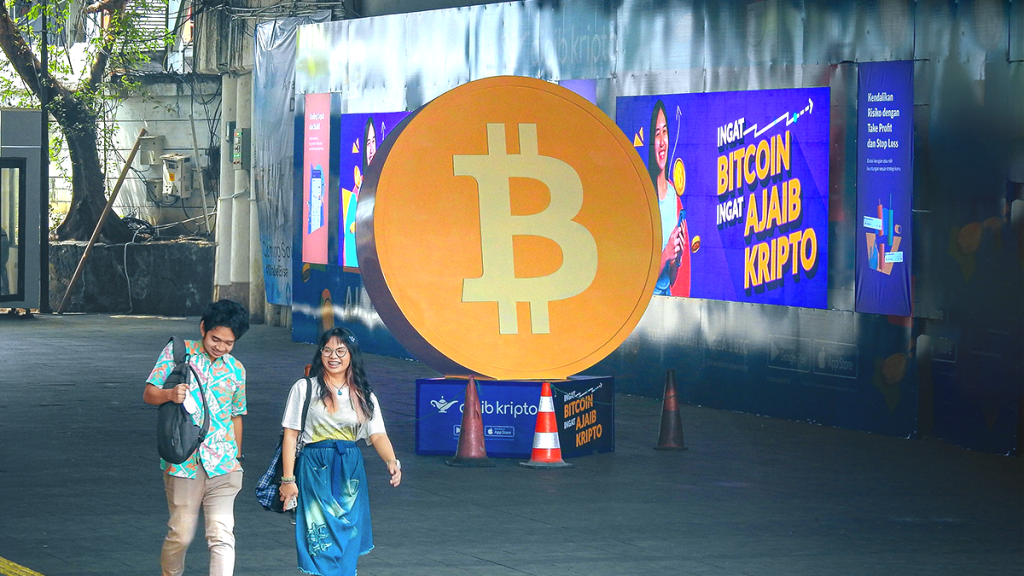
Photo credit: CimPin / Shutterstock
When equities rallied, bitcoin’s response was muted. When equities sold off, it fell more sharply in the same direction.
This skew captures crypto’s “middle child” position: it absorbs the downside of a risk asset without reliably sharing the upside.
Crypto by any other name
A liability, not a badge of honor
Stay ahead in Asia’s tech landscape
This is premium content. Subscribe to read the full story.
Companies like Polymarket and Kalshi are fully crypto under the hood, yet they barely talk about it. That’s not accidental.
We know this is not ideal. ⌛ Sign up in 20 seconds. Cancel anytime.
Our subscriber community includes professionals from these companies:





Stay updated on the go with our mobile app.
Get latest insights with smoother, more personalized experience through TIA mobile app.










📅 Upcoming Events
22 October 2026
Payoneer x CSPN Summit 2026