
Welcome to The Offset! Delivered once a month via email and through the Tech in Asia website, this free newsletter breaks down the biggest stories and trends in greentech. Get it in your email inbox by registering here.
Hi readers,
Happy new year! First and foremost, I want to thank you for being a part of The Offset in 2022. This year, we’ll continue to bring you all the big headlines about climate tech!
For the first issue of the year, we look at the recent breakthrough in nuclear fusion, the process that powers the sun. A breakthrough at a California-based laboratory has given companies in the space new momentum to raise funds.
Enjoy reading!
— Nicole
THE BIG STORY
Can Indonesia’s ESG startups benefit from G7’s $20b commitment?

Image credit: Timmy Loen
The G7 member countries, including the US and Japan, as well as several financial institutions have agreed to disburse US$20 billion for Indonesia to tackle its carbon footprint and speed up its transition to renewable power.
The Indonesian government has also commited to developing cleaner energy policies, including finalizing a new and renewable energy bill. Despite the commitments, it’s still a question how much real impact these initiatives will have on local enviromental, social, and governance startups.
DEEP READS
‘Bottling the Sun’: Is this a new dawn for the fusion industry?
In December, scientists at the Lawrence Livermore National Laboratory, in California, successfully generated more energy than what was put into the lasers that started a reaction. Their fusion-energy device is the multibillion-dollar National Ignition Facility.
Over the past few years, there have been a handful of promising startups working on fusion technology, including Avalanche Energy, Commonwealth Fusion, Helion Energy, TAE Technologies, and Zap Energy. These companies have raised billions from high-profile investors like Bill Gates and Jeff Bezos in the recent past.
Some hailed Livermore scientists’ breakthrough on fusion as the dawn of the fusion age, the new era of clean energy. True or not, it has put the wind in the sails of the nuclear energy industry.
In Australia, for instance, a coalition of tech companies aims to create a high-intensity laser industry, with potential applications that include nuclear fusion.
Thailand also hopes to join the global fusion research effort and become a hub in the region. The country received parts of a retired tokamak, a magnetic confinement device, donated by China last month. The Thailand Tokamak-1, a fusion device renovated using the parts of a tokamak from China, is the first of its kind in Southeast Asia.
TRENDING NEWS
You can also check out Tech in Asia’s coverage of Asia’s greentech scene here.
1️⃣ G7 nations to provide Vietnam with $15.5 bln to cut coal use
A group of nine industrialized nations has approved a deal to provide US$15.5 billion to help Vietnam transition away from coal. The G7 countries, along with Norway and Denmark, aim to help Vietnam reduce its emissions to “net zero” by 2050.
Why it matters:
The deal is among a series of Just Energy Transition Partnership agreements that developing and rich nations are negotiating.
At the G20 in November, a partnership between Indonesia and a similar international coalition led by Europe, the United States, and Japan was signed.
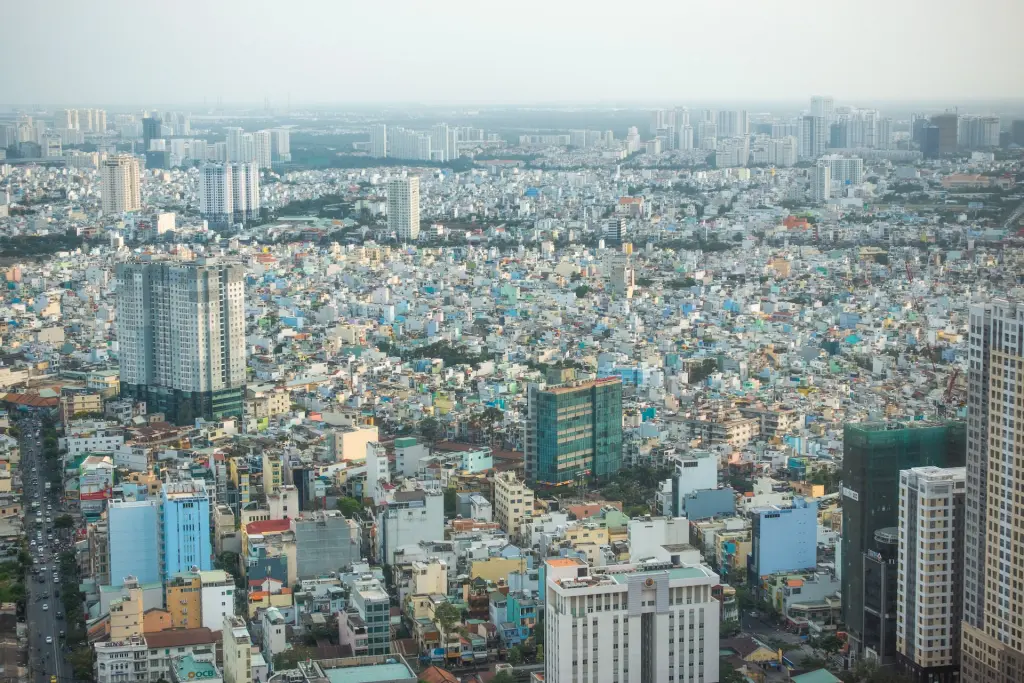
Image credit: Unsplash
2️⃣ India approves $2.3 billion to develop green hydrogen
The Indian government has approved US$2.3 billion to support the production, use, and export of green hydrogen. The funding initiative aims to lower the cost of the renewable energy source.
Why it matters:
The initiative is a first step in establishing the production capacity to churn out at least 5 million metric tons of green hydrogen by the end of this decade.
3️⃣ Big solar panel makers boosting production as costs fall
Three major solar panel module manufacturers in China are bumping up January output forecasts because materials have gotten much cheaper and near-term demand looks promising.
Why it matters:
The prices of materials like polysilicon and wafer are falling due to rising capacity. The ramping of production is a boon to markets including the US, where access to solar panels has been challenging.
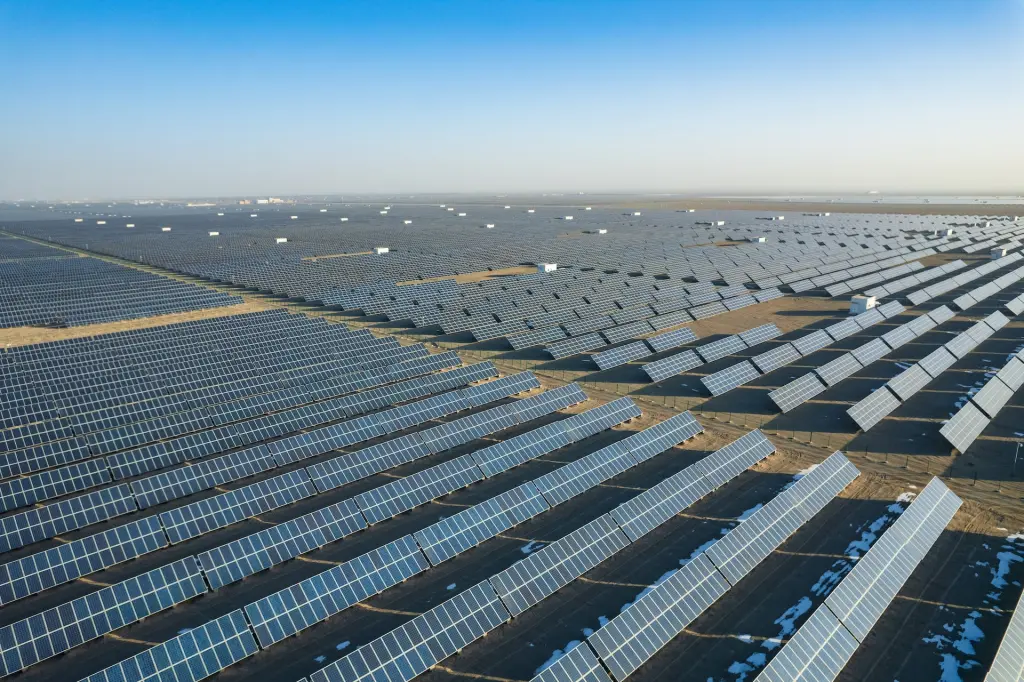
Image credit: Unsplash
4️⃣ Sony and Honda reveal joint EV brand Afeela at CES
Sony and Honda jointly revealed the prototype of an electric vehicle under the brand name Afeela. Pre-orders of the four-door sedan are scheduled for the first half of 2025, with sales to begin some time in the same year. The first Afeela vehicles are expected to be delivered to customers in North America in the spring of 2026.
Why it matters:
Emerging electric-vehicle brands have been slowly chipping away at Tesla’s dominance in the US market. Afeela’s mid-sized elective sedan is said to rival Tesla’s Model S.
STARTUP WATCH
1️⃣ Chevron leads $318m raise for carbon capture tech firm Svante
British Columbia-based Svante has raised a US$318 million series E round led by Chevron New Energies, the alternative fuels unit of oil giant Chevron. Svante launched in 2007 and has 216 employees. The funds will go toward building two commercial-sized carbon filter manufacturing facilities.
2️⃣ Group14 closes an additional $214m to complete $614m series C funding round
Group14, a silicon-battery technology firm, has raised an additional US$214 million in its series C round, bringing its total financing in the round to $614 million. The investors include Microsoft’s Climate Innovation Fund, Lightrock Climate Impact Fund, Moore Strategic Ventures, Oman Investment Authority, and Molicel.
3️⃣ EnginZyme raises 21m euroes in series B to accelerate the commercialisation of its cell-free biomanufacturing tech
EnginZyme, a cell-free biomanufacturing company based in Stockholm, Sweden, has raised around US$22.4 million in a series B round. Its backers include Almi Invest GreenTech, Navigare Ventures, Bunge Ventures, Sofinnova Partners, Industrifonden, and SEB GreenTech VC.
4️⃣ Thakral Corporation leads $2.5m round of BillionBricks
BillionBricks, a Singapore-based climate tech startup that combines clean energy and large-scale affordable housing, has closed a US$2.45 million seed funding round led by investment holding company Thakral Corporation.
5️⃣ Pathzero secures $5.8m in a series A extension
Pathzero, an Australia-based greentech startup, has raised US$5.8 million in an extension of its series A round led by Carthona Capital. Investors including Clyde Bank Holdings and Antler also participated. Pathzero has raised a total of US$10.5 million for the round. Founded in 2020, Pathzero helps companies and financial services measure, manage, and disclose emissions from their investment portfolios.
That’s it for this edition – we hope you liked it! Do subscribe to continue receiving The Offset.
See you next month!
The Offset is made possible thanks to Taiwan Mobile.
The company earned the best telco title in the Global Views CSR Awards.
Taiwan Mobile is on a mission to transition to 100% green energy by 2040.
Stay updated on the go with our mobile app.
Get latest insights with smoother, more personalized experience through TIA mobile app.
Recommended reads
 Alibaba’s capex isn’t the full story
 Forget startups. Buy the business running on Excel
 Life’s a game, and AI agents are Animoca’s new play
 Indonesian AI startup goes global
 Forrest Li on scaling Sea, building smarter bots, and founder grit
 An AI assistant that joins sales calls and scores team skills
 Beyond the check: Why VCs need more than capital
 SGX’s CEO says it doesn’t need a unicorn to win
 SMEs want AI too, but not the kind Big Tech is selling
 Oatside’s alt-milk rise hits a profitable gear




Editing by Arpit Nayak
(And yes, we’re serious about ethics and transparency. More information here.)






