Steven Millward · · 5 min read
In China, even creating a pollution tracking app is a risky business
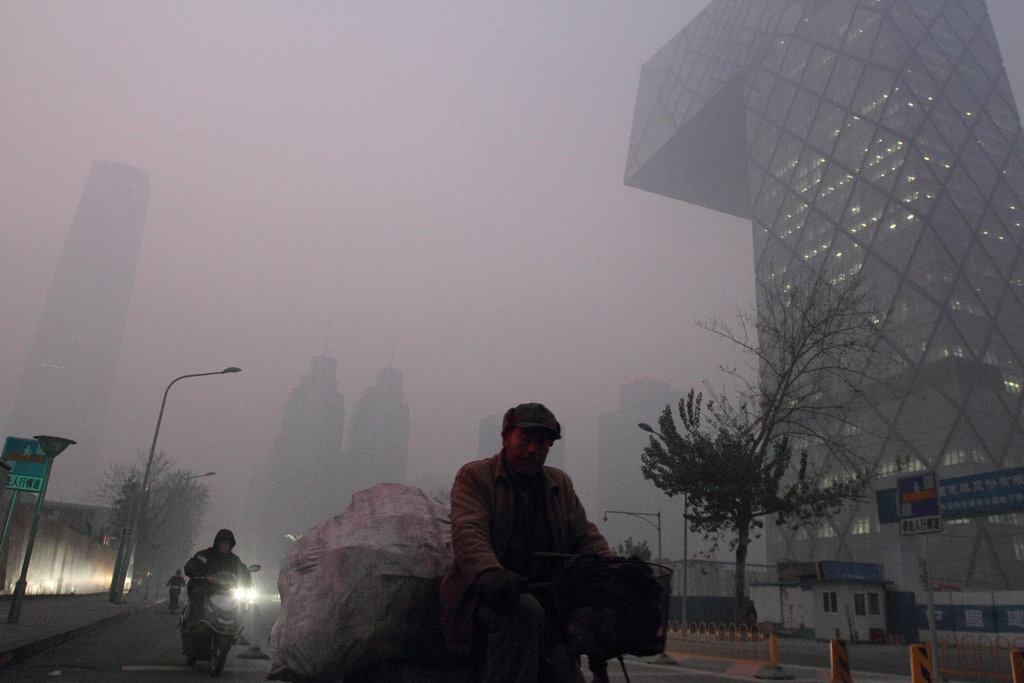
China’s pollution is a sensitive issue – not just in the way it inflames your throat and nostrils after a commute through a toxic smog. The pollution highlights how normal people are paying the price of development that’s fueling a boom in billionaires; the choking haze is linked to the premature deaths of 1.2 million people in China in 2010, according to figures from the Global Burden of Disease Study.
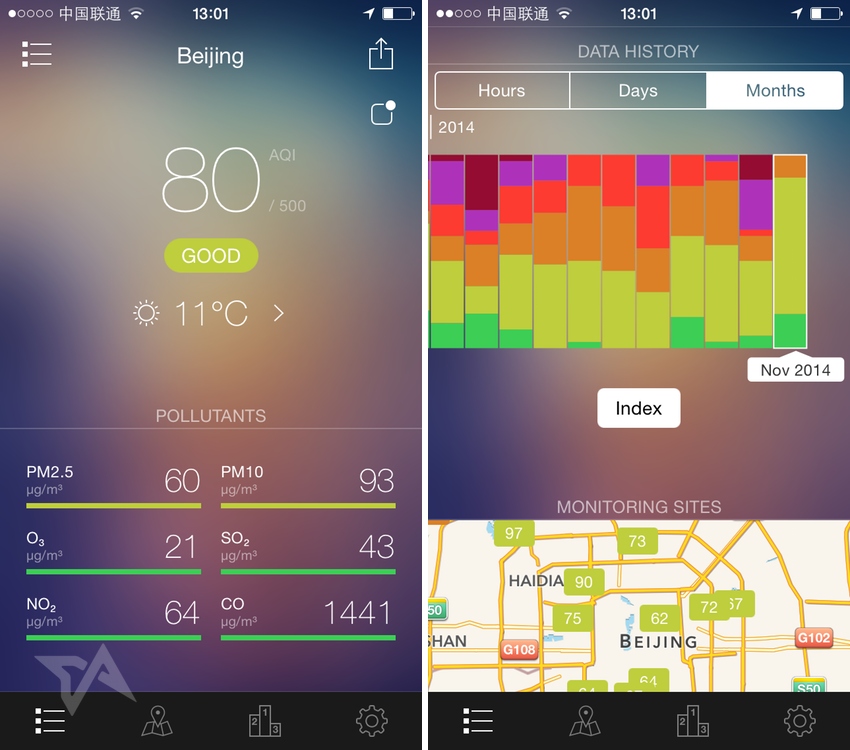
A new mobile app popped up in 2011 that wanted to make it easier for Chinese people to gauge just how bad the pollution is in their city. It also allowed for easy sharing of pollution index data through social networks like Weibo. It was initially called DirtyBeijing, but later changed its name to China Air Quality Index. Zhang Bin, the co-founder of the startup behind the app, explains to Tech in Asia:
It was mid-October 2011, and the air quality in Beijing was quite bad, as you may imagine. It came to my mind that if we could check the air quality on our phones and receive pollution notifications, that would be quite helpful and handy. After some research on the App Store, it turned out that all existing apps about air quality – in fact, there were not so many as that time – were ugly or poorly functioning.
We believed we can make a better one, so we spent two weeks’ leisure time – we had not quit our jobs yet – to build our first version, and that was how it began.
That was around the time Beijing’s air got drastically and noticeably bad, to the extent that the hills outside of the city became a distant memory to its residents. Barely being able to see the next few blocks was quickly becoming the new norm.
At that time, too, a new phrase came to the attention of China’s web users – “PM2.5.” That’s the measure of especially small particulate matter that’s less than 2.5 micrometers in diameter. Those are believed to cause more damage to urbanites’ lungs than the larger pollutants that are indexed by the older measurement system used by China’s municipal governments.
The US Environmental Protection Agency (EPA) began giving real-time PM2.5 updates in Beijing towards the end of 2011. The contrast to the authorities’ numbers was alarming. On one day in November 2011, we noted that the China National Environmental Monitoring Center page for Beijing gave an “air pollution index” of 27, which was rated as “excellent”; however, the EPA PM2.5 metric was 125, which was classified as “unhealthy for sensitive groups.” China’s netizens realized that the PM2.5 read-out was the real deal.
“At first we did not anticipate a large audience for this project, and we did not conduct any marketing,” continues Zhang. “But in early December 2011, when Beijing encountered air pollution again, we noticed a spike in downloads. The main factor contributing to this growth was that our users posted screenshots on Weibo voluntarily, including those who had plenty of followers like Yao Chen [an actress who, at the time, was the most followed person on Weibo], therefore more people started to download our app. After that, we received piles of user feedback email, which encouraged us to make this app better.”
Unhealthy





Stay updated on the go with our mobile app.
Get latest insights with smoother, more personalized experience through TIA mobile app.