 Samantha Cheh · · 6 min read
How this cosmetics startup is finding its niche with in-depth personalization

As of 2021, around 10% of India’s population had managed to escape poverty. This is a major accomplishment, but the reality is that millions still live below the US$2.15 per day poverty line.
It’s a bleak situation, one that made Samir Kazi want to look for a sustainable way to help.
“I wanted to come up with something that would empower these people to become self-sufficient, rather than relying on donations,” he recalls.
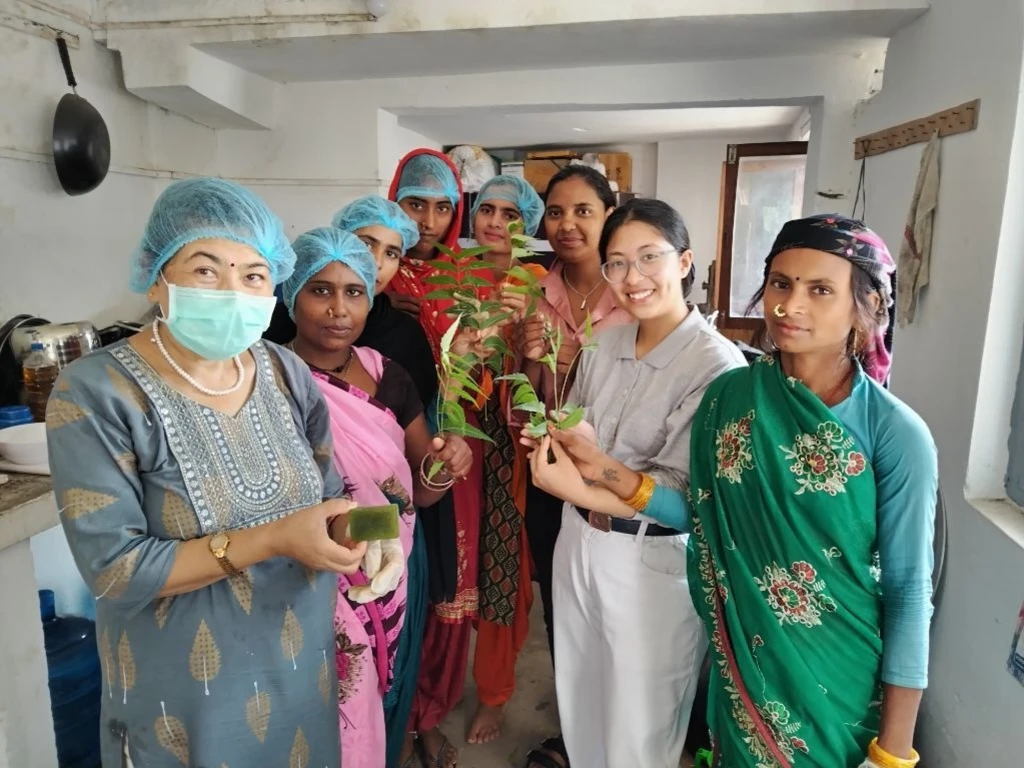
Rozhub’s employees – the startup provides work opportunities for underprivileged women in rural India / Photo credit: Rozhub
After some research, Kazi founded Rozhub Naturals, a cosmetics brand that would capitalize on the growing popularity of natural cosmetics, and provide work opportunities to underprivileged women in rural Maharashtra.
“Once we finalized some samples, we started with making soaps first, before expanding to lip balms, natural powders, and essential oils,” he explains.
Connecting the dots
Rozhub has expanded quickly since it launched, but as it moves into its next phase of growth, it faces the unenviable challenge of trying to stand out in an oversaturated, highly competitive beauty industry.
“India in particular is a very fragmented market where hundreds of new websites and startups are being created every day,” says Glenn Gore, CEO of data and identity management solutions provider Affinidi. “Having a good product is important but if the startup can’t find customers, it’s still going to fail.”
Kazi concurs, saying that 13 years of working in ecommerce has taught him that focusing on just marketing wouldn’t be effective. Relying on first-, second-, or third-party data to get customers would mean “spending ridiculous amounts of money on advertising with a 97% failure rate,” Gore adds.

Samir Kazi, founder of Rozhub : Photo credit: Rozhub
This mirrored Rozhub’s experience: It tried running ad campaigns on Meta and Google, but found its costs spiraling out of control.
“Our product category is very niche, so we were trying to drill right down to the right target audience,” recalls Kazi. “We have a limited marketing budget so we can’t afford to spend US$2 to US$3 per click. But if we can target customers with a wow experience, we can increase conversions.”
Finding the right audience and serving them the best possible experience requires startups to connect the dots between their products and a customer base with the ability and willingness to spend. Social impact startups like Rozhub may even be able to find a customer base whose passions resonate with the businesses’ empowerment goals.
Just one click
After a meeting in Mumbai, Rozhub began working with Affinidi to explore ways to embed more personalization into its customer journey in order to create this “wow experience.”
Two key solutions are being leveraged by Rozhub, the first being Affinidi Login, a passwordless authentication product that allows users to easily and quickly sign into the platform without having to share any personal details.

Affinidi Login on Rozhub’s platform / Photo credit: Rozhub
“Compare that to standard registration approaches, where I have to create an account with an email address or passwords – that’s so much hard work, so I’ll just drop out of the process,” says Gore. “With Login, I have one-click onboarding and a fast journey to checkout – that’s just a dramatically better experience.”
Using Affinidi Login is also more secure than traditional login processes as users’ information is stored on their own devices.
“Customers don’t have to worry about memorizing passwords. And from Rozhub’s perspective, it means not having to create and maintain its own data storage infrastructure that can be hacked,” Gore adds.
The network effect
Beyond seamless interfaces, enhanced customer experiences are also about serving customers with the perfect recommendations at the ideal time.
This is where Affinidi Vault, a holistic digital identity management solution, comes in. With Affinidi Vault, customers are empowered to decide what data they’re willing to share with Rozhub – this informs the level of personalization they receive.

Glenn Gore, CEO of Affinidi / Photo credit: Affinidi
“Affinidi creates a pool of customers who are actively advertising aspects of themselves that align with what the business is doing,” says Gore.
This level of personalization goes beyond discoverability, he adds, as the small details customers provide can enable Rozhub to offer accurate recommendations when they return to the site. For example, if customers share their purchase histories from other sites with Rozhub, the startup can recommend similar products or new items based on favorite scents or ingredients.
“If they have an allergy, products with the offending ingredients can also be cut out from their recommendations,” says Gore. “They don’t have to go hunting for ingredients lists.”
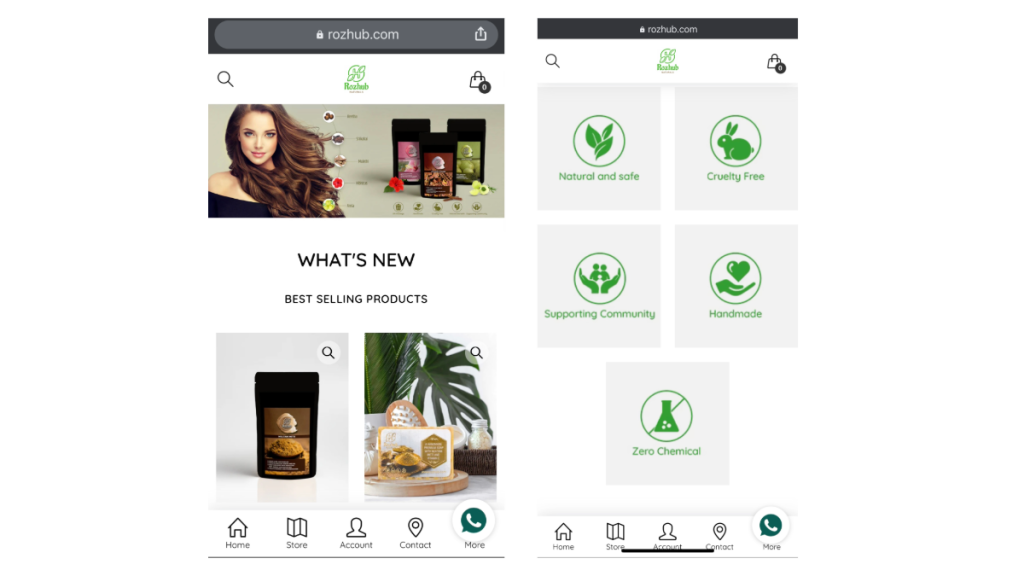
The Rozhub platform / Photo credit: Rozhub
In the long run, both startups and their customers are poised to benefit from the “network effect” of Affinidi’s new approach to identity management.
Rozhub, for one, is able to build its own community of customers who share its passion for natural cosmetics. Customers could also get rewarded with discounts or exclusive products if they demonstrate their commitment to helping disadvantaged communities or buying more sustainable goods.
Additionally, a third-party site could see that a customer has shopped on Rozhub, signaling their care for the environment, which could trigger a raft of other benefits down the line.
“We as customers could monetize some of that data while still remaining in control of our information,” says Gore. “Our digital selves are so wonderfully complex, they impart a real sense of who we are as an individual today. Sharing our passions can get us far better customer experiences.”
Staying focused on the human
According to Kazi, Rozhub has already received positive feedback from customers about the seamlessness of their login experiences. There has also been a noticeable fall in cart abandonment rates.
Gore shares that Affinidi is continuing to explore innovative ways to further enhance the personalization capabilities of Affinidi Vault with offerings like surveys, which could provide a cheap but effective form of market research to help Rozhub expand its product lines.
“As a young startup, we want to work with someone who can help us grow,” says Kazi. “We’re looking at a long-time partnership, I think.”
The same goes for Affinidi, which views Rozhub as a key partner in building tools that have real-world applications.
“We work on the latest, cutting-edge technologies, but we need actual businesses who interact directly with their customers to understand how they can give them a competitive edge,” says Gore.
This focus on relationships will be especially critical as AI adoption begins to accelerate.
“Humans are inherently driven by relationships; with our loved ones and – yes – even brands. The future of successful brands will be determined by how well they understand their customers and earn their trust,” Gore affirms.
Affinidi is a technology company dedicated to changing how we think about data ownership. By placing control back into the hands of users, its solutions help companies customize the entire customer journey.
Find out more about Affinidi on its website.
This content was produced by Tech in Asia Studios, which connects brands with Asia’s tech community. Learn more about partnering with Tech in Asia Studios.
Stay updated on the go with our mobile app.
Get latest insights with smoother, more personalized experience through TIA mobile app.
Recommended reads
 Indonesian AI startup goes global
 Forrest Li on scaling Sea, building smarter bots, and founder grit
 An AI assistant that joins sales calls and scores team skills
 SGX’s CEO says it doesn’t need a unicorn to win
 SMEs want AI too, but not the kind Big Tech is selling
 Oatside’s alt-milk rise hits a profitable gear
 Alibaba’s financial health in 12 charts
 Asia’s telcos bundle AI into mobile plans. Will it pay off?
 M-Daq chases bigger clients as revenue falls, losses grow
 VC tracker: Accel raises US$3.5b, including US$550m for India





Editing by Winston Zhang, Stefanie Yeo, and Dhania Putri Sarahtika
(And yes, we’re serious about ethics and transparency. More information here.)




