Erik Crouch · · 4 min read
Typing Chinese on a smartwatch seems insane. This startup might’ve figured out a way
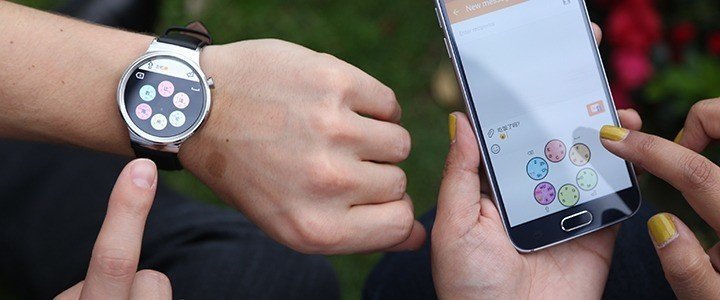
The first thing I thought when I saw iBeezi demoed was, “Sure, but why?”
The app works as a Chinese-language keyboard for smartwatches. A good amount of engineering – both in tech and linguistics – went into the software, which claims to offer a quick, highly accurate way to get Chinese text on screen.
But to see value in iBeezi, you have to first accept its basic premise: that people want to write on their smartwatches.
Yes, typing on a 1.3-inch screen is an actual thing that people want to do
“Voice commands are becoming increasingly accurate and efficient,” says Alexis Van Gestel, iBeezi CEO. “Even so, there are – and there will probably always remain – a number of use-cases in which the use of voice is not advised or possible: business meetings, school hours, crowded and loud places, etc.”
“A communication device, whether that be a smartphone or a wearable, should at least have one communication tool that can be used in any situation,” he adds.
If the more developed English-language smartwatch world is any guide, then there are some pretty solid signs that people are interested in typing messages, at least simple ones, on their watches.
As early as 2013, keyboard apps were being developed for the (at the time, very few) smartwatch owners in the US and Europe. Most relied on some kind of scaled-down QWERTY keyboard, using swiping or gestures to move between sets of keys.
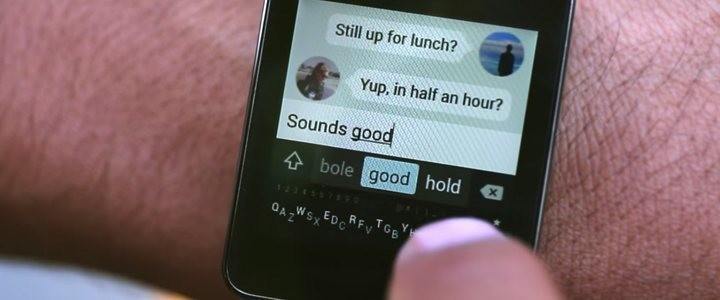
Minuum keyboard, via Minuum.com
The Minuum keyboard app, for example, condenses the QWERTY keyboard down into a thin bar at the bottom of the watch face and relies on a word suggestion feature to aid users. As the Minuum website says, echoing Alexis, “when you’re on a bus, in class, or in a meeting, talking to your wrist just doesn’t make sense.”
If you accept the idea that people actually want to do this, then it’s possible to think that the folks at iBeezi might be onto something.
Simplify, simplify, simplify
Typing Chinese characters on a smartphone or computer keyboard is typically done using pinyin, the primary romanization system for the language. The Chinese character 中, for example, is pronounced “zhōng.” To write it, a user would simply type z-h-o-n-g, and then select 中.
But z-h-o-n-g is also 重, and 种, and dozens of other homophones. On a computer or smartphone screen, it’s easy enough to simply select the character you want from a list. But on a smartwatch, the system would quickly fall apart.
Tapping into a market





Stay updated on the go with our mobile app.
Get latest insights with smoother, more personalized experience through TIA mobile app.