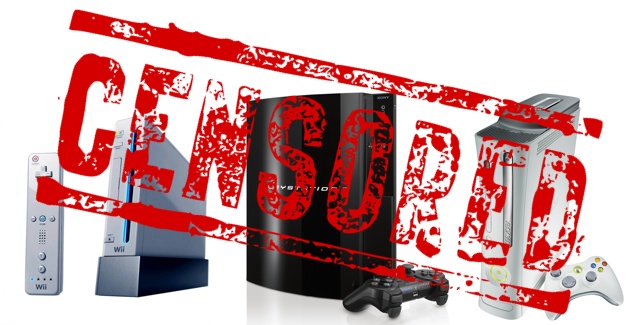
China has been in a gaming bubble for the last fifteen years. Isolation by language, draconian anti-console laws, and China-only servers mean that China hasn’t had a lot of impact on gaming outside its borders. Sure, League of Legends, Dota 2, and World of Warcraft all have massive followings here, but all that means is that Chinese servers are usually behind the rest of the world for patches and updates. Occasionally, something like a skeleton, or an icon will be altered for the Chinese version, but nothing more than that.
But as China’s gamers get richer and foreign publishers begin to focus on the world’s second largest games market, it’s clear that these days are drawing to a close. Things are going to change, probably not for the better.
A common misconception
There is a common misconception that China’s opening up to foreign businesses and wealth will inevitably lead to political shift and newfound democratic ideas. In short, there is a belief that the more business we do with China, the nicer the Chinese Communist Party will become. Let’s just nip that fallacy in the bud right now.
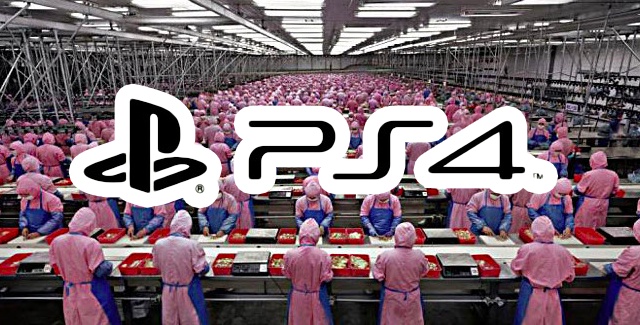
Business in China is there for one reason and one reason only: to make money. Companies happily throw away the ethics they espouse at home when it comes to China. Entities like Foxconn have thrived off dirtying their hands so that Western businesses like Apple, Sony, and Microsoft, to name a few, can take advantage of cheap labor, poor working conditions, and occasionally, outright abuse of human rights.
(See: Report: Foxconn using forced student labor to build Sony’s PS4)
Unfortunately this same misconception is applied to other forms of media, including computer games. Surely more access to foreign media will lead to change, new ideas, and a brighter future, right? Well, it’s not impossible, but it isn’t what happens, because that’s not what happens.
Contrary to hopeful belief, China is not lightening up. In the last month, shows like The Big Bang Theory and Supernatural were banned because they were deemed unsuitable for Chinese audiences. Slash fiction (homoerotic fanfiction) websites were shut down, and an unknown number of authors (mostly young women) were arrested under archaic anti-pornography laws. China isn’t loosening up, it is clamping down.
It works the other way
Western media doesn’t fight or struggle against Chinese censorship, it complies to it. Just look at Harvard professor emeritus Ezra F. Vogel, who allowed Chinese censors to edit his book Deng Xiaoping and the Transformation of China, in order to gain access to a wider market.
Or how about the numerous films that are edited for Chinese audiences? Films like Skyfall had whole subplots removed, and even the 3D version of Titanic censored Kate Winslet’s breasts because the government feared the power of three-dimensional boobs. 2D ones are okay though, only the 3D version had the offending body parts removed.





Stay updated on the go with our mobile app.
Get latest insights with smoother, more personalized experience through TIA mobile app.