- Insights This article was written by a TIA community member. Insights pieces undergo the same rigorous editorial process that newsroom-produced articles have.
 Kyle Qi · · 6 min read
If China planted a spy at Nvidia, it was self-sabotage
Every good spy story needs a motive. The one that ended Jensen Huang’s career last week doesn’t have one.
Jensen resigned as Nvidia’s CEO on November 12, days after admitting to an affair with Alice Huang (no relation), a former executive at Singapore-based data center operator Megaspeed. US officials reportedly believe she worked for Chinese intelligence, and The New York Times revealed that President Trump was briefed on that suspicion about a year ago.
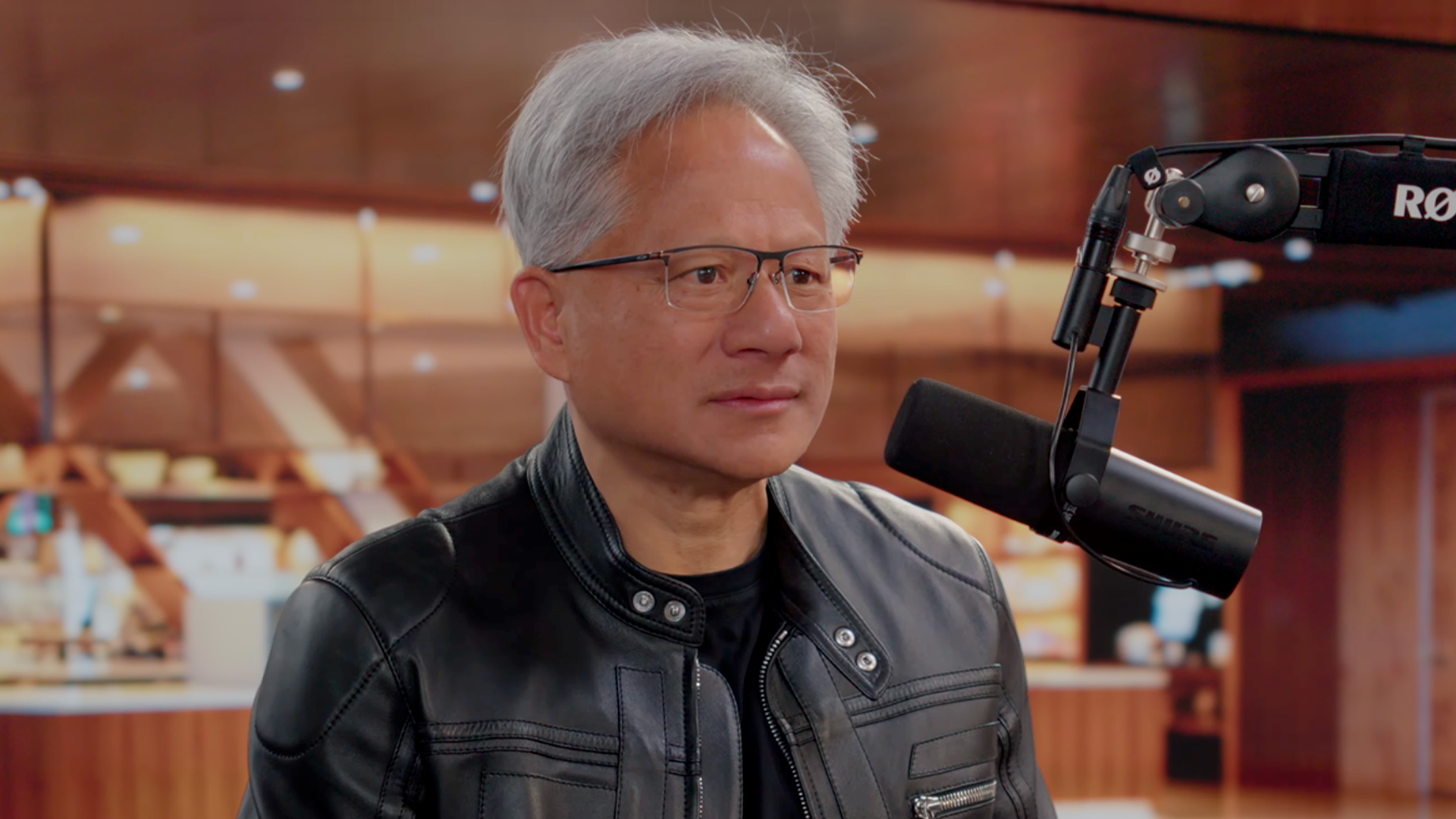
Former Nvidia CEO Jensen Huang / Photo credit: Dwarkesh Patel
Megaspeed’s Malaysian subsidiary Speedmatrix has bought at least US$4.8 billion worth of Nvidia equipment, including chips, between mid-2024 and early 2026. According to The New York Times, the US Justice Department has taken over a probe into whether Megaspeed helped Chinese firms evade export controls.
Beijing calls the espionage claims “groundless speculation.”
Despite all this, no one has publicly shown that Alice was an intelligence officer, or that Jensen knowingly helped move chips to China. The leap from an affair with a suspected spy to a scheme involving the sale of chips to China is being made in headlines, not in court.
And if this really was a Chinese operation, it worked against China at almost every turn, at least at first glance.
The motive problem
Think about what Beijing actually wants from the chip war: looser American export controls and a domestic chip industry that no longer needs Nvidia.
The alleged operation would have delivered neither.
For more than a year, Beijing has been pushing its tech giants off Nvidia and onto Huawei’s Ascend chips, discouraging purchases of even the downgraded Nvidia parts that Washington allowed.
Every grey-market Nvidia GPU that reaches a Chinese lab does the opposite and keeps Chinese engineers writing code for CUDA, Nvidia’s software platform, instead of Huawei’s. It is the most effective way to keep China dependent on an American company.
See also: Why Jensen’s downfall puts SEA at risk
There’s also the politics. Jensen was, in Eurasia Group analyst David Meale’s words, “the industry’s most effective lobbyist against tighter rules.”
He was in the room for Trump’s Beijing visit in May and Xi’s Washington trip in September. Jensen was by far the most valuable voice in America for keeping chips flowing to China legally.
Chinese chips’ chance?
What would change my mind
Stay ahead in Asia’s tech landscape
This is premium content. Subscribe to read the full story.
The Nvidia scandal reads like a spy thriller. But the plot has a hole: Why would Beijing want this?
We know this is not ideal. ⌛ Sign up in 20 seconds. Cancel anytime.
Our subscriber community includes professionals from these companies:









📅 Upcoming Events
30-31 March 2027
Upskill Fest