 Bree Chan · · 5 min read
A tale of two firms: one protects lives, another stops scams

When you are down with a fever and stuffy nose, the last thing you want is to leave your bed. Fortunately, modern telemedicine apps let you consult doctors and even get medicine delivered right to your door.
While telemedicine has made medical care more convenient for tech-savvy consumers, those who stand to benefit the most from the service often struggle to access it.
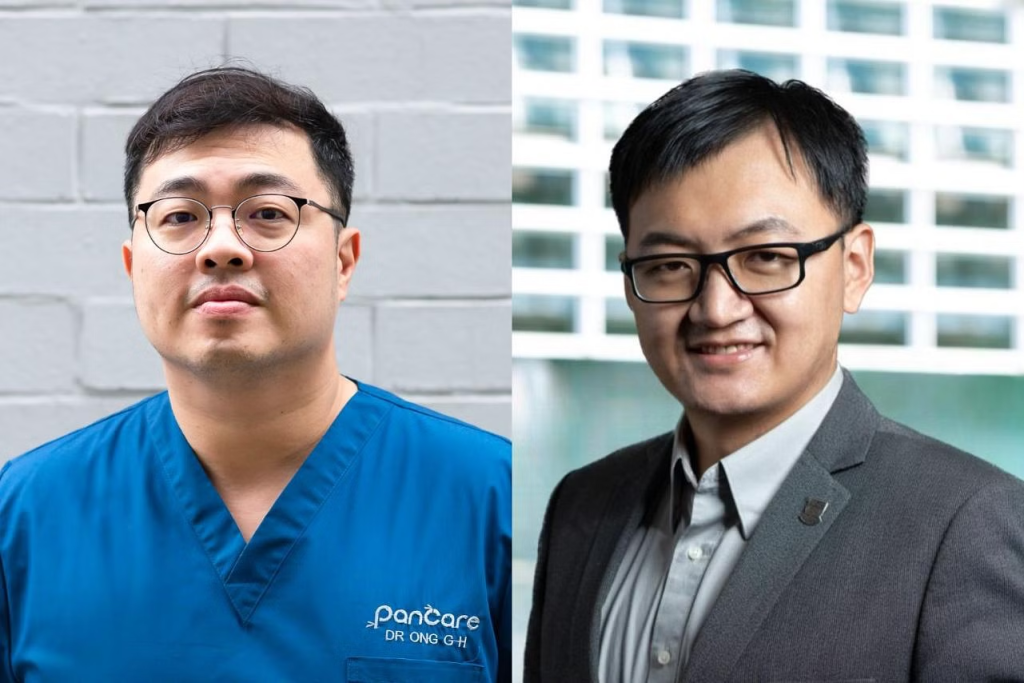
Dr. Ong Guan Hong of PanCare Medical (left) and Dr. Miles Wen of Fano, are leading their respective companies in addressing societal challenges. / Photo credit: Pancare Medical and Fano
“There is a large group of people out there, in rental flats and receiving social assistance, or the very elderly, who don’t know how to use mobile phones,” says Dr. Ong Guan Hong, chief executive officer of PanCare Medical, a medical group specializing in community and transitional care.
Many of these patients face mobility challenges too. “Some of them are very frail, wheelchair- or bed-bound,” he adds.
Rather than having doctors make individual house calls, PanCare Medical has developed an innovative solution. Specifically, mobile teams of nurses and healthcare assistants visit patients at home, conducting basic procedures and facilitating video consultations with clinic-based doctors when needed.
This telemedicine-by-proxy model has significantly improved efficiency, allowing doctors to consult with more patients while nurses provide hands-on care.
By maximizing the skills of both medical professionals and support staff, PanCare Medical can also reach more homebound patients daily while maintaining high standards of care.
Proven expertise in managing complex healthcare facilities
PanCare Medical, winner of the Emerging Enterprise Award this year, earned its stripes during one of Singapore’s most challenging healthcare crises. During the Covid-19 pandemic, the company played a crucial role in setting up, managing, and running Joint Testing and Vaccination Centres (JTVCs), swab isolation facilities, and community care facilities. This demonstrated its ability to efficiently handle large-scale healthcare operations.
This extensive experience and proven track record led to PanCare Medical winning competitive bids to operate two strategic Transitional Care Facilities (TCFs).
TCF@East in Changi (in partnership with Parkway) and TCF@West in Jurong serve patients who have been discharged from acute care in hospitals but are waiting for their discharge destination to be ready. PanCare Medical provides follow-up care like rehabilitation and psychiatric counselling, as well as caregiver training.
“Our experience managing JTVCs during the Covid-19 pandemic taught us valuable lessons about scaling healthcare operations while maintaining quality care,” says Dr. Ong, who has been practicing medicine for more than 13 years. “We applied these insights to create comprehensive care programs at our transitional care facilities.”
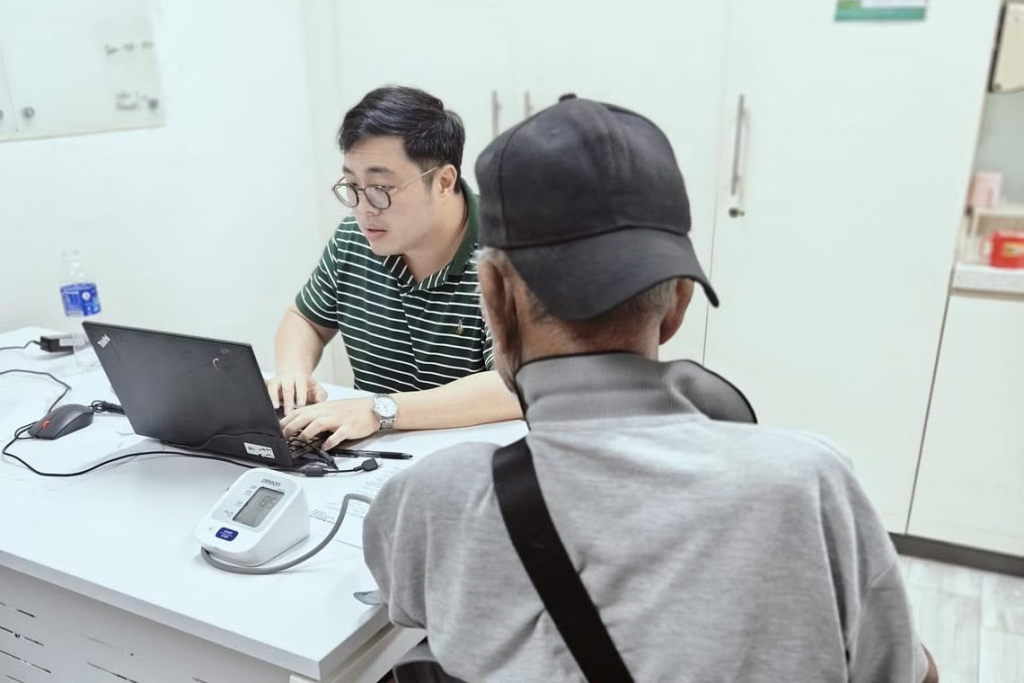
Dr. Ong conducts a patient consultation during one of PanCare Medical’s health screening events. / Photo credit: PanCare Medical
The company’s “kampung spirit” approach stems from its eight heartland clinics in Singapore, strategically located in areas with high concentrations of elderly residents needing chronic and geriatric care: Ang Mo Kio, Hougang, Serangoon, Jurong East, Lavender, Bukit Merah, Yishun, and Lorong Ah Soo.
By working with specialists, these clinics aim to bring hospital-level services like physiotherapy, dietician services, counselling, and wound care into the heartlands, providing holistic care that addresses medical, functional, mental health, and nutritional needs.
“We think of ways to further value-add to our end users and go the extra mile. For example, family involvement is very important, so we have events like the Mid-Autumn Festival and campfires. We also bring in volunteers to provide haircuts, music and art therapy at our TCF,” says Dr. Ong.
Pioneering multilingual AI solutions for Asia’s diverse markets
In a region where multiple languages and dialects often blend within a single conversation, Fano has emerged as a groundbreaking force in AI-driven language solutions. The company, another Emerging Enterprise Award winner, has developed sophisticated AI models specifically trained to handle the linguistic complexity of Asian markets.
“Asia’s linguistic landscape is unique,” explains Dr. Miles Wen, Fano’s CEO. “In Singapore alone, you might hear Singlish that combines English, Mandarin, Malay, and Tamil in a single sentence. Traditional language processing systems struggle with this reality.”
Fano’s proprietary software transcribes multiple languages in real-time with over 90% accuracy, surpassing human listeners. Currently supporting over 18 languages and dialects, including Singlish, Cantonese, Tagalog, and Hindi, its technology has found critical applications across various industries.
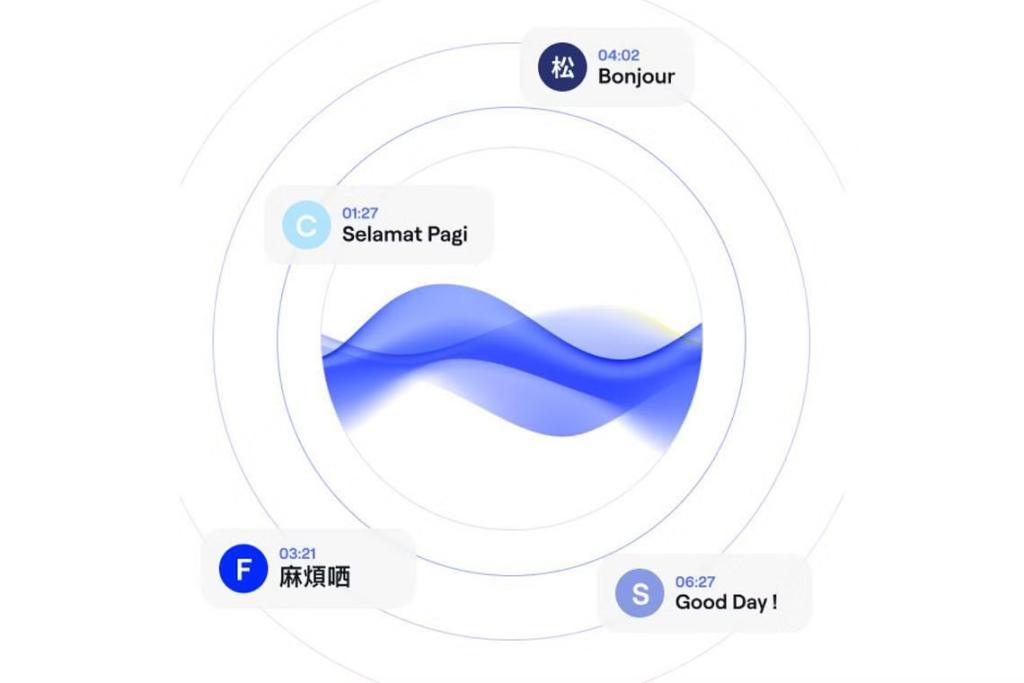
Fano’s AI-powered voice recognition technology can simultaneously process multiple languages and dialects, including greetings in French, Malay, Chinese, and English. / Photo credit: Fano
Major financial institutions use Fano’s speech analytics software to track and label different voices during complex banking meetings involving multiple participants – clients, family members, lawyers, bankers, and supervisors. This proves invaluable for regulatory compliance and documentation requirements.
The technology’s applications extend beyond finance. Stock exchanges use it to monitor rapid trader communications, while law enforcement and legal proceedings benefit from its ability to transcribe and distinguish speakers across various languages and dialects accurately.
One crucial application of Fano’s technology is in combating the rising threat of AI-powered voice scams. Its scam detection software helps banks and financial institutions identify AI-generated voices and prevent fraudulent transfers, addressing a growing concern in the digital age. In the first half of 2024, [Singapore reported scam losses of US$283.2 million (S$385.6 million), averaging US$85,500 (S$116,500) per case.
Unlike general speech processing models from tech giants like Google or Amazon, Fano achieves higher accuracy by training on specific data from its clients, including banks, financial institutions, and public agencies. Its client roster includes regional banks like HSBC and a majority of local and international banks in Hong Kong.
“We’re not just here for security, but to create value for society,” says Dr. Wen, whose own mother fell victim to fraud. To prevent misuse of Fano’s technology, which is founded on decades of academic research, the company carefully selects its clients.
“We do not work with general consumers directly, only with reputable firms. These organizations publish their governance framework, so we are confident that the technology will not be abused and misused.”
Currency converted from Singapore dollar to US dollar: US$1 = S$1.36.
Recognizing bold ambition
Now in its 17th year, the Emerging Enterprise Awards continue to highlight the innovation, resilience, and excellence of SMEs under 10 years old. The awards are a joint initiative by The Business Times and OCBC Bank.
For the second consecutive year, applications were extended to emerging businesses across the region, broadening the awards’ reach beyond Singapore.
In the sustainability category, the Emerging Enterprise Sustainability Awards honor enterprises that embrace opportunities in the green economy, whether by embedding sustainable practices in their operations or leveraging technology and innovation to drive the transition to low-carbon economies.
Additionally, the Most Promising Sustainability Startup Awards celebrate businesses with unique, commercially viable ideas and significant long-term potential. Find out more here.
This story was republished with permission from The Business Times. It was moderately edited to reflect Tech in Asia’s editorial guidelines.
Stay updated on the go with our mobile app.
Get latest insights with smoother, more personalized experience through TIA mobile app.
Recommended reads
 SEA financials tracker: Moladin’s revenue rises 6% in 2025
 On‑demand services lift Line Man Wongnai’s 2025 revenue to $544m
 Flipkart’s costly late push into quick commerce and food delivery
 Inside Singapore’s government team that kills its own products
 Once an IPO hopeful, SCI Ecommerce nears collapse
 Who’s betting big on ChatGPT ads? Not Asian brands
 VC tracker: Granite Asia launches US$50 million fund
 GCash trims IPO ambitions to meet market realities
 Igloo CEO eyes global M&A: ‘We have an appetite to grow more’
 Why SBI paid a premium for Ajaib amid a tough market





Editing by Jaclyn Tiu
(And yes, we’re serious about ethics and transparency. More information here.)







📅 Upcoming Events
22 October 2026
Payoneer x CSPN Summit 2026