 Gilang Kharisma · · 6 min read
The narrative war behind AI’s biggest IPOs
This article summarizes an episode of Alex Kantrowitz’s video series featuring Dick Costolo, former CEO of Twitter.
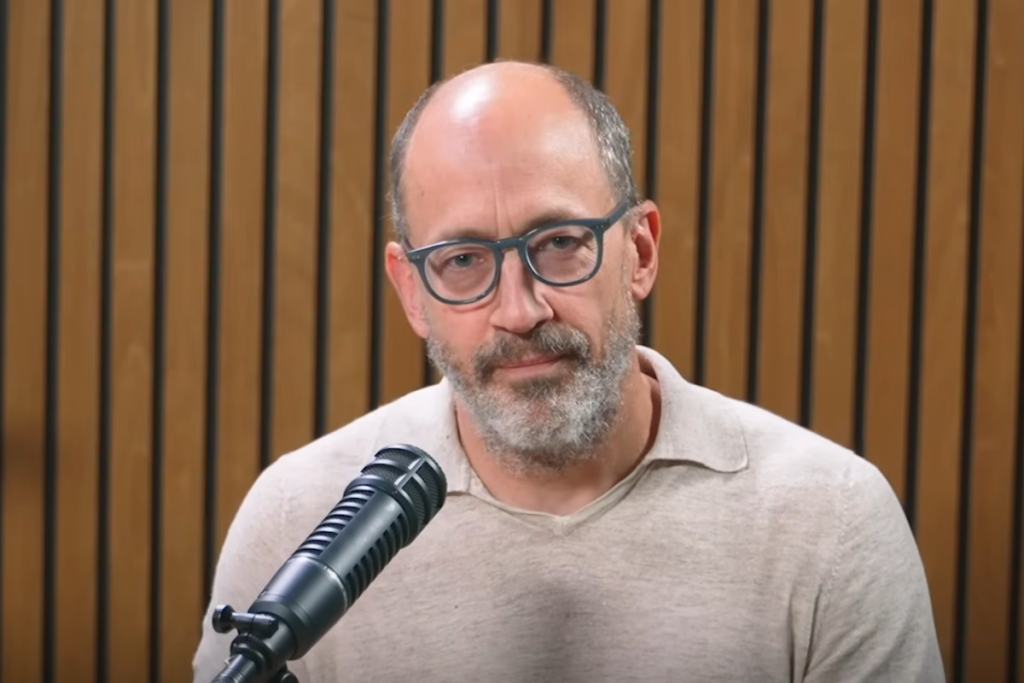
Dick Costolo, former CEO of Twitter and managing partner at 01 Advisors/ Photo credit: Alex Kantrowitz
The upcoming IPOs of SpaceX, OpenAI, and Anthropic will face physical and financial hurdles that traditional software companies never had to navigate.
Dick Costolo, former CEO of Twitter and managing partner at 01 Advisors, points out that the transition from digital code to physical infrastructure changes how these companies must pitch themselves to Wall Street.
To survive the public markets, Costolo argues that tech leaders must now master corporate storytelling to offset huge capital expenses, unpredictable market metrics, and local zoning disputes.
Public markets need a guide
A newly public company must dictate its own narrative before Wall Street forces one upon it. Leaders must establish a clear operational story before analysts and retail investors invent their own metric.
While private valuations change slowly between funding rounds, public stock prices fluctuate daily based on market sentiment. To maintain control over their valuation, executives must take these steps:
- Define the main metric early because these initial narratives train investors to fixate on specific numbers that often overpower actual revenue performance.
- Turn ambition into measurable steps since Wall Street tolerates long-term visions only when leaders can prove current spending leads to future profits.
- Match the road show with internal messages to ensure that selling a radically different story to the public than to the engineering team does not destroy employee morale.
- Assume the first story will last, knowing that once analysts anchor a company’s valuation to a specific metric, breaking that habit takes years.
- Prepare employees for daily price swings to provide the psychological training needed for a world where stock prices jump on weak signals.
“You need to prep the team for a world where the price of the stock can change even though nothing particularly happened today,” Costolo warns. “The stock can go up by 15 or 20 % based on nothing or down 15 or 20 % based on nothing.”
He adds that financial fundamentals often take a backseat to Wall Street’s chosen indicators. His team once beat expectations yet saw the stock drop because monthly active users fell short. The one time they missed revenue targets, the stock rose because user growth exceeded consensus.
Physical proof buys time
While some companies learn to manage these daily market expectations, others deliberately reject short-term financial targets to focus on proving technological dominance.
SpaceX represents an example, anchored by physical achievements. Its Starlink satellite business provides the cash flow required to finance the distant promise of deploying orbital data centers.
This physical foundation allows the company to operate under a different set of market rules:
- Investors will wait for these returns, routinely forgiving missed deadlines from visionary founders if the long-term goal remains plausible.
- Satellite internet grounds the vision by using the physical reality of building a global communication network to fund that waiting period.
- Scarcity drives demand during this process, ensuring a limited supply of available shares generates high interest during an IPO.
- Time is the ultimate enemy despite these advantages. Physical limits turn the venture into a race that resembles autonomous vehicles: late to arrive, but still a clear path forward.
High costs complicate the public pitch
Commoditization threatens pricing power
Physical building requires local approval





Stay updated on the go with our mobile app.
Get latest insights with smoother, more personalized experience through TIA mobile app.








📅 Upcoming Events
22 October 2026
Payoneer x CSPN Summit 2026