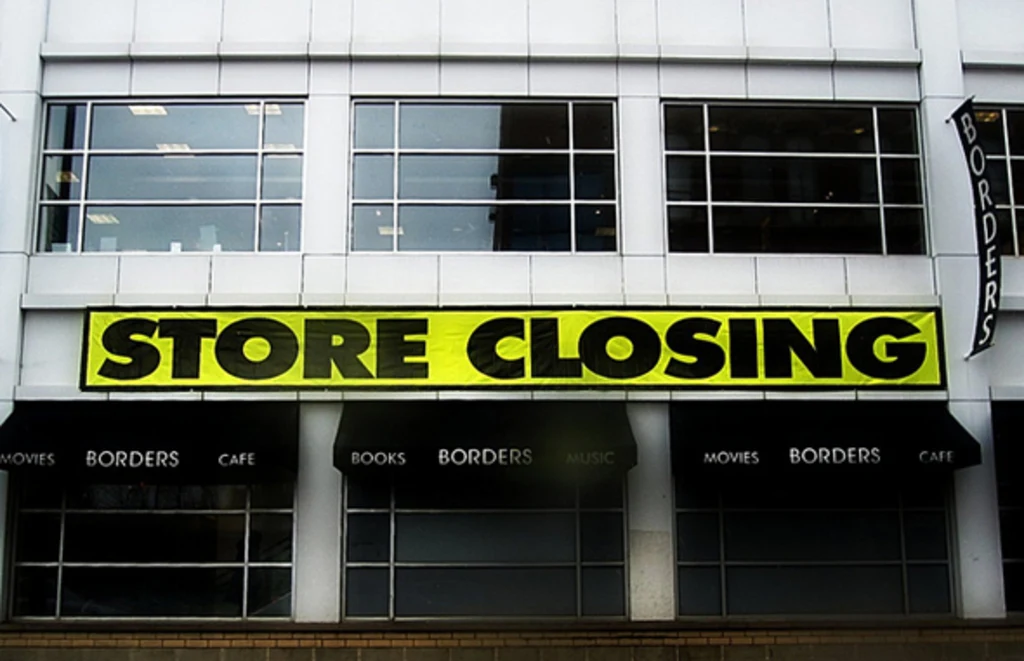
Paying heed to the following advice could stop your business from ending up like Borders — bankrupt. Photo: ChicagoGeek
Don’t count on renting a storefront to revive the flagging sales for your online business and compensate for a weak business model: You might end up digging yourself a bigger hole. Rather, going retail may be prudent only if your online business is doing very well.
So if you’re considering whether to head in that direction, here’s a checklist compiled from the experiences of retailers who’ve made that step, and well as blogshop owners who chose not to.
1) Do you have a strong fanbase?
If your online business does not have loyal customers, then it may not be wise to transition offline. For KissJane, which aggregates blogshops in two physical locations, it can rely on the branding of its myriad of partners. Tracyeinny, on the other hand, was able to leverage on its strong fan base to offset the lack of human traffic in their first outlet in Pearl’s Hill Terrace, Chinatown.
Ng Chong Kee, co-founder of KissJane, suggests that blogshop owners build a strong niche for themselves by focusing on a particular style. Only by doing so can they differentiate themselves from the thousands of blogshops out there.
Jeannie Pang of Tracyeinny believes good customer service is paramount. Customers must feel that you’re reliable and always ready to respond to their requests and complaints.
“Accountability is damn important. If you failed or neglected to deliver a product, you’d better admit it,” she says.
2) Are you protected from getting burnt financially?
The amount of money you need to invest in going retail is no joke. For prime locations, expect to fork up around S$200,000 (US$166,653) in upfront rental, deposit (which will only be returned at the end of the lease), renovation, and other costs. Even in places like Chinatown, monthly rental can cost around S$3,000 (US$2,499) a month, in the case of Tracyeinny.
Depending on the contract, lease commitment can be as short as six months or as long as three years for many shopping malls.
So it really helps to work out the sums, know what you’re in for, and plan accordingly. Jeannie made sure she had at least S$18,000 in the bank account, or six months of rental liquidity, before committing to a lease. This precaution made sure that in the event the endeavor didn’t do well, the overall business would not be adversely affected.
3) Is your revenue stream healthy?
Jeannie ensured that the profit margin from her online business was strong enough before embarking on her retail project. She also made sure that she had a sizable sales volume as this meant that she won’t need to pass the increased costs from the retail business to the consumers.





Stay updated on the go with our mobile app.
Get latest insights with smoother, more personalized experience through TIA mobile app.









📅 Upcoming Events
22 October 2026
Payoneer x CSPN Summit 2026