Advertising has evolved into a new creature. With the fall of banner ad giants, the monsters of content marketing have now arisen. Companies seeking to get their name out are clamouring to do so with content that people will click, read, and love.
The latest product of this content marketing craze is sponsored content, where brands employ the help of publishers to create and distribute quality content for them. While designed to blend in with a publisher’s existing work like native ads, sponsored content doesn’t have to be promotional in nature, which gives brands and publishers more room to experiment with content creation.
Buzzfeed is great at creating gif-heavy click-bait articles that blend seamlessly into their already gif-heavy repertoire, while The New York Times has T Brand Studios, an entire team dedicated to paid posts.
Even here in Tech in Asia, we have Brand Pulse, dedicated to creating educational, insightful, and credible content with the support of reputable brands.
However, with the rise of “sponsored content” comes distrust and skepticism. To clear the air, here are five myths about sponsored content debunked.
1. Sponsored content is a new thing

Image credit: Pixabay
Despite its newfangled name, sponsored content isn’t new. Native advertising had existed as early as the 1910s when advertising agencies began using advertising space in newspapers to display written articles like Theodore MacManus’s famous essay for Cadillac, “The Penalty of Leadership.”
In the 1930s, to reach out to housewives, soap manufacturers like Procter & Gamble, Colgate-Palmolive, and Lever Brothers also sponsored radio and television series, creating the first ever “soap operas”. While the first soap operas were heavily indented with soap commercials (the first radio soap opera, Painted Lives, was sponsored by “new Duz” laundry soap), this entertainment genre has since become popular and timeless.
2. No one reads sponsored content
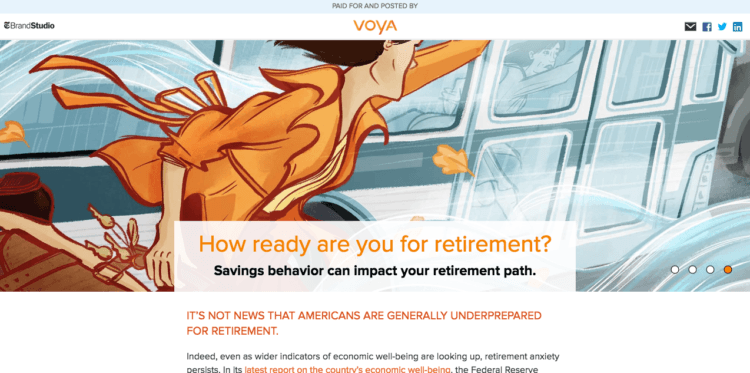
Screencap of a sponsored article by The New York Times about how ready Americans are for retirement, made possible by Voya.
While banner ads suffer from consumer banner blindness, an unfortunate disease that makes it impossible for consumers to see banner ads, sponsored content is still going strong. Though consumers are more wary of branded content, a brand attached to an article doesn’t make it less desirable if the content stays relevant and includes an engaging narrative.
In June 2014 The New York Times created a narrative piece on women’s prisons, partly to promote Netflix’s TV series Orange is the New Black. Despite being clearly labeled as a sponsored article, it received more than 145,000 impressions according to ad measurement company Nudge.
A Malaysian lifestyle website, Says.com, also experienced sponsored content success — Business Insider Singapore reported in June 2015 that a sponsored article created for Pampers Malaysia gathered over 1.02 million reads, and continued to see high organic traction a year from publishing.
3. Sponsored content are just blatant advertising
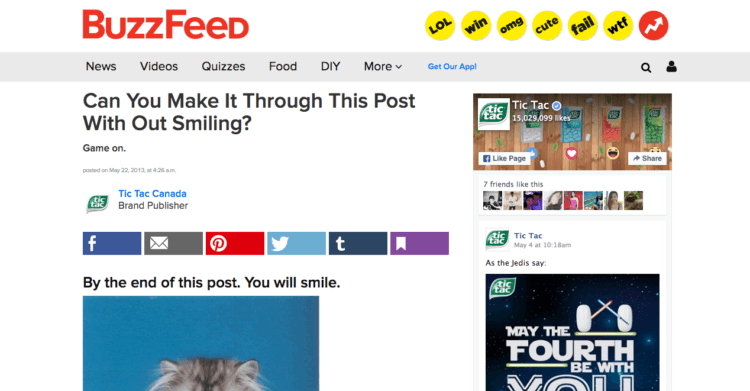
Screencap of Buzzfeed’s sponsored post for Tictac.
Advertisements are by nature promotional. They’re designed to inspire consumers to perform a particular behaviour, from buying stuff to visiting a website. Native advertising are promotional messages designed to blend in with site content.
The label “sponsored content” is where things get tricky. Publishers define “sponsored content” very differently, so there are sponsored content out there that are ads by nature. According to a study by Contently, 12.6 percent of online news articles labelled “sponsored content” are written by the sponsor themselves.
This myth that sponsored content is just another form of native advertising is in some sense true. But as shown by the other 87.4 percent of sponsored content actually written by the editorial team, the bottom line is it doesn’t have to be. Experts in the field say that quality content that aims to inform rather than promote, creates a great user experience, and are transparent with their goals, tend to perform better than hidden advertorials. The appeal of sponsored content lies in its editorial edge.
So if you’re a brand tempted to use sponsored content to hard-sell — don’t. Working with publishers means that you gain the resources needed to understand their audience, and know what works and what doesn’t. So take the opportunity to listen to them.
4. Sponsored content is only effective when it’s deceptive

Image credit: Pixabay
Many brands still subscribe to the idea that sponsored content only works when masked to look like a regular news article. This belief is understandable. According to Contently, there is a real stigma that surrounds sponsored content, as 66.42 percent of respondents to their 2014 survey said that they are less likely to click on an article sponsored by a brand.
However, hiding the fact that an article is sponsored can make things worse for publishers and brands. Never underestimate your consumers and their ability to unmask promotional content in a faux-editorial. A large part of content marketing is emotional, and if your consumers realize that your brand paid money for a disguised article (and they are a very discerning bunch), they will be disappointed and betrayed. The bad vibes will rub off on your brand.
Instead of trying to hide an advertorial in plain view, adopt a policy of transparency. According to a study by IAB and Edelman, readers are more receptive to in-feed sponsored content when they’re relevant, authoritative, and trustworthy.
5. Sponsored content brings no value to readers
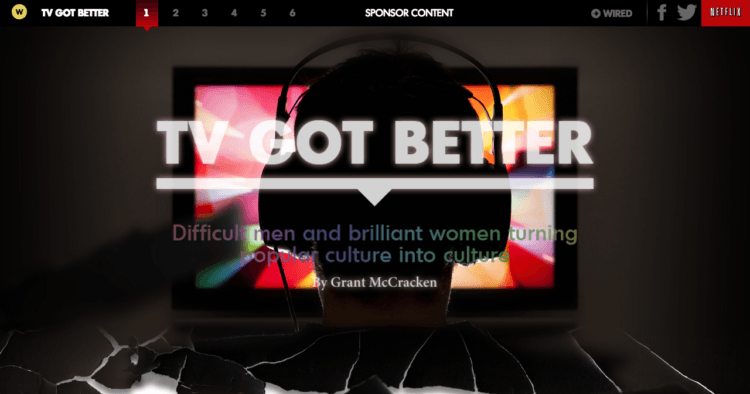
Screencap of Wired’s look at how TV viewing has changed, sponsored by Netflix.
Sponsored content brings clear value to companies forking out the cash, and they can be written in a way that benefits readers.
Through sponsored content, publishers can bring the information that would otherwise have been buried in corporate white papers and boardroom discussions to public viewing. These insights into Indonesian app consumption patterns are a great example.
Sponsoring content also gives publications the means to write pieces that are more in-depth than they usually have the resources for, so if you’re a company that’s planning to sponsor an article, dream big. Branded content like Wired’s article for Netflix is a smorgasbord of interactive images, polls, and videos designed for great user experience.
Sponsored content, if well done, can benefit brands, publishers, and readers. The brand gets to tell their story effectively, publishers get more resources, and readers get relevant, entertaining, and informative content.
Get clued in
Itching to learn more about content marketing? Fill in the very simple form below, and we’ll drop you an update the next time we share new insights. Let us know what you want to learn next in the comments below!
Brand Pulse is Tech in Asia’s very own take on sponsored content. Our Brand Pulse team works closely with reputable brands to create educational, insightful, and credible content for our audience. To find out more, visit us at brandpulse.techinasia.com, or drop us an email at brandpulse@techinasia.com.
Stay updated on the go with our mobile app.
Get latest insights with smoother, more personalized experience through TIA mobile app.
Recommended reads
 Animoca co-leads $1.75m round of IreneDAO creator
 UMG IdeaLab pours seed money into Indonesian influencer marketing platform
 Grab partners with Nas Academy to groom 100 aspiring content creators in SEA
 Line to launch NFT marketplace in Japan next month
 Navigating the changing digital advertising landscape
 Content creation platform Hashnode banks $2.1m in round led by Sequoia’s Surge
 Sequoia’s Surge leads $2m injection into ecommerce marketing firm Epsilo
 Hooq’s CEO shares his side of the story for the first time
 Will virtual humans replace ‘real’ influencers, models, and more?
 Breaking down WhatsApp and Facebook’s super-app ambitions





Editing by Terence Lee
(And yes, we’re serious about ethics and transparency. More information here.)






📅 Upcoming Events
22 October 2026
Payoneer x CSPN Summit 2026