- Premium Content It takes our newsroom weeks - if not months - to investigate and produce stories for our premium content. You can’t find them anywhere else.
 Elyssa Lopez · · 7 min read
Behind SBI’s bid to build a digital asset empire in SEA
While many investors have been pulling back from Southeast Asia’s tech sector, Japan’s SBI Holdings has been on a shopping spree across the region.
Over the past three years, the Japanese financial giant has acquired stakes in a string of Southeast Asian companies, including a US$270 million investment in Indonesia-based trading platform Ajaib in August.
But SBI isn’t simply betting on a recovery in the region’s fintech market. It appears to be assembling the pieces of a new financial ecosystem built around stablecoins and tokenized assets.
In his announcement of the Ajaib investment, SBI chairman and CEO Yoshitaka Kitao called the trading platform a “perfect match” for the group’s vision of building a global structure for digital assets.
So far, SBI’s acquisitions in Southeast Asia reveal a pattern, according to analysts who spoke with Tech in Asia. The firm tends to target companies that already hold regulatory licenses in their respective markets and have an established customer base.

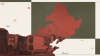
Digital collage by Ulla
“The real magic is when you are able to create that cross-border ecosystem,” says Qin En Looi, partner at Saison Capital. “The idea is that they don’t have to build it from scratch.”
But SBI still needs to turn these individual platforms into a cross-border network for digital assets linking Southeast Asia and Japan. That will be no small task, particularly when stablecoins and tokenized assets have yet to achieve widespread adoption in many Southeast Asian markets.
Tech in Asia reached out to SBI Holdings for comment but did not receive a response as of publication time.
Building the distribution network
In recent years, several governments across Asia – including Japan, Singapore, and Hong Kong – have established regulatory frameworks for digital assets. As a result, financial institutions are stepping up their involvement in the sector, particularly in stablecoins and tokenized assets.
Earlier this year, SBI introduced JPYSC, Japan’s first trust bank-backed yen stablecoin. Unlike rival JPYC, which limits purchases and cash-outs to 1 million yen (around US$6,300), JPYSC is designed to handle larger institutional transactions.
For now, SBI’s stablecoin is available only to users with accounts at SBI VC Trade, its Japan-based crypto exchange. But with the company building a crypto network across Southeast Asia, JPYSC could eventually be offered through other exchanges in which SBI has invested.
Coinhako could be one of them.
In a previous interview with Tech in Asia, Coinhako co-founder Yusho Liu acknowledged that SBI’s acquisition of the Singapore-based exchange could provide the Japanese group with a way to distribute its digital assets.
Disruptor DNA
The Southeast Asian test
Stay ahead in Asia’s tech landscape
This is premium content. Subscribe to read the full story.
The Japanese financial giant has spent hundreds of millions backing Southeast Asian fintech firms. Now comes the hard part: making them work together.
We know this is not ideal. ⌛ Sign up in 20 seconds. Cancel anytime.
Our subscriber community includes professionals from these companies:





Stay updated on the go with our mobile app.
Get latest insights with smoother, more personalized experience through TIA mobile app.











📅 Upcoming Events
22 October 2026
Payoneer x CSPN Summit 2026