 Xinmei Shen · · 3 min read
China says AI robots won’t lead to significant job loss
There has long been a debate on whether robots will end up putting a large part of the population out of work. Now China says that AI and automation will indeed replace some jobs, but it won’t be as damaging as feared.
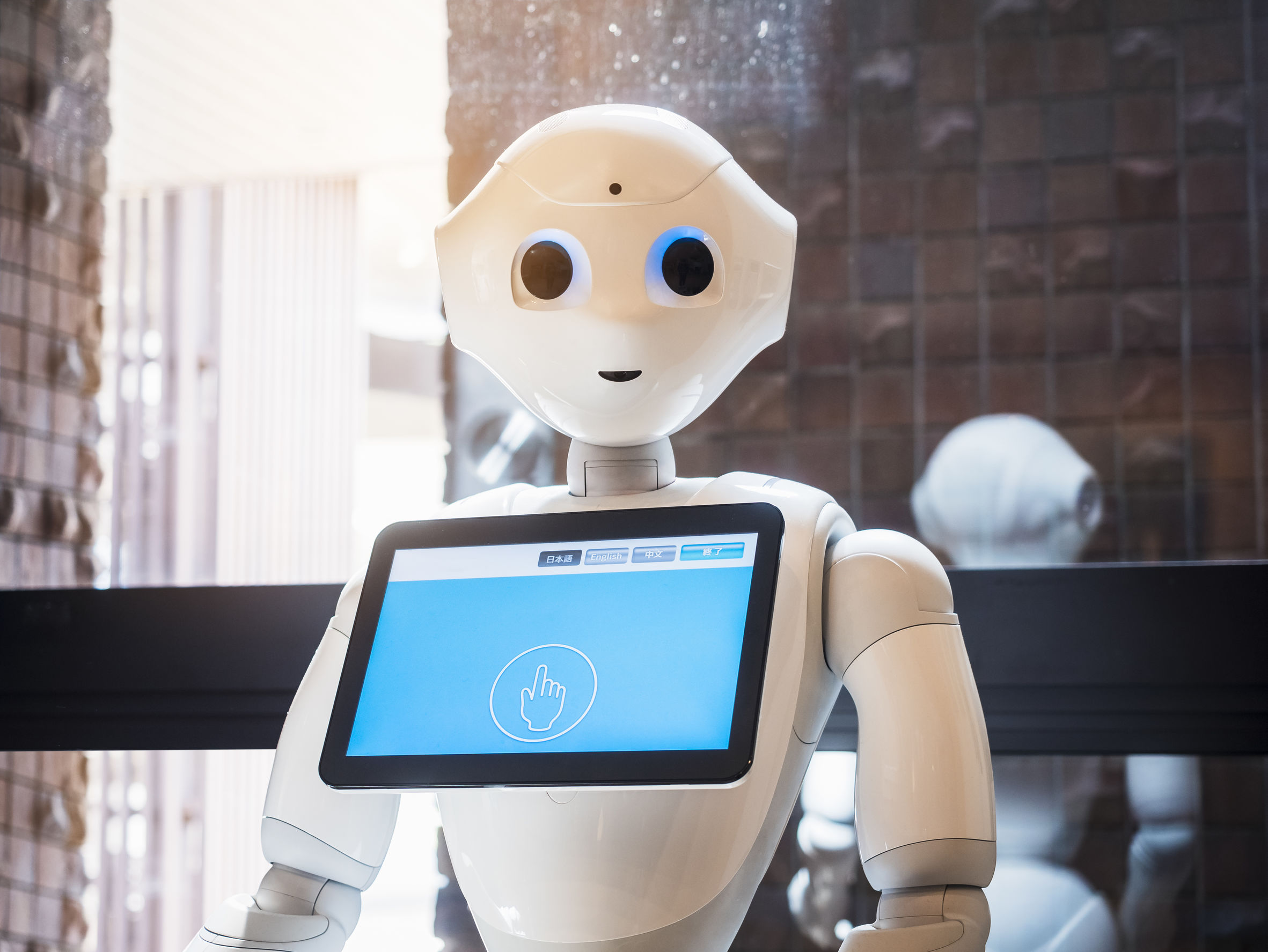
Photo credit: viteethumb/123RF
That’s according to a report published this week by the Chinese Academy of Social Sciences, a national think tank. It says that during China’s 14th Five-Year Plan, which starts in 2021, the rise of robots will not lead to “significant” job destruction.
Citing the report, state-run People’s Daily says low-skilled workers won’t be directly rendered obsolete – but will instead be transferred to other jobs.
Driven to become one of the world’s strongest manufacturing powers by 2020 while facing the pressure of an aging population, China has been developing and adopting robots in different industries.
Ecommerce companies including Alibaba and JD.com have automated some of their warehouses and deployed delivery robots.
(Abacus is a unit of the South China Morning Post, which is owned by Alibaba.)
Restaurants and hotels in China have also installed service robots, delivering food to people’s tables and rooms. Some cities also started using police robots, which patrol the streets, snap photos of dangerous drivers, and alert people who are jaywalking.
Industrial robots that help boost manufacturing power are also widely used. China installed 154,032 industrial robots in 2018 according to the International Federation of Robotics (IFR), more than the number of industrial robots installed in Europe and the Americas combined.
But because of an outsized workforce, China still lags behind in terms of robot density – the number of industrial robots deployed for every 10,000 manufacturing workers. In 2019, China had 97, far behind the US with 200 and South Korea’s 710, according to the IFR. China aims to boost that number to 150 by 2020.
People in China believe that there is a benefit to a more automated workforce: One survey conducted last year by UK digital marketing firm Dentsu Aegis Network found that 65% of Chinese respondents think that AI and robotics will help create more jobs instead of taking them.
But that’s not always true. Foxconn, a key manufacturing partner for Apple, among others, cut 60,000 jobs in a factory in the eastern city of Kunshan in 2016 while installing robots. The southern city of Dongguan, one of China’s manufacturing hubs, has cut its manufacturing workforce by 280,000 and installed 91,000 robots in the past five years.
The new report by the Chinese Academy of Social Sciences also said that during China’s 13th Five-Year Plan (which ends this year), robots and other AI applications will have taken roughly 8 million to 10 million manufacturing jobs from migrant workers, averaging 1.6 million to 2 million per year.
Still, many are positive about the long-term outlook. Estimations by economists for the percentage of jobs replaced by robots varies depending on their methods, but by 2037 AI and related technologies could create 12% more jobs, according to a PwC report from September 2018. That would mean an additional 93 million jobs.





Stay updated on the go with our mobile app.
Get latest insights with smoother, more personalized experience through TIA mobile app.










📅 Upcoming Events
22 October 2026
Payoneer x CSPN Summit 2026