 Rebecca Liew · · 5 min read
What it’s like to run a hybrid tech event, as told by the Tech in Asia team
Before the pandemic, large-scale physical events were the tried-and-true formula for networking opportunities. But the time was ripe for change, and amid border restrictions and heightened safe distancing measures, more businesses took to hosting interactive virtual events to keep viewers engaged.
Cautious efforts to integrate both online and offline experiences, however, have paved the way for a new means of congregation. Enter the hybrid format event, one that combines a physical venue with an online experience.
While the model’s recent emergence means that it still has a way to go before reaching its full potential, the Tech in Asia team took a chance to adopt it in October for its flagship event, Tech in Asia Conference Virtual 2020.
A stage for change
Given that past editions of the conference had taken place physically, it would have been easy to postpone or cancel the event altogether. The organizing team saw things otherwise, though.
“The conference was an opportunity to find a solution in these unprecedented times,” shares Putra Setia, conference director of Tech in Asia Indonesia. “In June, we ran our first virtual summit – the Product Development Conference – which made us see the potential of going further with an event that combines the online and offline experience. It’s like building a product, running A/B tests, and seeing what works.”
He adds that Tech in Asia Conference Virtual 2020 now serves as a use case on running a hybrid event, and poses as an example of the challenges that could arise. The increased reliance on technology, for instance, could lead to a wider margin of error for technical glitches.
That was precisely the case on the first day of the conference. The events team had set up the necessary tools and streaming platforms and conducted a test run at its downsized physical conference venue to ensure that no snags would occur. But then, one did.
As a panel session went live, a technical glitch disrupted Tech in Asia’s video feed, leaving the team scrambling to fix the issue.
“We couldn’t pinpoint what caused it or at what point it went wrong, but we had to keep the show running,” says Kelyn Koh, senior event manager for Tech in Asia’s Singapore team. In response, the crew made multiple backup recordings of subsequent segments – whether panel sessions or the Startup Arena Pitch Battle segment – using web-conferencing platform Zoom.
A new dimension to logistics
Being quick on your feet isn’t a cure-all for technical glitches and streaming delays, however. The team also worked closely with the production crew at NoonTalk Media to make sure that nothing else would be compromised.
“We went through several vendors before narrowing it down to NoonTalk Media based on factors including cost, experience, and the level of trust,” says Koh. “The production crew and platforms used were really important in helping us sort out the technicalities of broadcasting the livestreams.”
As the events team moved from organizing a physical event to a hybrid one, other immediate shifts became apparent. Without the need to rent an entire exhibition hall, this significantly cut the time required to craft the floor plan, as well as design and print event collaterals.
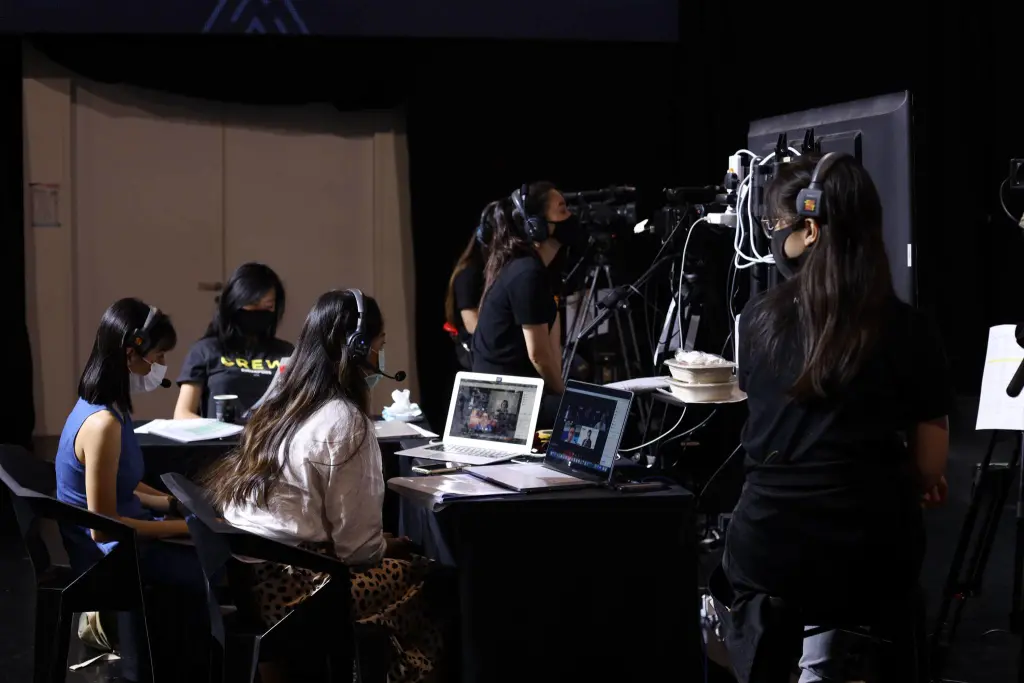
Photo credit: Tech in Asia
These resources were instead channeled into employing the right tools and software to create an engaging and user-friendly experience for participants.
“User behavior changes online,” Setia notes. “While we couldn’t recreate the energy of having many attendees in a physical space, we wanted to see how they interacted with speakers and with each other. For example, how many people are visiting a sponsor’s virtual booth? We also tracked the average time spent on each session.”
To that end, and after two months of discussion, the team decided to employ tools like web-conferencing and streaming platforms Zoom and Hubilo, as well as video-recording tool Open Broadcaster Software. These were selected based on several factors, such as whether interactions between attendees and speakers during panel sessions would be possible.
Accessibility breeds interaction
To further boost audience interaction, a rewards system was introduced. Attendees were ranked on a leaderboard according to their activity – such as posing questions, visiting virtual booths, and attending multiple segments – and awarded prizes including Tech in Asia Core or Live subscriptions.
Such incentives go hand in hand with a speaker’s ability to engage the audience. With an online event, Setia adds, “It’s very easy to tell which segments are engaging our audience [and] helps us understand better how our attendees behave.”
That said, part of audience engagement also comes from educating attendees on how to navigate an online event.
As the conference director points out, some participants were not familiar or comfortable with interacting on the platform. By the fourth and final day of the tech conference, however, the team saw an increment in audience interaction with panellists and at the Virtual Startup Factory session, which featured scores of online booths for conference attendees to “visit.”
Growth through trials
While it’s clear now that there isn’t a one-size-fits-all formula for the success of a hybrid tech event, it comes down to preparation, trust, and having the guts to go back to the drawing board.
“For speakers dialling in remotely, we relied on them to show up on time [for video-call segments] and adjust their audio and lighting based on our instructions,” shares Regina Lin, Tech in Asia’s resident events producer.
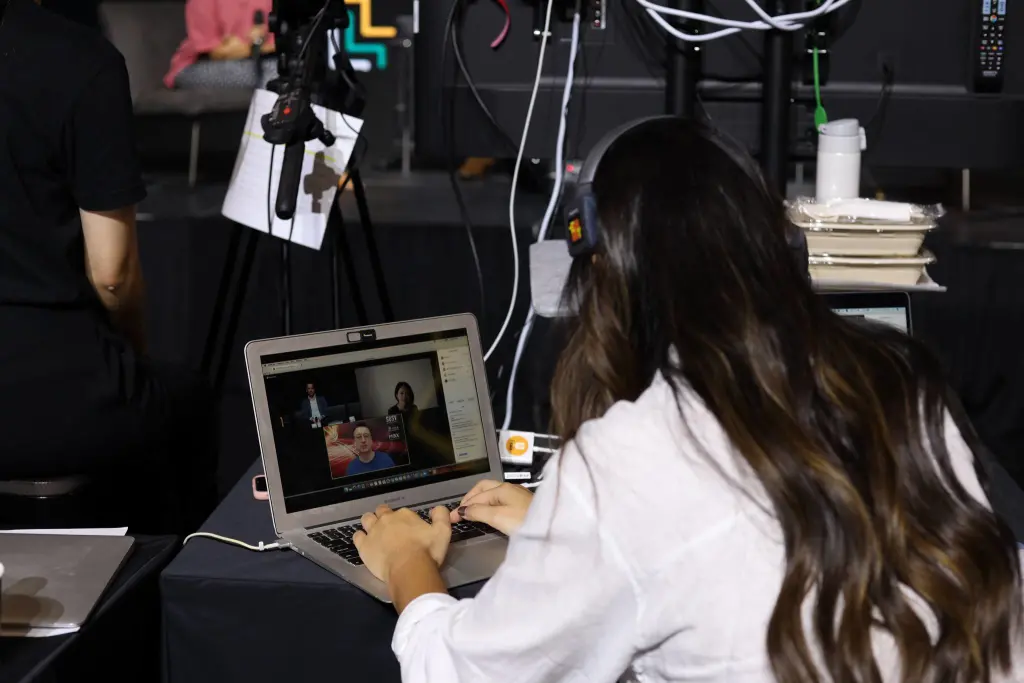
Photo credit: Tech in Asia
In addition, the team gathered post-event feedback from attendees on their overall satisfaction with the quality of the video streams and found new ways of measuring audience engagement. Part of this was observing how attendees interacted with each other – and with speakers – during panel sessions and measuring the bounce rate to determine which segments held participants’ interest.
“An online event means that we can get more eyeballs or more views, but it’s important to focus on the engagement rate – things like time spent per segment and how we can make the Q&A sessions better for attendees and speakers,” Setia notes. “The most important thing is to experience what it’s like organizing [a hybrid event], then make it better in the future.”
Revisit the Tech in Asia Conference Virtual 2020 and enjoy unlimited digital access to our content when you sign up as a Tech in Asia Core or Live subscriber.
This content was produced by Tech in Asia Studios, which connects brands with Asia’s tech community. Learn more about partnering with Tech in Asia Studios or view our media kit below.
Stay updated on the go with our mobile app.
Get latest insights with smoother, more personalized experience through TIA mobile app.
Recommended reads
 Life’s a game, and AI agents are Animoca’s new play
 Indonesian AI startup goes global
 Forrest Li on scaling Sea, building smarter bots, and founder grit
 An AI assistant that joins sales calls and scores team skills
 Beyond the check: Why VCs need more than capital
 SGX’s CEO says it doesn’t need a unicorn to win
 SMEs want AI too, but not the kind Big Tech is selling
 Oatside’s alt-milk rise hits a profitable gear
 Alibaba’s financial health in 12 charts
 Asia’s telcos bundle AI into mobile plans. Will it pay off?





Editing by Nathaniel Fetalvero and Jaclyn Teng
(And yes, we’re serious about ethics and transparency. More information here.)








