- Insights This article was written by a TIA community member. Insights pieces undergo the same rigorous editorial process that newsroom-produced articles have.
 Neo Zhizhong · · 5 min read
We took our online-first startup hybrid. It got complicated
This article was co-authored by Alicia Cheong.
When a business is doing well, the safer choice is to stay the course. But customer needs don’t always fit neatly within an existing model. That’s the challenge we faced at Geniebook recently.
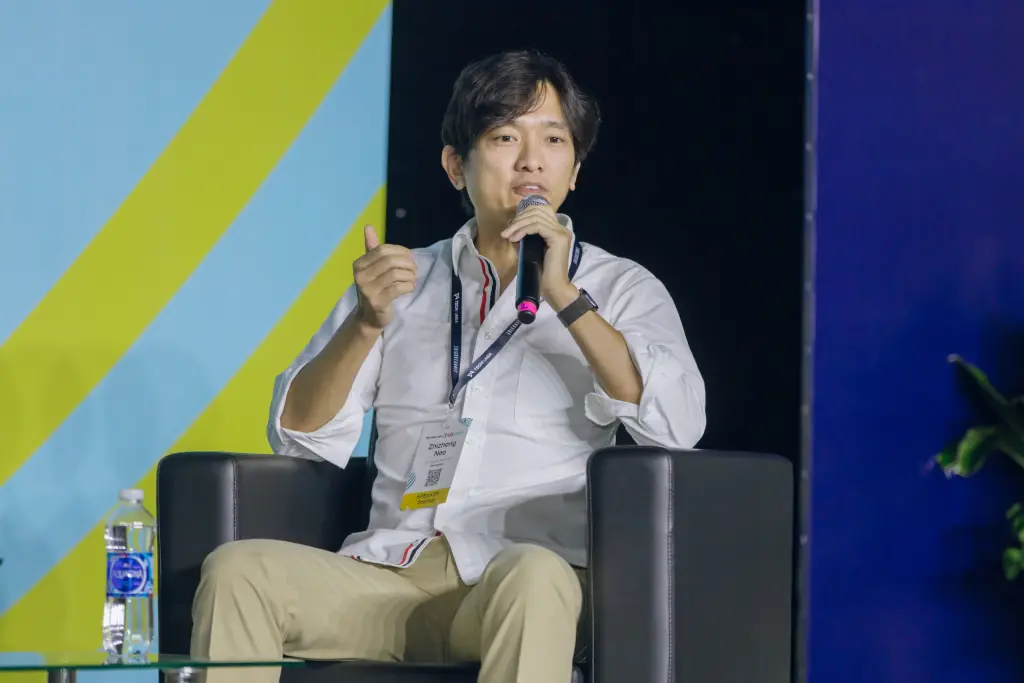
Geniebook CEO Neo Zhizhong at Tech in Asia’s Saigon Summit last May 2024 Image credit: Tech in Asia
As a digital platform, we’ve focused on online learning for years. But in 2022 we began to hear a message: “Online is great, but is there a physical center we can send our child to?”
This pushed us to launch a hybrid model. Along the way, we’ve learned that the approach isn’t about adding physical spaces to a digital business, but it means rethinking your entire model while preserving what made you successful in the first place.
Here are the key lessons other founders can extract from our experience.
Location strategy is make or break
Online-first startups typically don’t need to concern themselves with physical spaces, but transitioning to a hybrid model means tackling this challenge head-on.
Finding good locations for centers has been one of the toughest parts of this path for our team. The best spots, which are easy to reach, trusted by parents, and conducive for learning, are scarce and are hotly contested.
See also: Bukalapak leaps into edtech, but not without skeptics
We also looked at foot traffic, nearby schools, and market demand to determine what made for a prime location.
Proximity to schools, we believe, is crucial because schools indicate a high concentration of young families, which is our target demographic. The Geniebook center at the Century Square mall, for example, is located within Tampines, one of Singapore’s largest residential districts for Housing & Development Board flats.
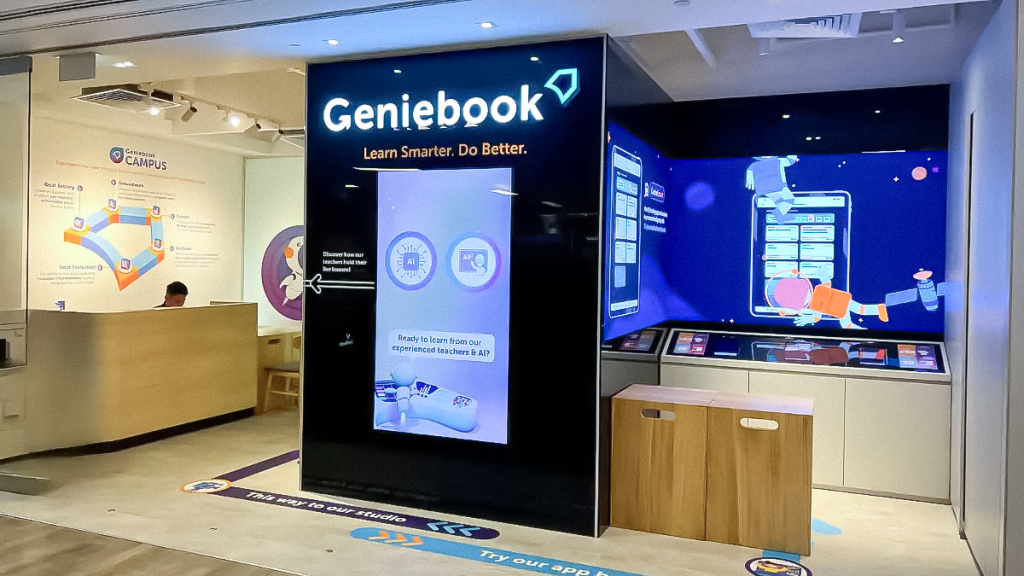
Photo credit: Geniebook
Still, we had to move fast when a good unit popped up. This meant preparing solid pitches for the property owners quickly, something our team had to learn on the fly.
Hybrid can’t just be bolted on
Digital DNA as a competitive advantage
Bumps in the road
Balance
Stay ahead in Asia’s tech landscape
This is premium content. Subscribe to read the full story.
Going hybrid sounds simple, until it isn’t. Geniebook’s CEO breaks down the lessons from adding an offline element to its digital-first business.
We know this is not ideal. ⌛ Sign up in 20 seconds. Cancel anytime.
Our subscriber community includes professionals from these companies:





Stay updated on the go with our mobile app.
Get latest insights with smoother, more personalized experience through TIA mobile app.











📅 Upcoming Events
22 October 2026
Payoneer x CSPN Summit 2026