 Erik Crouch · · 5 min read
Now isn’t the time to sell your Apple stock, no matter what Carl Icahn says
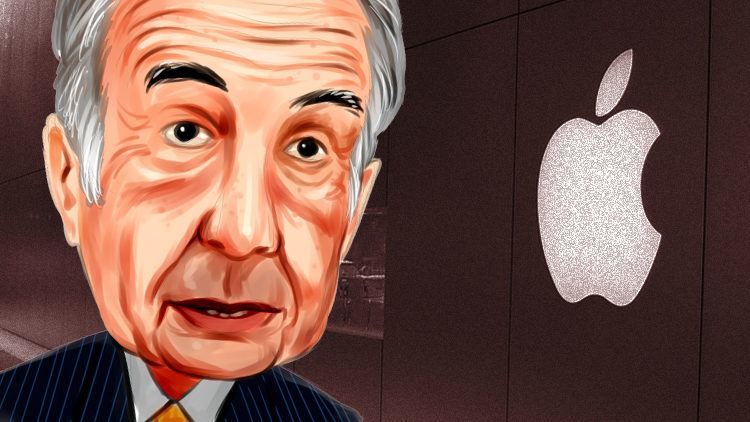
Image credit: Carl Icahn illustration from Insider Monkey; Apple store by Plasticpeople.
Today the news broke that billionaire investor Carl Icahn sold his entire stake in Apple – about 53 million shares – citing fears of Chinese government interventions wreaking havoc on the company’s worth. This was a bad idea.
The dude made US$2 billion in profit by selling his shares, so preachy finger-pointing may not be quite necessary. I would be patting myself on the back for making many decimal points less than that. But on we go…
What’s at issue isn’t Icahn’s reading of the US stock market or Apple’s condition as a company – it’s that he misread China.
Government fears
Icahn explained to CNBC that he sold off his shares in part because the Chinese government could “come in and make it very difficult for Apple to sell there.”
“You worry a little bit, maybe more than a little, about China’s attitude,” he said, referring to the government, which he called a “benevolent dictatorship” before slightly walking back on the “benevolent” part.
“China is sort of looking at Apple and saying ‘Well can you do this? Should we let you do that? Should we let you do this?’” he added.
Apple certainly hasn’t been untouched by Chinese government regulations. Just last week, the company’s iBooks and iTunes Movies stores were forced to close in the mainland, and Apple has long had to develop a separate and carefully censored App Store for the People’s Republic.
But Apple wasn’t exactly rolling in dough with its Chinese iBooks buyers – the country has much more established ebook platforms (namely Baidu’s), and China’s movie streaming wars were waging long before Apple got involved.
Hardware’s not that hard
Apple’s biggest money maker in China has always been hardware and a wide variety of apps, not specific services that may be censored without notice. So when Icahn frets that the government may come in and “make it very difficult for Apple to sell there,” he’s presumably worried about hardware sales, not software.
Unless he knows something we don’t (which, uh, is possible), his worries about Apple’s hardware sales are misplaced.
Conflating ideological censorship with trade policy is an easy mistake to make.
China’s authorities have shown themselves to be very activist and paranoid about foreign companies distributing media because it has a very strict policy on ideology and information control. But it’s wrong to see this as flat-out trade protectionism.
China didn’t block Google so Baidu could thrive, it blocked it because it couldn’t monitor and control what Google’s mainland users were doing.
A new normal in China
Keep the faith





Stay updated on the go with our mobile app.
Get latest insights with smoother, more personalized experience through TIA mobile app.








📅 Upcoming Events
22 October 2026
Payoneer x CSPN Summit 2026