- Insights This article was written by a TIA community member. Insights pieces undergo the same rigorous editorial process that newsroom-produced articles have.
 Jay Kim · · 9 min read
He was dead for 6 minutes. Here’s how he used positivity to come back from the dead.
This article is part of Tech in Asia’s partnership with The Jay Kim Show where we publish the revised transcripts from the show’s podcast interviews with top entrepreneurs. This is heavily revised from the original show transcripts. For the full interview, go here.
Hal Elrod has one of the most fascinating stories you’ll ever hear. At the age of 20, he was hit head-on by a drunk driver at 70 miles an hour and found dead at the scene. He was dead for six minutes, in a coma for six days, and the doctors told him that he would never walk again. But despite all that, Hal defied the doctors and refused to be a victim. He went on to write a number one bestselling book called The Miracle Morning. In this book, he talks about how any of us can transform our lives in as little as six minutes a day. I know you’re going to enjoy this. Let’s jump right in.
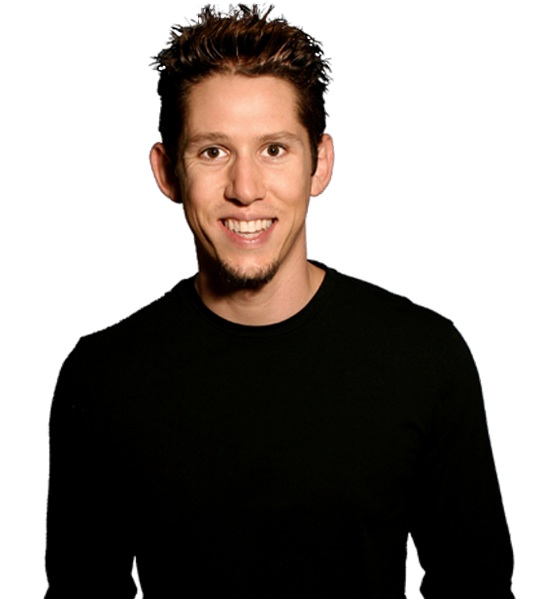
A photo of Hal Elrod.
Who is Hal Elrod and how did you become who you are right now?
“I think that, first and foremost, I am a husband and a father. I didn’t always put those first and foremost. I think there was a time when I was pursuing goals and success so much, and I thought it was in the name of being a husband and a father. [That was] until a friend made me realize that we both needed to be husbands and fathers first, and all the success we were pursuing and the work we were doing was really a far second in terms of what was important in our lives. I’m probably best known now as the author of a book called The Miracle Morning which has […] sold a few hundred thousand copies now around the world and has been translated into 21 languages. Every day I’m still in awe of seeing the profound impact that it is making in people’s lives.”
You became an entrepreneur, then had some not-so-fortunate events. Could you run us through that?
“When I was 19 years old, I took a job in direct sales, where I was selling Cutco Cutlery, just high-quality kitchen knives, in people’s houses through demonstrations. I didn’t really have a big dream or ambition with it. A friend of mine was doing it, and I thought it was a way where I could set my schedule around college. In my first 10 days, I broke the all-time company record, where I sold more knives in my first 10 days than just about anybody had in the history of the company. What’s important to note is that I was very mediocre and average my whole life before that.
“What that taught me is that it really is in a moment of decision where we decide to commit—at a level we’ve never committed before—to a single purpose or a single goal. […] That’s when we go from being ordinary to being extraordinary, or from being average or being mediocre to really starting to fulfill our potential and tap into what we all have, which is this unlimited potential that so few people ever even come close to.
“When I was 19, I got my first glimpse of that. A year and a half later, I suffered my most extraordinary adversity driving home from a sales conference. My car was hit head-on by a drunk driver on the freeway at 70 miles per hour and I died.
“I had broken 11 bones and suffered a lot of internal injuries. I was clinically dead for six minutes and then was rushed to the hospital, brought back to life. I was in a coma for six days. When I came out of [it], [the doctors] told me that I would probably […] never walk again and that I had permanent brain damage. Obviously, as you said, […] there’s a lot to the story. The short version of it is that I decided I couldn’t change what had happened to me, but I could choose what I was going to focus on.
“I chose to accept that I was in this car accident. I chose to not feel sorry for myself. I chose to accept the worst-case scenario, which was that I might never walk again, and made peace with that so that it wouldn’t destroy me emotionally. I decided that if I was in a wheelchair the rest of my life that I would be the most grateful person you had ever seen in a wheelchair in your life. […] I think for all of us, if someone’s unhappy, it has nothing to do with what’s going on around us and it has everything to do with what’s going on inside of us.
“That’s what that taught me, is that even the most difficult circumstances of my life, I was the happiest I’d ever been. In fact, the doctors thought I was in denial [and delusional] because I was so happy. But, two weeks later, they came in with x-rays and they said, ‘We don’t know how to explain this, but your body is healing so quickly. We’re going to let you take your first step tomorrow in therapy.’ I went from never walking again to, ‘You’re going to walk tomorrow.’ That was just three weeks after the crash, two weeks after I came out of the coma. I took my first step and went on from there.”
Before this happened to you, were you always a positive person?
“Kind of. I attribute it to what I learned when I started in sales. […] I learned from my mentor something called the five-minute rule, which was when things go wrong (when you experience a disappointment or a tragedy), it’s okay to feel bad, but not for more than five minutes. We literally were taught: set your timer on your phone for five minutes and give yourself five minutes to feel it. Bitch, moan, complain, cry, whatever you [have] to do. But when the timer goes off, you make an intelligent decision and you go, ‘OK, I can’t change what happened five minutes ago, so there’s no point in fostering negative emotions.’”
After that, there was another low point during the financial crisis, right?
“Yeah. The economy crashed in 2008. Prior to [that], I was as successful as I’d ever been. I had hit the hall of fame with my Cutco Company, then I moved on and I started my own business doing sales coaching and business and life coaching. I wrote my first book called Taking Life Head On. I started speaking professionally, which was a dream of mine that I’d had for five or six years. Then the economy crashed and I crashed with it. It felt like [it was] overnight, but I lost my house, tripled my body fat percentage, stopped exercising, and I was depressed. I went from being debt-free to having US$52,000 in credit card debt, and climbing every day. I couldn’t pay the bills.
“To keep a long story short, […] one day a friend had a conversation with me that led me to go on a quest to figure out what the world’s most successful people do every day for personal development that I was not doing. What could I do that would enable me to become a better version of myself so that I could achieve the success that I used to have and even greater? […] Finally I had read so many different articles about the world’s most successful people, and most of them swore by their morning ritual. I finally went, ‘I have to try this. I’ve got to get out of my comfort zone. I’ve got to do something different if I want my life to be different.’
“I woke up the next morning an hour earlier and I did the six practices. I basically decided, ‘If I’m going to wake up an hour earlier, I’m going to make it count. What are the best personal development practices in the world that I can do within this hour in the morning?’ I did all six of them. Within two months I more than doubled my income.”
Let’s dig into The Miracle Morning. What are your six steps and how can this affect an entrepreneur?
What’s the final piece of advice that you’d like to leave?





Stay updated on the go with our mobile app.
Get latest insights with smoother, more personalized experience through TIA mobile app.











📅 Upcoming Events
22 October 2026
Payoneer x CSPN Summit 2026