 Michael Tegos · · 8 min read
Ben Horowitz on tough decisions, Asia, and why he’s not friends with Marc Andreessen
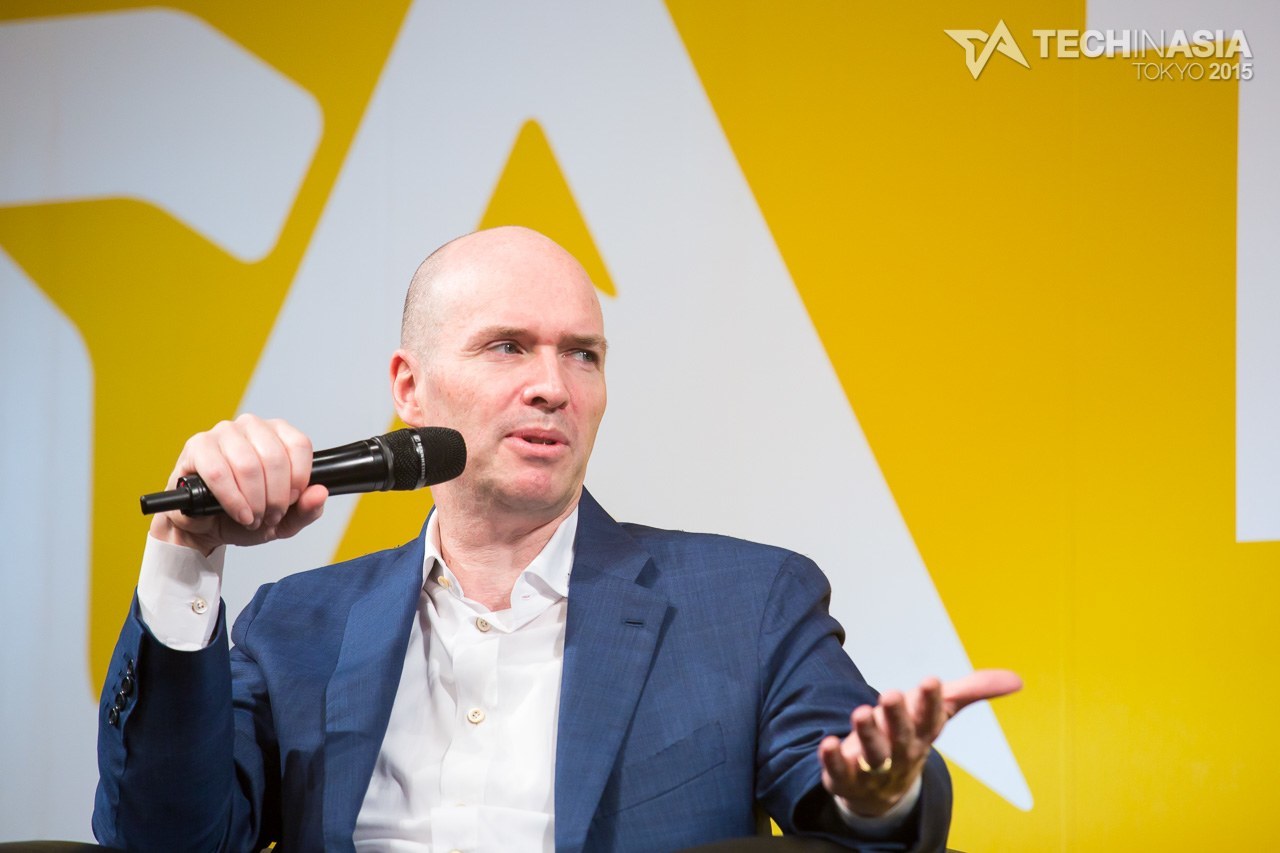
This is where I start the article by saying Ben Horowitz needs no introduction, then proceed to introduce him anyway. Industry veteran, engineer, entrepreneur, and now venture capitalist, he’s talked the startup talk and walked the Silicon Valley walk. These days, he’s co-founder and general partner at venture capital firm Andreessen Horowitz, along with Netscape creator and industry guru Marc Andreessen.
He spends his days investing, advising founders, blogging, and writing the occasional best-selling book. He also appreciates good hip-hop, as his loyal readers know – he demonstrates this by praising Tech in Asia Tokyo 2015’s DJ for choosing Ryan Leslie as Ben’s entrance music.
Since The Hard Thing About Hard Things was recently published in Japanese, Ben’s appearance on stage at Tech in Asia Tokyo 2015 was well-timed.
In a fireside chat with Tokyo-based VC Hiro Maeda, he recounted his experience of the dotcom crash of 2000, during which he was founder and CEO of cloud computing startup Loudcloud. “We were supposed to be the first cloud computing company,” he says. “We started in 1999 – it seemed like the best time [to do it]. It turned out to be the worst time.”
Live, die, repeat
Loudcloud’s growth was lightning-fast; Ben recalls the company booked US$12 million in business in its first three months, and that number climbed to US$27 million after just nine months. But lightning often strikes before a storm. Low on funds, Loudcloud was forced to go public just 18 months after its launch to stand a chance of braving the choppy waters ahead. The ordeal was recorded for posterity as “the IPO from hell” in a 2001 Business Week article.
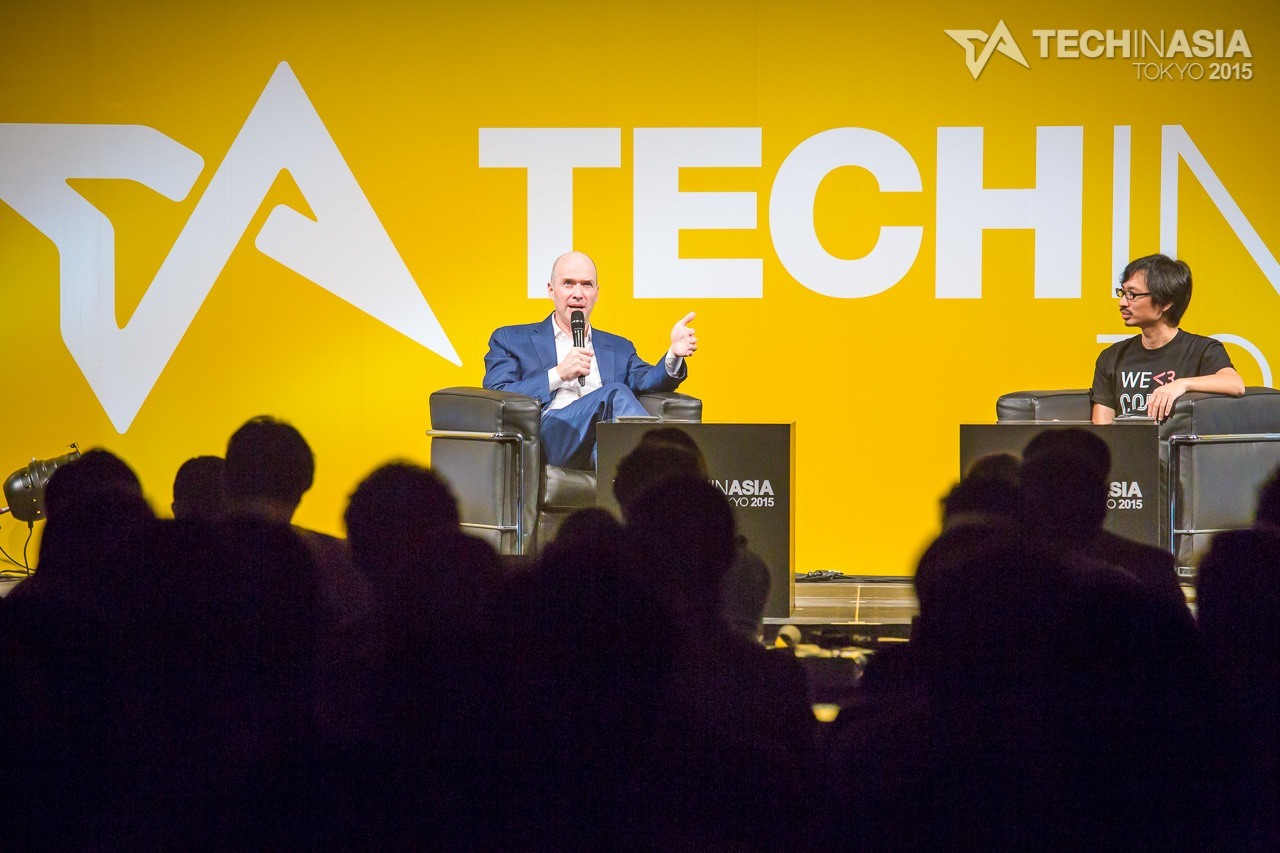
The company faced the dilemma of going public at a difficult time, barely making it through, and getting vilified in the press – or going bankrupt and squandering investors’ money and its founders’ reputations. It kept Ben up at night. “I would sleep like a baby,” he says. “I would wake up every two hours and cry.”
The move paid off. “Retrospectively, we not only survived, but everyone who ever invested in Loudcloud made money,” Ben says. The cost was high. The company laid off about 400 people before recovering. Laying off people is never easy – especially, as Ben says, since it breaks trust in the company. “The key to a good company is communication,” he explains. “If everyone’s on the same page, you’re going to execute very well. If not, you’re going to execute very poorly.”
Honesty is the best policy
The company got through this maelstrom by staying honest, a quality that pervades The Hard Thing About Hard Things. Ben explains that a lot of companies aren’t honest about why they let people go. When he fired employees, he explained honestly to them why they had to leave. He even helped clear out their desks. “You can’t just close the door to your office and come out when everyone’s gone,” he says.
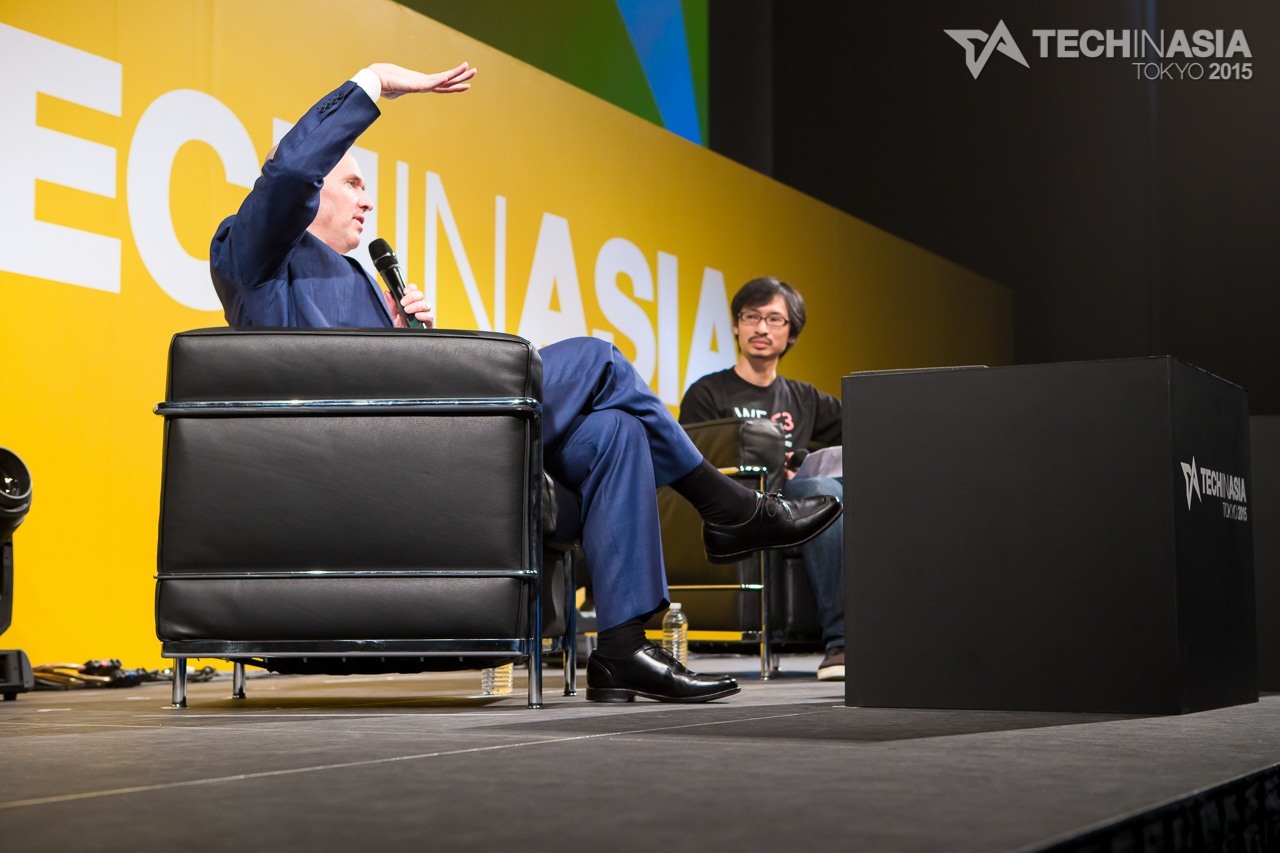
The ones who stayed, at least, were more motivated to make the company work and prove the naysayers wrong. Ben’s own motivation was a lot simpler: responsibility. When asked why he didn’t just quit the company and go do something else, he was taken aback – he didn’t see quitting as an option. “I was motivated by being stuck,” he says. “I founded the company, went out and raised money for it, hired employees. You shouldn’t start a company if you feel you can walk away from it after you’ve [done all this].”
Too much honesty can be trouble, sometimes, of course. “I have a friend who’s completely honest but who always gets in trouble. His name is Kanye West,” Ben says. “It’s hard work to tell the truth because the polite, easy thing to do is tell people what they want to hear.” But a company leader can’t hope to keep on the right track if they’re not honest within their organization.
What he does now, both through writing and working as a VC, is demystify what he learned as an entrepreneur and pass on the knowledge. A famous example of that is Ben helping Facebook founder Mark Zuckerberg decide against selling his company in 2007, contrary to the advice of all his executives. Facebook at the time was stuck at 100 million users, which put tremendous pressure on Mark. Ben suggested that it was for Mark to decide what to do, as this was his company, and he was the one who knew best what to do with it. “A lot of the work for a CEO is to have the confidence to listen to themselves,” Ben says.
Do it yourself
Ben recalls how a16z got started. He was at home, reading up on macroeconomics and chatting with Marc on AOL instant messenger. Their conversation revolved around the question, how come there isn’t anyone who can provide entrepreneurs with the necessary contacts, networking, and advice to get ahead? The VCs they knew weren’t doing it.

Like with every good startup, the answer to that question was to do it themselves. A16z (almost called Benmarc, a play on the founders’ names and the word “benchmark,” Ben reveals) was born not long after, continuing a decades-long collaboration between the two men.
“It’s a great relationship,” Ben says. The two disagree constantly and their honesty often causes tensions between them, when they argue about all kinds of topics. “I’m not friends with Marc, he’s much more like a relative. I don’t want to have lunch with him every day, in fact I prefer not to!” But this is what makes theirs a unique and strong bond: the disagreements create a robust exchange of ideas, which means they have much to learn from one another.
A war of ideas
When it comes to dealing with new founders and discovering new leaders, Ben says he’s looking for ideas. A powerful, breakthrough idea that people haven’t had before, or if they have, they thought it was a really bad one. Ben cited Facebook and Airbnb as examples. Through hard work, the founders had an insight about the world that no one else had. Both faced skepticism and even ridicule for their ideas. A16z itself wasn’t convinced about Airbnb at first, and didn’t get in on its A round (it later joined the B round and gave the startup some valuable guidance).
Ben says he provides advice to startups, but he doesn’t want to interfere too much. “I understand enough about what it means to run a company that I don’t think I know more about it than the CEO who runs it,” he says. Decision-making relies on knowledge, and CEOs always know better than anyone what’s best for their companies. Or should know, anyway.
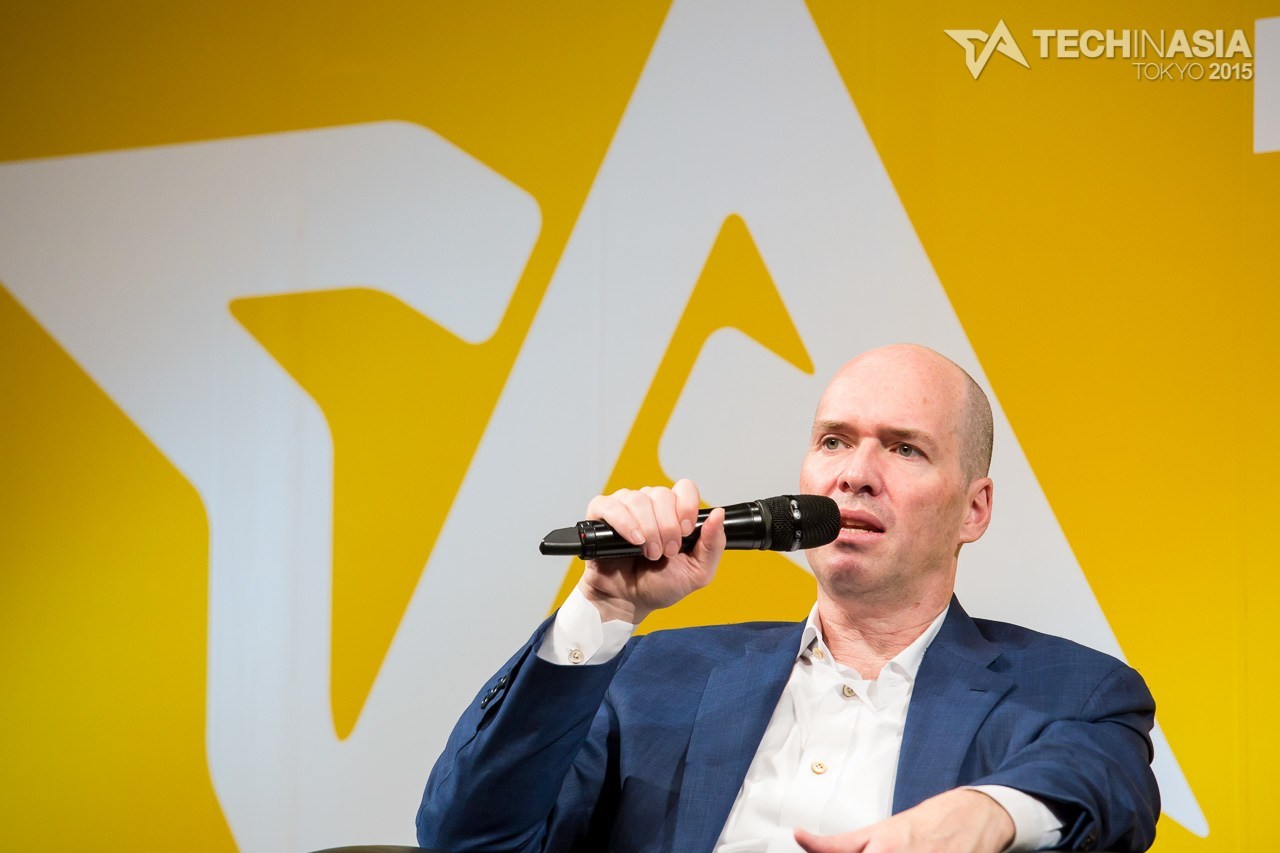
“[A CEO is] almost the opposite of a politician,” Ben says. Politicians are driven by what people around them say, hoping to please everyone. A company leader can’t do that – they need to listen to everyone around them, incorporate their knowledge into their decision-making progress, and then make the necessary decision based on their information.
When Steve Jobs brought Apple back from purgatory back in the nineties, he did exactly what everybody else thought was a bad idea. But he knew what the company was capable of. “It’s very easy to do what everybody else says,” Ben points out. “The much more difficult decision is when you think you need to do the opposite of what everybody says. That’s where the company needs leadership – when you believe something that nobody else does.”
Looking east
For now, a16z isn’t in a hurry to enter the Asian market. “What’s stopping us is confidence,” Ben says. “We’re extremely confident in the US, where we believe we can get any deal. China and India are very different.” He gives companies such as Sequoia Capital credit for approaching those markets effectively.
Catching up with Ben after his fireside chat, he tells Tech in Asia he’s not too worried about a potential bubble, in Asia or elsewhere. Having gone through one of the worst ones himself, he thinks nothing happening now resembles what happened back then. “Financial market bubbles are inevitable, a psychological phenomenon as much as anything,” he says. The 2000s were just too early for most of these companies – a significantly lower percentage of the population was online, the cost of making an application was 10 times what it is today and the cost of running it was a 100 times. The companies that are doing well today, are doing spectacularly so compared to then, he thinks.

Excessive government interference in Asia’s various startup ecosystems might be another issue Ben has with the region. “I think the biggest help the government can provide is removing regulations,” he says, much like what happened at places like Shenzhen with China’s Special Economic Zones. Important startups tend to be global, Ben explains, so they should be careful about how much help they receive from the government.
So what’s next for Ben, after wearing so many hats over the years? For now he is very happy where he is. “I never thought I’d write a book,” he quips. One thing’s for sure though; he’s not about to go off and start another company. It all comes back to the breakthrough idea. Ben says he has too much knowledge now to be able to have that kind of an idea for a business. Maybe a sequel to Hard Things then? Ben doesn’t plan to write one, but says he does have a title in mind. “I joke sometimes I’ll write a book about VCs called The Easy Thing About Easy Things.”
Stay updated on the go with our mobile app.
Get latest insights with smoother, more personalized experience through TIA mobile app.
Recommended reads
 Pandu Sjahrir, Indonesian tech’s power broker, on his next act: energy transition
 Meet SEA’s growing founder-VC mafia
 A startup’s guide to recruiting and retaining remote talent
 Founders are being hit hard by layoffs, too
 3 pieces of advice for the aspiring founder from Unravel Carbon’s Grace Sai
 Vibe Check: Mental health in the startup world
 A startup’s guide to establishing an efficient remote-working culture
 Vibe Check: The lonely, stressful entrepreneur life
 A VC asked me not to use the ‘N-word.’ He meant nipple
 A startup’s guide to performance management in a remote-work environment





Editing by Nadine Freischlad, Terence Lee, and J.T. Quigley
(And yes, we’re serious about ethics and transparency. More information here.)



📅 Upcoming Events
22 October 2026
Payoneer x CSPN Summit 2026