- Premium Content It takes our newsroom weeks - if not months - to investigate and produce stories for our premium content. You can’t find them anywhere else.
 Emmanuel Samarathisa · · 4 min read
Malaysia’s ‘failed Silicon Valley’ is becoming a white elephant
Dan Lain-Lain (Malay for “and others”) is a weekly column by TIA journalist Emmanuel Samarathisa that dissects the goings-on in the Malaysia tech scene but with a heavy mix of current affairs, policy and politics. Click here to read past articles.
On March 26, business publication The Edge ran a sponsored post titled “The rise of Cyberjaya as a global tech hub.”
Paid content is the bread and butter for many media houses – nothing wrong there. But the article got me thinking of that city, which is roughly about 50 kilometers from Malaysia’s capital, Kuala Lumpur.
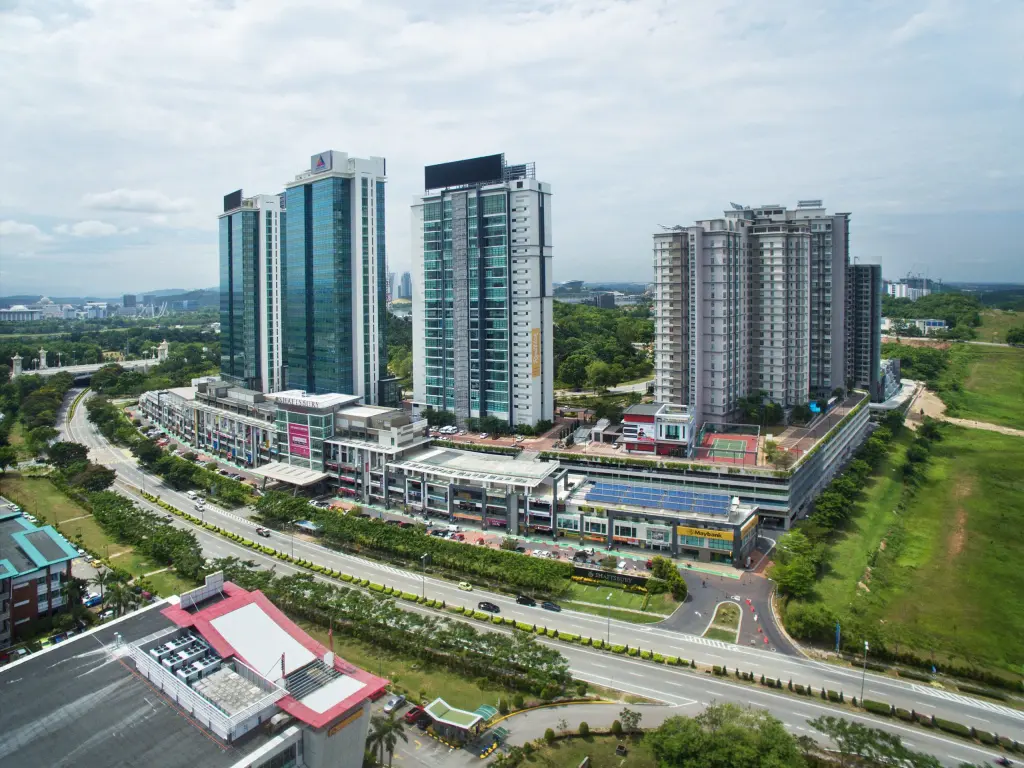
Shaftsbury Square in Cyberjaya, home to the Malaysian Communications and Multimedia Commission, an industry regulator and state agency / Photo credit: Wikipedia
To be sure, this isn’t the first sponsored content with the same story angle that Cyberview, the state-owned developer behind Cyberjaya, has paid for. In 2021, it published another sponsored article called “Revitalising Cyberjaya into a global tech hub.”
Cyberview commissioned both pieces to say the same thing: Cyberjaya is a tech hub and has the means – from infrastructure to talent pool and incentives – to be so.
Interestingly, the paid post last March came right after Business Insider published two articles in January that cast a negative light on Cyberjaya.
The first piece talked about the “ghost malls” – empty shopping centers – in the city. The second one was about spending a night in a shipping container hotel.
Spoiler alert: The reporters muse about unpleasant experiences, and both articles had the keywords “Malaysia’s failed Silicon Valley.”
As far as I can recall, the first publication to call Cyberjaya a failure was Wired magazine. The 2016 article had the same trajectory: Reporter scouted the area, noted some disappointing stuff, and then mentioned that plans were under way to reboot the place into a tech hub.
Lack of political will
Cyberjaya was born out of then-Prime Minister Mahathir Mohamad’s ambition to create a “multimedia super corridor” in 1997. Through the years, some large tech multinationals such as NTT, Dell and IBM have set up shop in the city.
This effort resulted in a mesh of company headquarters, research hubs, call centers, and global business or delivery centers. Two local universities were also established in the city.
IBM shut down its Cyberjaya services center in 2021, but the tech giant still maintains an office in Petaling Jaya, a city bordering Kuala Lumpur.
Building Cyberjaya was part of Mahathir’s plan to put up a tech corridor close to Putrajaya, Malaysia’s administrative center and also his brainchild. Various tax incentives were also thrown into the mix as bait.
Competing with a hot address
Kuala Lumpur still the focus
Stay ahead in Asia’s tech landscape
This is premium content. Subscribe to read the full story.
Cyberjaya may risk losing out to Kuala Lumpur if there’s no policy change.
We know this is not ideal. ⌛ Sign up in 20 seconds. Cancel anytime.
Our subscriber community includes professionals from these companies:





Stay updated on the go with our mobile app.
Get latest insights with smoother, more personalized experience through TIA mobile app.











📅 Upcoming Events
22 October 2026
Payoneer x CSPN Summit 2026