 Jum Balea · · 5 min read
The stage is set for the Amazon vs Alibaba battle in Southeast Asia
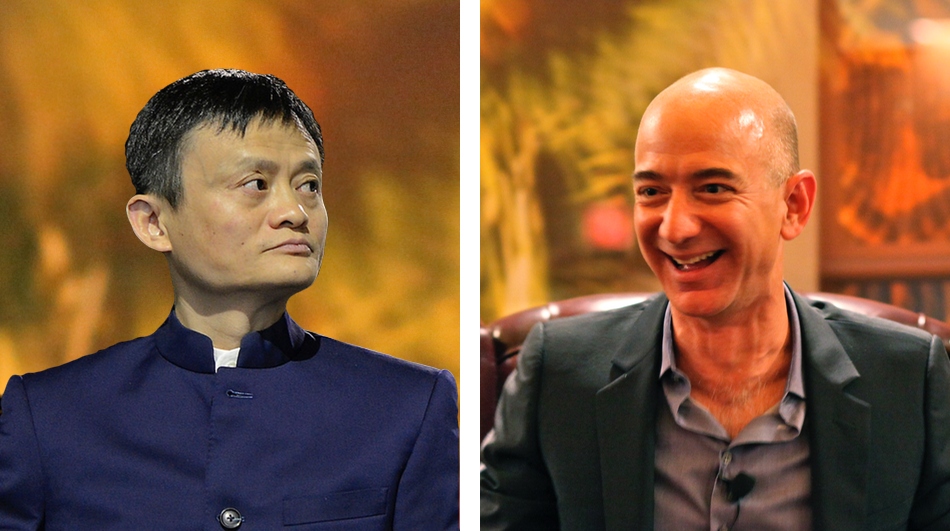
Jack Ma and Jeff Bezos. Photo montage by Tech in Asia. Photos by Steve Jurvetson and UNclimatechange.
A momentous battle over Southeast Asia’s online shoppers looms. On one side, there’s US-based Amazon, the granddaddy of internet shopping sites, and in the opposite corner is Chinese heavyweight Alibaba. Both are formidable in their home markets and are looking for fresh ground to conquer.
Alibaba, owned by billionaire Jack Ma, has been making aggressive moves in Southeast Asia, while Amazon is reportedly planning a debut early next year.
This is not the first time the two will encounter each other – Alibaba has begun to wage a battle with Amazon in the US, just like Amazon has with Alibaba in China, and the two giants are running after India.
How do they stack up?
Different strokes
While the two companies are the most notable players in the ecommerce space, their business models differ.
Amazon, started by Jeff Bezos, sells goods direct to consumers with a markup and keeps inventory in its network of warehouses.
The giants slug it out for new territories.
Alibaba’s business, on the other hand, is online marketplaces. Its largest site, Taobao, provides a platform for sellers and buyers to trade goods – akin to eBay. It doesn’t take a commission out of the sales but charges sellers for higher ranking on site searches. The company also has Tmall for larger retailers where it generates commissions, and AliExpress, a global-facing ecommerce site where consumers from around the world can buy from Chinese merchants. Alibaba doesn’t own inventory, making its business easier to scale.
Over the past few years, Amazon has been shifting toward an open marketplace where it takes a cut of sales. Many sellers can store goods in Amazon warehouses, allowing for quick shipping to buyers.
With the two accounting for a huge chunk of ecommerce in their home markets – Alibaba is 80 percent of China’s online shopping sales; Amazon, 60 percent of the US’ – the next logical step was international expansion.
Which is why they’re slugging it out for new territories, including each other’s home base. Alibaba rolled out its cloud computing service to compete with Amazon Web Services (AWS) in the US and invested in a number of US-based companies. Amazon, for its part, launched its delivery service Amazon Prime, which also offers music and video streaming, in China. Then there’s India, where Amazon competes fiercely with Alibaba-backed Paytm and Snapdeal, and another major player, Flipkart.
The big face-off
The rivals might soon be clashing in Southeast Asia, where there’s over 600 million consumers. While internet shopping accounts for less than 5 percent of all retail in this region, it’s expected to multiply on the back of surging smartphone use and a rising middle class.
Buy your way in or start from scratch.
Deep pockets





Stay updated on the go with our mobile app.
Get latest insights with smoother, more personalized experience through TIA mobile app.












📅 Upcoming Events
22 October 2026
Payoneer x CSPN Summit 2026