 Malavika Velayanikal · · 5 min read
They pursue ‘Fanatic Activism Against Substandard Occidental Shit’ with Indian fast food
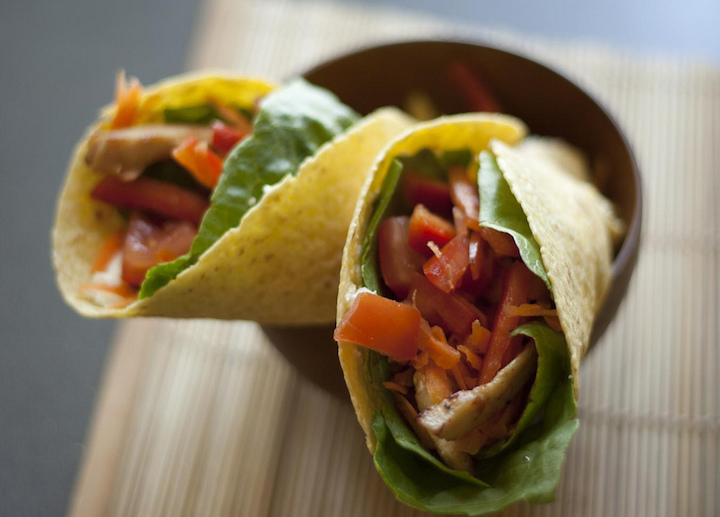
Two Indians traveling, working, and living abroad got tired of eating burgers, hotdogs, and pizzas. Their taste buds craved for Indian food. One was in London, and the other one in Singapore, but when they chatted, it was often about the chapatis (flat bread) and paneer (cottage cheese) they were missing.
On a cold night, the wheels of creativity greased by a few drinks, the two friends were grumbling as usual about the fast food they were consuming. And they came up with Faaso’s, which is today a rapidly growing chain of Indian fast food restaurants. Few people know that Faaso’s is an acronym for “Fanatic Activism Against Substandard Occidental Shit” – the product of an alcohol-induced late night tirade against burgers, pizzas, and hotdogs.
Today, Jaydeep Barman and Kallol Banerjee only remember hazily that not-so-coherent conversation in 2003 which ended in a decision to start a quick service restaurant serving Indian wraps in Pune, neighboring Mumbai. Initially, they just managed it remotely from abroad, but the restaurant got so popular that it expanded to five outlets in the western Indian city.
In 2011, Faaso’s co-founders quit their high profile jobs – Barman with McKinsey & Company in London and Banerjee with Bosch in Singapore – to move back to India and build a technology-enabled food delivery startup. The idea was to scale it up into an internet-and-mobile-based delivery service across the country for its wraps and other popular Indian fast food.
Faaso’s now has 90 outlets in six Indian cities: Pune, Mumbai, Bangalore, Chennai, Ahmedabad, and Baroda. Most of these are kitchens supply food to the surrounding offices, although Faaso’s also has a few places in each city where its regular patrons can sit and eat.
This offline-cum-online model just got a big boost today with US$20 million in a series B round of funding led by Lightbox. Sequoia Capital, which had led its US$8 million series A funding round in 2011 when it embarked on the expansion, participated in the latest round.
The startup was one of the early movers in the online food delivery space. It created a buzz in 2011 when it pioneered a Twitter-based marketing strategy. Its customers could tweet Faaso’s for wraps or even send wraps to their friends in other cities. When Faaso’s launched in Bangalore, Faaso’s customers in Pune and Mumbai were encouraged to tweet for gifts to their friends in Bangalore. “That really helped us spread the word quickly, with very little investment. We launched our mobile app eight months ago, and now, over 70 percent of our orders come through the app. In a month, we do about 50,000 orders on it,” co-founder and CEO Jaydeep Barman tells Tech in Asia.
Faaso’s app has close to 100,000 monthly active users – “almost all of them are repeat customers,” Barman adds.
Wraps on the run spurred by tech
Lately, food startups in India have been doing brisk business, lapping up venture capital. A few weeks ago, Bangalore-based TapCibo raised seed funding to deliver lunch to office-goers. Flipkart co-founder Sachin Bansal invested in Spoonjoy. SnaxSmart, and iTiffin. TinyOwl also raised funding recently.
Like most of these food startups, Faaso’s targets young students and urban professionals who need a reliable source for their daily meals. But one of its key differentiators is the customer insights it has gathered over time. It knows your favorite food, whether you wrinkle your nose at garlic or balk at cheese, what day you’re most likely to order, and so on. This data is used to personalize offers for you.
The two founders of Faaso’s, both engineers with MBAs from Indian Institute of Managament (IIM) Lucknow and INSEAD, had no experience in the restaurant business at the outset. What they knew best was technology, and decided to bank on that heavily when they returned to India in 2011 to scale up Faaso’s.
The data-centric approach has reaped rewards for the venture. For instance, last year, during Navratri, an important Hindu festival when people fast for nine days, Faaso’s used its data to set its cash bells ringing. Usually, business is zilch for restaurants during this period as most Hindus stick to a vegetarian diet without onion, garlic, and many other common ingredients. “Based on three years of data, Faaso’s offered Navratri specials to the right set of customers, and got incredible business,” investor Prashant Mehta, Partner at Lightbox, points out. It sold over 1,000 Navratri combo meals everyday during that period.





Stay updated on the go with our mobile app.
Get latest insights with smoother, more personalized experience through TIA mobile app.











📅 Upcoming Events
22 October 2026
Payoneer x CSPN Summit 2026