 Nadine Freischlad · · 4 min read
Seeing through the haze: how technology could help protect Southeast Asia’s forests
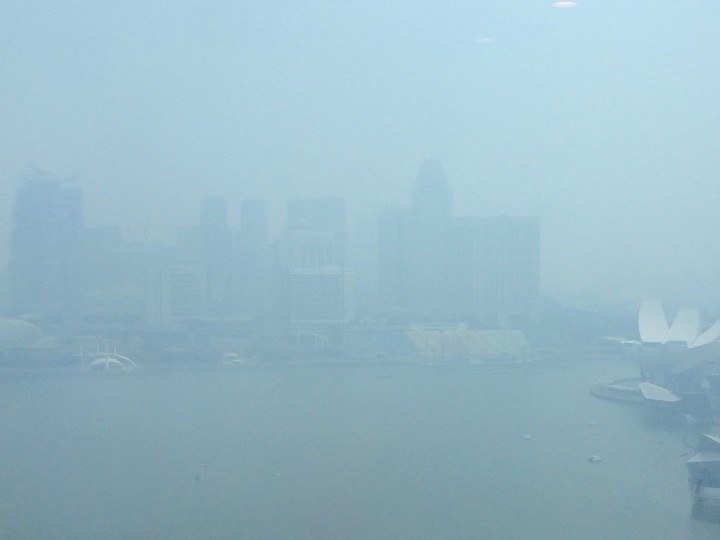
Haze in Sinhapore as a result of forest fires. Image source: Eco Business
Southeast Asia’s most pressing topic these past few months has been the devastating environmental and human catastrophe caused by burning peatlands in Indonesia.
At least 19 people are dead as a result of the air pollution. More than half a million Indonesians are suffering from respiratory ailments, while neighboring countries Singapore and Malaysia are also severely affected.
Need more figures? As a result of the fires, Indonesia’s CO2 emissions in the past few weeks have surpassed what Germany put out in an entire year. The worst part: these fires are man-made. Burning is the cheapest but riskiest method to clear forested land for palm oil plantations. This year’s extended dry season escalated the situation and fires spread.
Luckily, rain is slowly starting to fall and there’s some relief.
How can peatlands be managed better so that the tragedy won’t repeat itself next year? Indonesia’s president Joko Widodo has called on universities to help find solutions. Tech innovators in Southeast Asia, too, could contribute.
See: Singapore haze: apps, purifiers, and sites to help you copeOn top of building air purifiers, pollution measurement apps, or masks that deal with the consequences of the haze, technologists should build solutions that target the causes of the haze problem.
Here are some promising ways technology has been used in conservation so far.
Noise monitoring
Topher White from San Francisco came up with this brilliant idea: he uses old cellphones to monitor sounds in the forest. The phones are powered by an array of solar panels and hidden in tree tops. The phones could be programmed to listen to the sound of certain animals, but the phones used in Topher’s project Rainforest Connection listen for sounds that don’t belong in a rainforest, for example that of a chainsaw or human chattering. It then sends an alert to a control station.
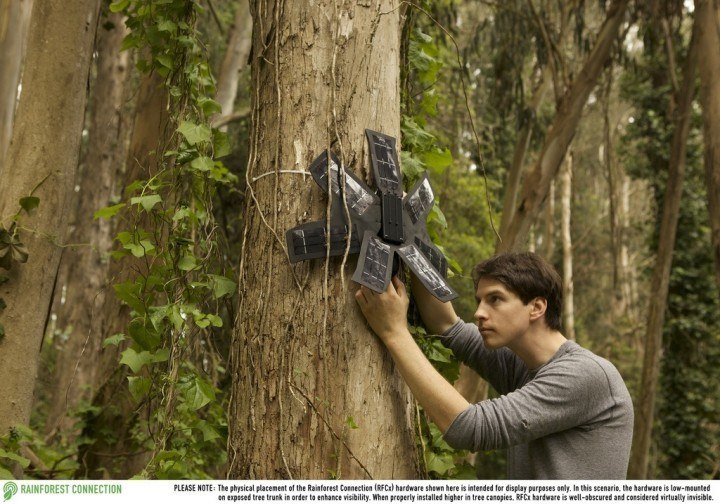
Topher White, the creator of Rainforest Connection. Image source: Rainforest Connection
Rainforest Connection ran a successful pilot program in Sumatra. The advantage of this technology is that it’s cheap, but it doesn’t cover a large area and each device needs to be installed by hand.
Smart sensors
Libelium, a company based in Spain, specializes in smart sensors that are linked up with software for easy monitoring. There are countless applications for Libelium’s system. It has been used for early detection of forest fires in Spain. The sensors can be configured to pick up, for example, humidity, temperature, and changes in CO2 levels in short intervals. The system sends an alert if there are significant changes.
This technology can detect subtle changes and can pinpoint the source of fires pretty accurately. The downside of it is that each sensor needs to be placed individually.
DIY drones
Cheap satellite imagery
Where are Southeast Asia’s tech innovators?





Stay updated on the go with our mobile app.
Get latest insights with smoother, more personalized experience through TIA mobile app.











📅 Upcoming Events
22 October 2026
Payoneer x CSPN Summit 2026