 Echo Xie · · 4 min read
AI is watching China’s students, but how well can it really see?
Almost every second of Betty Li’s school life is monitored.
The 22-year-old student at a university in northwestern China must get through face scanners to enter her dormitory and register attendance, while cameras above the blackboards in her classrooms keep an eye on the students’ attentiveness.
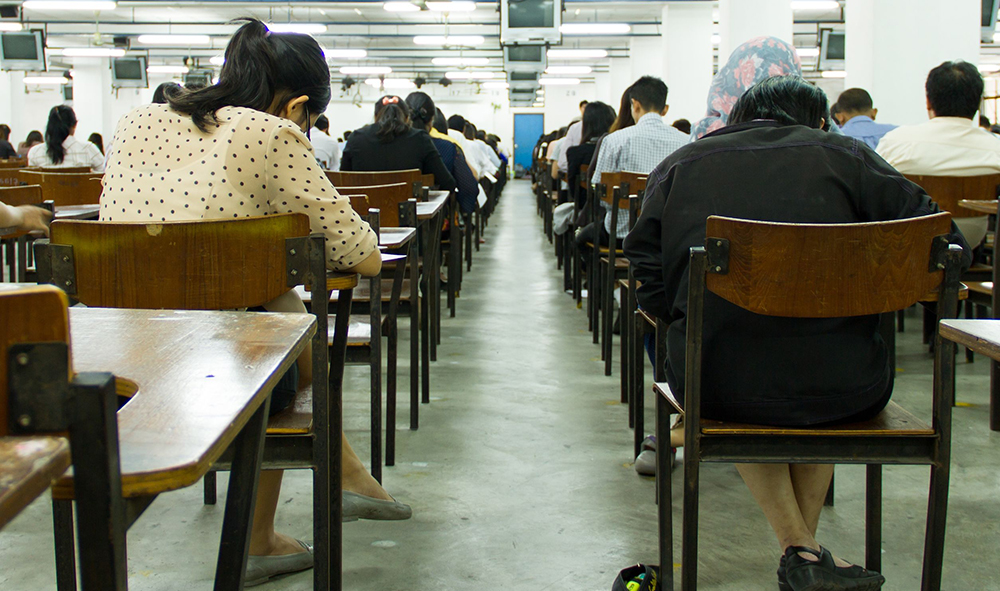
Photo credit: Patibutkan Singsoot
Like many other educational institutions across the country, the university in Xian, Shaanxi province, deployed AI-powered gates and facial recognition cameras several years ago as a part of the “smart campuses” campaign promoted by the Ministry of Education. Some schools are even exploring ways to use AI to analyze the behavior of teachers and students.
The universities are at the forefront of a national effort to lead the world in emerging technologies and move China’s economy up the value chain.
But the surveillance of students has raised privacy issues for educators and parents, as well as big questions over the effectiveness of the technology.
After long exposure to the scanners at her Xian university, Li is used to the technology’s constant presence – and its obvious failures. The “smart” facial recognition system cannot recognize her if she wears different glasses, and there are long queues to get through the door to her dormitory.
It was not quite what Beijing had in mind when it called on schools and universities to promote AI in education and school management and use big data technology to develop online education apps.
In a detailed plan published in 2018, the ministry suggested that schools explore a new teaching model based on AI, including using the technology to monitor the teaching process and analyze the performance of students and teachers.
Schools across China have enthusiastically adopted AI, particularly facial recognition technology. The systems are not only used to gain entry to and secure school facilities, they also record student attendance and handle enrolments.
The Hangzhou No. 11 High School in the coastal province of Zhejiang uses the systems in various applications, from its canteens to manage the distribution of school meals to its classrooms where it monitors whether students enjoy their classes.
According to a video posted on Douyin last year, cameras in the school’s classrooms can pick up seven emotions in the students – neutral, happy, sad, disappointed, angry, scared, and surprised.
In the southwestern province of Guizhou, Guanyu Technology supplies chip-equipped “smart uniforms” to track students’ locations, according to its website.
Beijing Normal University law professor Wu Shenkuo said young people were the key to the adoption of AI.





Stay updated on the go with our mobile app.
Get latest insights with smoother, more personalized experience through TIA mobile app.









